
Case 1Right-click crosses out. Double-click marks.
Subcortical structures
Limbic Memory and Fear
The limbic system assigns emotional weight, builds long-term memory, links smell to behavior, and routes autonomic drive. For boards, fear is amygdala and new memory is hippocampus.
Amygdalafear and salience
Hippocampusnew memory formation
Mammillarythiamine memory injury
First lock
A patient after bilateral temporal encephalitis becomes hyperoral, fearless, sexually disinhibited, and visually agnosic. What structure took the hit?
One pattern
Limbic questions are behavior plus memory localization.
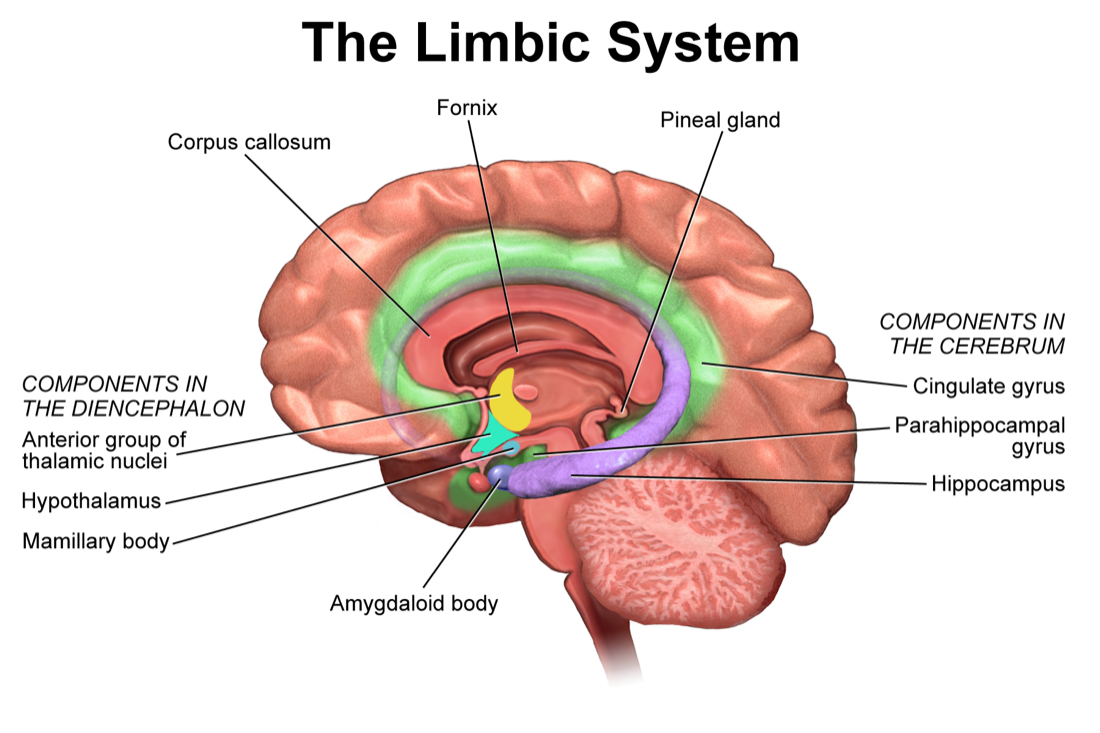
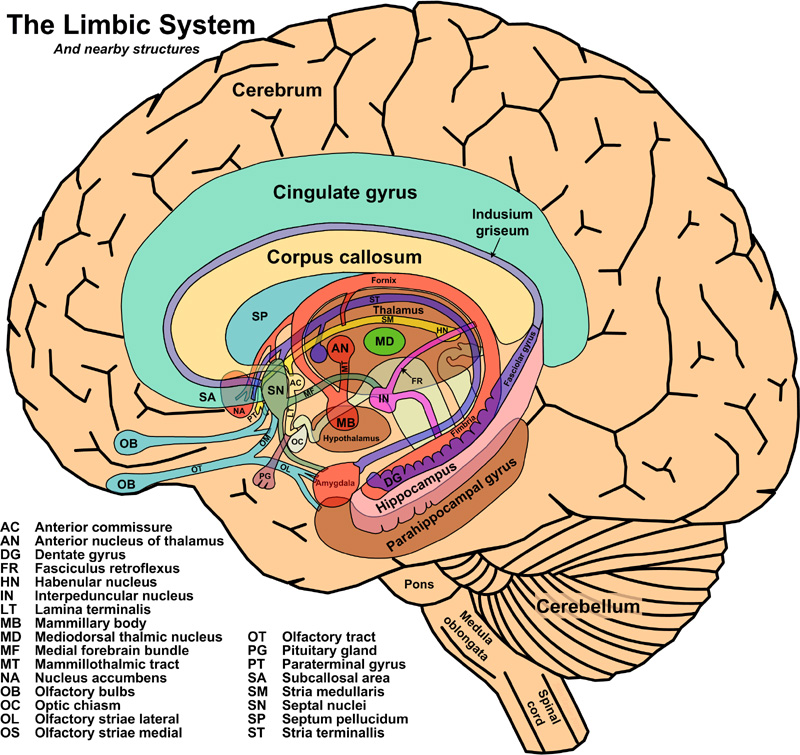
Do not flatten the limbic system into emotion. It is a circuit: amygdala tags threat, hippocampus writes new memory, fornix carries output, mammillary bodies and thalamus help the memory loop, cingulate links drive and attention.
Amygdala
Fear, threat, salience, and Kluver-Bucy when bilaterally damaged.
Hippocampus
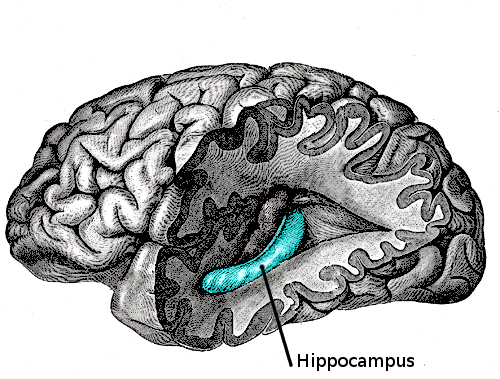
New declarative memory formation; vulnerable to hypoxia and temporal lobe injury.
Fornix
Hippocampal output cable to mammillary bodies.
Mammillary bodies
Thiamine deficiency memory injury and confabulation clue.
Cingulate
Emotion, attention, and motivated behavior.
Smell
Olfaction has unusually direct limbic access, which is why smell can punch memory hard.
Switchboard drill
Separate fear, new memory, and confabulation.
Most stems give you the answer by phenotype. Fear loss and hyperorality are amygdala. New-learning failure is hippocampus or its output. Confabulation after thiamine deficiency is mammillary body and thalamic memory circuit injury.
Fear and Kluver-Bucy
Bilateral amygdala injury can cause hyperorality, hyperphagia, disinhibition, reduced fear, and visual agnosia.
New memory
Hippocampal injury causes anterograde amnesia. Remote memory can be better preserved because it is stored more broadly.
Output cable
The fornix carries hippocampal output toward mammillary bodies. Cut it and the patient cannot pass memory forward.
Wernicke to Korsakoff
Confusion, ataxia, and eye findings need thiamine first. Persistent confabulation and new memory failure is Korsakoff syndrome.
Fast decision
Which clue is most specific for Korsakoff rather than simple delirium?
Visual anchors
See the circuit, then answer from behavior.
The pictures show the curved medial system. The answer comes from what failed: fear, new memory, output cable, or thiamine-sensitive memory loop.
Commit before reveal
Six limbic cases
The move is phenotype first, structure second. Fear, new memory, output cable, or confabulation.
Memory lock
The limbic lock
These four anchors catch nearly every limbic board stem in this lecture cluster.
Fear is amygdala
Bilateral temporal damage plus hyperorality and fear loss is amygdala.
New memory is hippocampus
Hypoxia and medial temporal injury produce anterograde amnesia.
Cable is fornix
Fornix carries hippocampal output to mammillary bodies.
Confabulation is Korsakoff
Thiamine deficiency can injure mammillary and thalamic memory circuits.