
Case 1Right-click crosses out. Double-click marks.
Subcortical structures
Hypothalamus Command Center
The hypothalamus turns body state into commands: eat, stop eating, cool down, conserve heat, release pituitary signals, keep water, and run the clock.
Lateralhunger
VMHsatiety
Anteriorcooling and fever set point
First lock
A suprasellar lesion produces obesity, fatigue, diabetes insipidus, and bitemporal visual loss. What structure is being squeezed?
One pattern
Think command center, not relay center.
The thalamus relays sensory traffic. The hypothalamus drives homeostasis. It tells the body when to eat, cool, heat, drink, ovulate, release cortisol signals, and retain water.
Lateral
Hunger center. Lesion causes anorexia and failure to thrive.
Ventromedial
Satiety center. Lesion causes hyperphagia and obesity.
Anterior
Cooling center and fever set-point region. Injury can cause hyperthermia.
Posterior
Heat conservation and thermoregulation.
Suprachiasmatic
Circadian clock.
Supraoptic
ADH synthesis for posterior pituitary release.
Switchboard drill
Pair the nucleus with the command.
Most misses come from swapping drive and brake. Lateral makes hunger. Ventromedial makes satiety. Anterior cools and mediates fever set point through prostaglandin signals.
Lateral hunger
Destroy lateral hypothalamus and the patient stops eating. Think lateral equals lunch.
Ventromedial satiety
Destroy ventromedial hypothalamus and the patient keeps eating. It is the meal brake.
Cytokines to PGE2
Inflammatory cytokines increase prostaglandin E2 near the anterior hypothalamic set point. Antipyretics lower that signal.
ADH pathway
ADH is synthesized in hypothalamic neurons, especially supraoptic, then stored and released from posterior pituitary.
Fast decision
Which clue makes hypothalamus more likely than a primary pituitary-only lesion?
Visual anchors
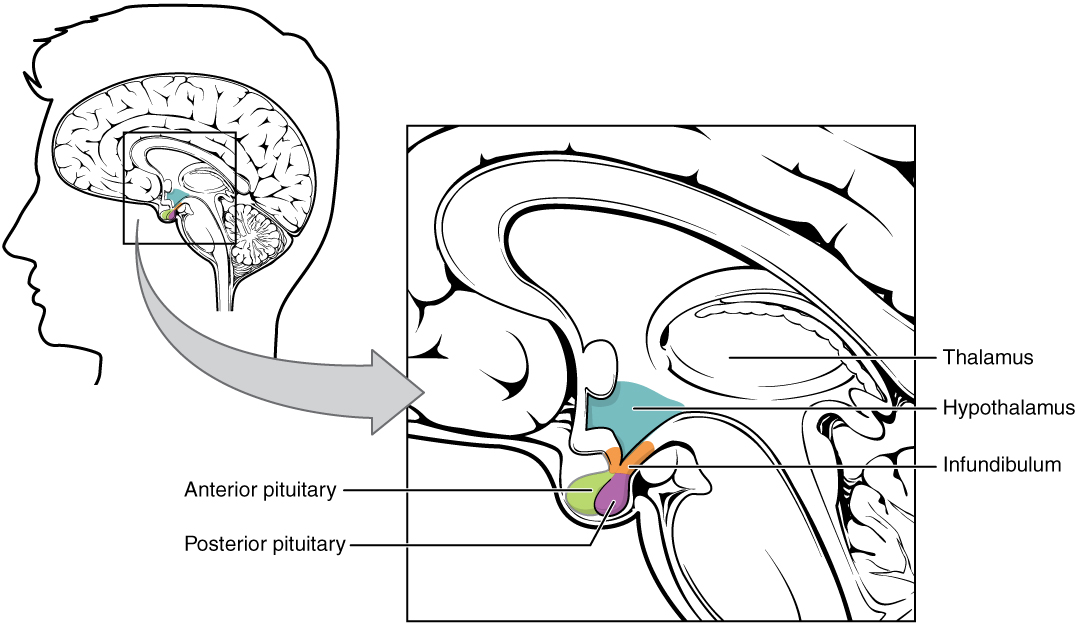
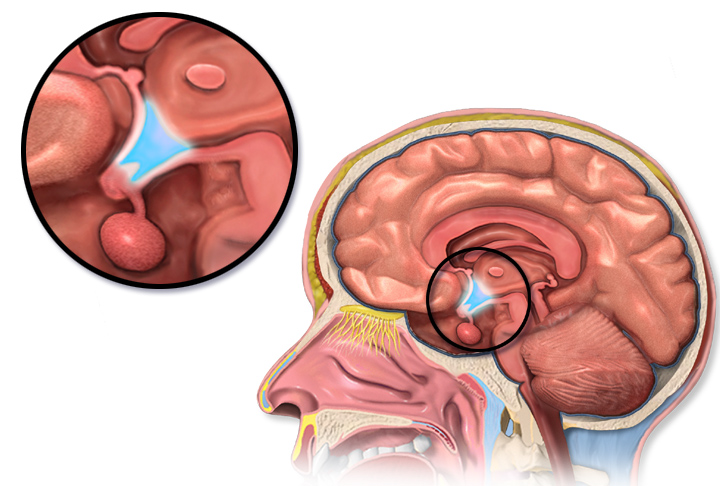
Locate the command board.
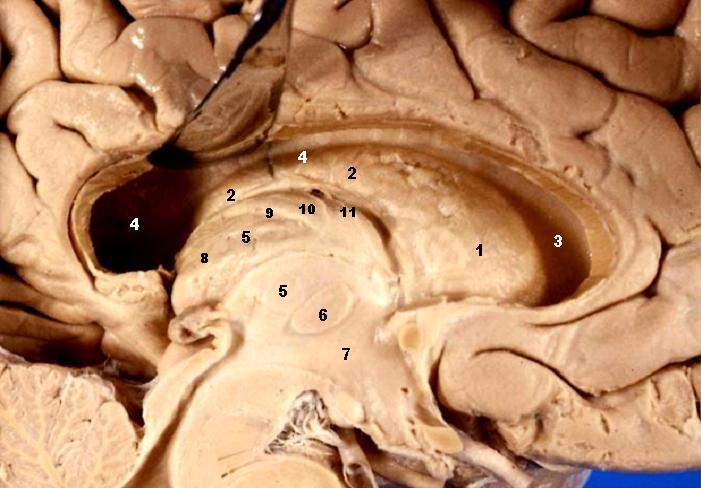
The images show why suprasellar pathology can hit chiasm, hypothalamus, stalk, and posterior pituitary physiology in one patient.
Commit before reveal
Six hypothalamus cases
Read the body-state problem, then name the command center that would fix or break it.
Memory lock
The hypothalamus lock
If the stem mixes endocrine, water, appetite, temperature, or chiasm clues, stop and map the neighborhood.
Lateral equals lunch
Loss of lateral hypothalamus removes hunger.
Ventromedial is the brake
Loss of ventromedial hypothalamus removes satiety.
Anterior cools
Injury causes hyperthermia; fever set point uses PGE2 signaling.
ADH made upstairs
ADH is made in hypothalamus, stored and released from posterior pituitary.