One vignette at a time. Right-click (or long-press on phone) an option to cross it out. Double-click (or double-tap) to highlight one you are weighing. Answer, and the buried clues light up.
A 23-year-old female medical student pulls an all-nighter studying for biochemistry. During a sprint, her anaerobic sprint produces 4 moles of pyruvate. Her muscles are hypoxic. Without oxygen to run the ETC, her mitochondria close. What happens to the pyruvate?
A) Pyruvate enters the Krebs Cycle and produces 10 NADH
B) Pyruvate is converted to lactate via LDH; NADH is regenerated to NAD+ so glycolysis can continue
C) Pyruvate is immediately shunted to the liver for gluconeogenesis
D) Pyruvate becomes alanine, which is toxic and causes acidosis
Answer: B. Without oxygen, the ETC shuts down, NADH can't be oxidized back to NAD+, and glycolysis stalls unless NAD+ gets regenerated. LDH converts pyruvate to lactate and recycles NADH back to NAD+. Glycolysis keeps producing ATP. Lactic acid lowers pH, but that's the cost of anaerobic energy.
A) Krebs cycle, 10 NADH: Krebs depends on a working ETC to keep NAD+ available. Without oxygen, Complex IV stalls, and Krebs grinds to a halt. Like trying to drive with the engine off.
Break it down: no oxygen = no Krebs. Pyruvate has to go anaerobic.
C) Shipped to liver for gluconeogenesis: The muscle has to handle this locally, in seconds. No time to ship pyruvate across the bloodstream to the liver during a sprint. Like calling room service when you're already at the buffet.
Break it down: anaerobic muscle = local lactate production via LDH. The Cori cycle to liver is slow, not the immediate move.
D) Becomes alanine, toxic, causes acidosis: Alanine is the muscle's nitrogen-transport form (Cahill cycle) and isn't toxic. The acidosis comes from lactate accumulation, not alanine. Like blaming the mailman for the bills he delivered.
Break it down: alanine = nitrogen carrier, harmless. Lactate = the acid that drops pH.
A 45-year-old man with a long history of heavy alcohol use presents with muscle weakness, dilated cardiomyopathy, and hypoglycemia. His serum triglycerides are elevated. Explain the metabolic cascade.
A) Alcohol is metabolized efficiently, producing ATP and maintaining homeostasis
B) Ethanol → massive NADH production → blocks gluconeogenesis (hypoglycemia) → body breaks down muscle protein (cardiomyopathy) and oxidizes fatty acids (hypertriglyceridemia, ketosis)
C) Alcohol blocks lactate formation, causing severe acidosis
D) Ethanol directly damages the myocardium through inflammation only
Answer: B. Ethanol produces tons of NADH via alcohol and acetaldehyde dehydrogenases. The high NADH/NAD+ ratio (1) blocks gluconeogenesis → hypoglycemia, (2) drives proteolysis → muscle wasting and dilated cardiomyopathy, and (3) ramps fatty acid oxidation → hypertriglyceridemia and ketosis. Classic chronic-alcoholic metabolic chain.
A) Metabolized efficiently, homeostasis intact: Chronic heavy alcohol use is the opposite of homeostasis. The whole point of this clinical picture is metabolic chaos. Like calling the warehouse 'organized' after the tornado.
Break it down: chronic alcohol = NADH overload, gluconeogenesis blocked, muscle catabolism. Far from homeostasis.
C) Blocks lactate, severe acidosis: Alcohol can cause lactic acidosis indirectly (high NADH pushes pyruvate to lactate), but lactate isn't blocked, it's elevated. And acidosis isn't the cardiomyopathy mechanism. Like blaming the sneeze when you have the flu.
Break it down: alcohol drives lactate UP, not blocks it. The cardiomyopathy is from muscle catabolism, not acidosis.
D) Direct myocardial inflammation only: There's some inflammatory component, but the dominant mechanism is metabolic (low glucose forces protein breakdown including cardiac muscle). Reducing it to inflammation alone misses the chain. Like blaming graffiti when the wall fell.
Break it down: alcoholic cardiomyopathy = metabolic chain (NADH → no glucose → muscle breakdown). Inflammation contributes but isn't the whole story.
A 9-year-old girl is brought to the ER after ingesting antifreeze (ethylene glycol). The standard EtOH is NOT available, but fomepizole IS. Why is fomepizole the right choice?
A) Fomepizole binds ethylene glycol and removes it from the body
B) Fomepizole blocks Alcohol Dehydrogenase, preventing conversion of ethylene glycol to glyoxalate → oxalate (which causes kidney stones and AKI)
C) Fomepizole is a diuretic that flushes the kidneys
D) Fomepizole has no mechanism; we use EtOH instead
Answer: B. Fomepizole blocks alcohol dehydrogenase, the first enzyme in the toxic pathway. Without ADH, ethylene glycol can't get converted to glyoxalate and oxalate (which crystallize in the kidneys and cause AKI). Blocking the enzyme buys time for the kidneys to excrete intact ethylene glycol.
A) Binds and removes ethylene glycol: Fomepizole doesn't bind or chelate ethylene glycol. It blocks the enzyme that would otherwise activate it. Like glue trapping the wrong insect.
Break it down: fomepizole = ADH inhibitor, not a chelator.
C) Diuretic flushing kidneys: Fomepizole isn't a diuretic. Different drug class entirely. Like asking the umbrella to dry the carpet.
Break it down: fomepizole = enzyme inhibitor. Diuretics are separate drugs.
D) No mechanism, use ethanol instead: Fomepizole has a clear mechanism (ADH inhibition) and is preferred over ethanol because it's safer, more predictable, and doesn't intoxicate the patient. Like saying the new car has no engine.
Break it down: fomepizole is the modern first-line antidote. Ethanol is the backup.
A 35-year-old woman taking metronidazole for a UTI drinks alcohol at a party. She develops severe nausea, flushing, and tachycardia within minutes. What enzyme is blocked, and why?
A) Alcohol Dehydrogenase is blocked; ethanol cannot be metabolized
B) Acetaldehyde Dehydrogenase is blocked by metronidazole; acetaldehyde accumulates → "disulfiram reaction" (nausea, flushing, tachycardia)
C) Lactate Dehydrogenase is blocked; lactate accumulates
D) Aldolase is blocked; glucose metabolism is impaired
Answer: B. Metronidazole (and cefotetan, cefamandole, moxalactam, chlorpropamide) blocks acetaldehyde dehydrogenase. With alcohol on board, acetaldehyde piles up and triggers the disulfiram reaction: nausea, vomiting, flushing, tachycardia, hypotension. A hangover-from-hell mechanism.
A) ADH blocked, ethanol can't be metabolized: ADH is the FIRST enzyme. If it were blocked, ethanol would just sit unmetabolized; no toxic intermediate, no flushing reaction. The flushing comes from acetaldehyde piling up at the SECOND step. Like blaming the front door when the back is open.
Break it down: ADH block = no toxic intermediate. Acetaldehyde DH block = acetaldehyde accumulation = flushing.
C) LDH blocked, lactate accumulates: Lactate dehydrogenase isn't part of alcohol metabolism. Different pathway entirely. Like swapping the tire when the brake is the broken part.
Break it down: LDH = pyruvate-lactate. Acetaldehyde DH = ethanol's second metabolic step.
D) Aldolase blocked, glucose metabolism impaired: Aldolase is a glycolysis and fructose enzyme. Not in alcohol metabolism. Wrong system. Like checking the soup recipe when you wanted dessert.
Break it down: aldolase = sugar metabolism. Disulfiram-like reactions = acetaldehyde DH block.
During a mitochondrial screening, a male patient is found to have Pyruvate Dehydrogenase Deficiency. He has two daughters who are carriers. Which of the following is unique about this inheritance pattern?
A) It follows autosomal recessive inheritance; his daughters have a 50% chance of being affected
B) It is X-linked dominant; ALL of his daughters are affected, and his sons are unaffected
C) It is mitochondrial; only his daughters can pass it on
D) It follows a complex pattern with reduced penetrance
Answer: B. Pyruvate dehydrogenase deficiency is the rare enzyme deficiency that follows X-linked DOMINANT inheritance. An affected father passes his single X to ALL daughters, so every daughter inherits the mutant allele. Sons inherit the Y instead, so they are unaffected. Board favorite because it breaks the autosomal-recessive default for enzyme defects.
A) Autosomal recessive, daughters 50%: AR would affect both sexes equally and would NOT make all daughters carriers from one affected father. The skewed pattern (all daughters affected, no sons) is the giveaway. Like rolling fair dice when the question described loaded ones.
Break it down: AR = both sexes equal, 50% if one parent is carrier. PDH deficiency skews to all daughters affected.
C) Mitochondrial, only daughters can pass it on: Mitochondrial inheritance is maternal-only. Fathers cannot pass mitochondrial mutations to ANY children. Here the FATHER is the affected one and is passing to all daughters, which only fits an X-linked pattern. Like saying the package came from the wrong shipper.
Break it down: mitochondrial = maternal only. Father affected with all daughters affected = X-linked dominant.
D) Complex pattern with reduced penetrance: The PDH deficiency pattern is clean X-linked dominant, not a vague penetrance story. Reduced penetrance is a fallback explanation when the simple Mendelian pattern doesn't fit, but here it does. Like calling a clear sky 'partly cloudy.'
Break it down: PDH deficiency = X-linked dominant. The unique board fact is the inheritance, not the penetrance.
A 58-year-old man with chronic alcoholism is brought to the ED for confusion. He has a wide-based gait and his eyes do not move past midline laterally. The intern starts an IV and is about to push D5W. What should you do FIRST?
A) Push D5W as ordered, the brain needs glucose
B) Give IV thiamine before any dextrose
C) Give IV magnesium and skip thiamine
D) Order an MRI and wait for results before treating
Answer: B. Classic Wernicke triad (confusion, ataxia, ophthalmoplegia) in a chronic alcoholic. Thiamine before glucose. PDH cannot turn pyruvate into Acetyl-CoA without B1, and a glucose load forces the cells to spend whatever B1 is left, precipitating or worsening Wernicke. IV thiamine first, dextrose after.
A) Push D5W first: The classic clinical medicine trap. Glucose without thiamine in an alcoholic burns through the last reserves of B1 and tips the patient into full Wernicke. Like pouring gas on a stalled engine without checking if the spark plug is in.
Break it down: glucose without B1 = brain damage. Thiamine first, always.
C) Magnesium, skip thiamine: Magnesium is a useful adjunct in alcoholics (it is a cofactor for thiamine activation), but it does not replace B1. The deficient cofactor is thiamine, that is what fixes PDH.
Break it down: magnesium helps thiamine work, it does not substitute for it.
D) Wait on MRI: Wernicke is a clinical diagnosis. Treatment is so cheap and the miss is so devastating that you treat first and image later. Like waiting for a chest x-ray before doing CPR.
Break it down: clinical suspicion = treat now. MRI confirms, it does not gate treatment.
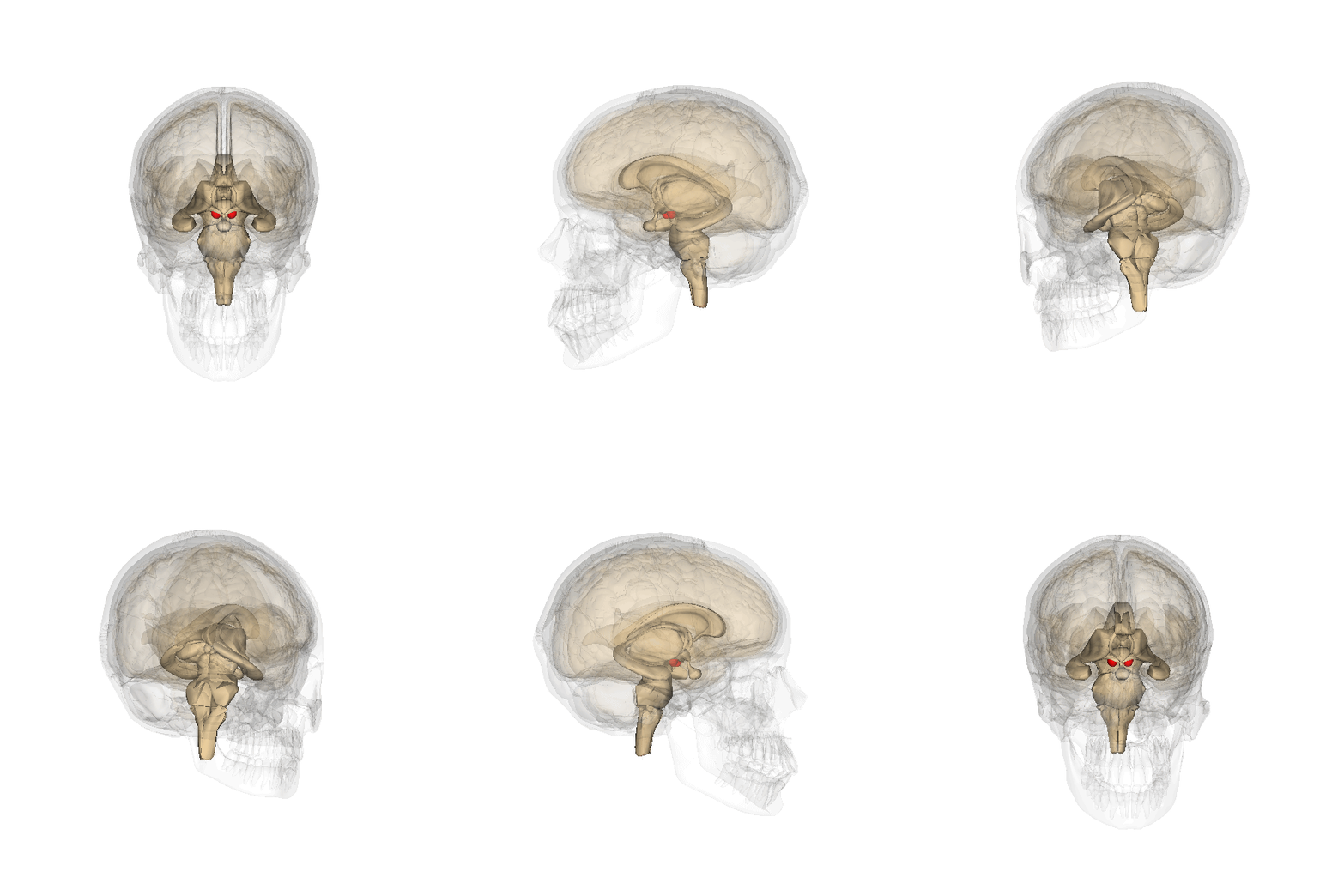
A 62-year-old man with a long alcohol history is admitted. He is calm, oriented, but cannot remember anything you tell him for more than a minute. When asked where he was yesterday, he tells a detailed but completely fabricated story about a fishing trip he never took. Where is the lesion?
A) Hippocampus only, classic Alzheimer pattern
B) Mammillary bodies and dorsomedial thalamus, Korsakoff syndrome
C) Frontal lobe, this is just personality change
D) Cerebellum, ataxia produced the confabulation
Answer: B. Anterograde amnesia plus confabulation in a chronic alcoholic is Korsakoff. The lesion is in the mammillary bodies and dorsomedial thalamus, the hub of the Papez memory circuit. Wernicke went untreated long enough to infarct these structures, the damage is irreversible.
A) Hippocampus, Alzheimer: Hippocampal atrophy causes anterograde amnesia, but Alzheimer does not present this acutely with confabulation in an alcoholic. The history points to nutritional deficiency, not neurodegeneration.
Break it down: alcoholic + amnesia + confabulation = Korsakoff. Mammillary bodies, not hippocampus.
C) Frontal lobe personality change: Frontal lobe damage produces disinhibition and judgment problems, not pure memory loss. Confabulation can occur in frontal damage but not paired with this clean anterograde amnesia.
Break it down: Korsakoff = memory hub damage. Frontal damage = personality, not memory loss with intact orientation.
D) Cerebellum, ataxia caused it: Cerebellum runs balance and coordination, not memory. Ataxia is part of Wernicke, but it does not produce confabulation. Wrong system entirely.
Break it down: cerebellum = motor coordination. Mammillary bodies = memory.
A 28-year-old man with Type 1 diabetes is found unresponsive. Labs show glucose 28 mg/dL, low C-peptide. After dextrose, he wakes up. Which biochemical relationship explains why the C-peptide is informative here?
A) C-peptide is a byproduct of endogenous insulin synthesis from proinsulin, low C-peptide with low glucose suggests exogenous insulin (injected) rather than an insulinoma
B) C-peptide is a marker of pyruvate metabolism
C) C-peptide rises during alcohol intoxication
D) C-peptide tracks PDH activity directly
Answer: A. Proinsulin is cleaved into insulin plus C-peptide in equimolar amounts. Endogenous insulin secretion always brings C-peptide along for the ride. Low C-peptide with hypoglycemia points to exogenous insulin (the patient injected it). Insulinoma would show HIGH C-peptide because the tumor makes both. The board pearl is using C-peptide to distinguish factitious hypoglycemia from endogenous causes.
B) C-peptide tracks pyruvate: Wrong pathway. C-peptide comes from insulin synthesis, not glycolysis or pyruvate metabolism.
Break it down: C-peptide = insulin coproduct. Pyruvate = glycolysis output. Different stories.
C) C-peptide rises with alcohol: Alcohol metabolism creates NADH and acetate, it does not affect C-peptide directly. C-peptide tracks beta-cell insulin output.
Break it down: alcohol = NADH overload. C-peptide = beta-cell secretion marker.
D) C-peptide tracks PDH: PDH activity is regulated by phosphorylation, NADH/NAD ratio, and Acetyl-CoA, not by C-peptide. C-peptide is an insulin marker.
Break it down: PDH activity = energy state. C-peptide = endogenous insulin tag.
A 50-year-old chronic alcoholic is hospitalized for pneumonia. The medical team starts IV dextrose for nutrition. Within 6 hours, the patient develops acute confusion, nystagmus, and bilateral lateral rectus palsy. What precipitated this deterioration?
A) Glucose load consumed the patient's remaining thiamine stores, precipitating acute Wernicke encephalopathy
B) The dextrose caused hyperglycemia and osmotic demyelination
C) The pneumonia organism crossed the blood-brain barrier
D) Alcohol withdrawal caused the neurologic symptoms
Answer: A. Classic clinical medicine trap scenario. Glucose metabolism through glycolysis produces pyruvate, and PDH needs thiamine (B1) to convert pyruvate to Acetyl-CoA. A chronically malnourished alcoholic has near-zero B1 reserves. The IV glucose bolus forces PDH to burn through whatever B1 remains, tipping the patient into acute Wernicke. This is why you give thiamine BEFORE glucose in any malnourished or alcoholic patient.
B) Osmotic demyelination: Central pontine myelinolysis comes from rapid sodium correction, not from glucose. Wrong electrolyte story. Osmotic demyelination = rapid Na+ correction. Wernicke = glucose without B1.
C) CNS infection: Pneumonia causing meningitis would present with fever, neck stiffness, and CSF pleocytosis. The triad of confusion + ataxia + ophthalmoplegia is Wernicke, not meningitis. Wernicke triad = metabolic, not infectious.
D) Alcohol withdrawal: Withdrawal causes tremor, tachycardia, seizures, and delirium tremens, not the specific ophthalmoplegia pattern. Lateral rectus palsy is a Wernicke signature. Alcohol withdrawal = hyperadrenergic. Wernicke = specific CN6 palsy + ataxia + confusion.
A marathon runner collapses at mile 22. Labs show pH 7.28, lactate 14 mmol/L (normal <2). Despite severe lactic acidosis, which organ is simultaneously performing the Cori cycle to recycle this lactate?
A) The skeletal muscles themselves
B) The liver
C) The kidneys
D) The brain
Answer: B. The Cori cycle runs between muscle and liver. Muscle converts pyruvate to lactate (LDH), lactate travels via blood to the liver, liver converts lactate back to pyruvate via LDH (reverse direction because liver has more NAD+), then runs gluconeogenesis to make glucose and ships it back to muscle. The liver is the recycling plant for muscle's anaerobic waste.
A) Skeletal muscles: Muscles are PRODUCING the lactate, not recycling it. They lack glucose-6-phosphatase and cannot complete gluconeogenesis. Muscles dump lactate. Liver recycles it. That is the Cori cycle.
C) Kidneys: Kidneys can perform some gluconeogenesis during prolonged starvation, but the Cori cycle specifically describes the muscle-liver shuttle. Cori = muscle to liver. Kidney gluconeogenesis = starvation backup, not Cori.
D) Brain: Brain cannot perform gluconeogenesis. It is a net consumer of glucose (and ketones during starvation). Brain uses fuel, does not make it.
A 40-year-old alcoholic presents with lactic acidosis. His physician explains that the high NADH/NAD+ ratio from alcohol metabolism shifts the LDH equilibrium toward lactate. Which specific step in gluconeogenesis is also inhibited by this same NADH excess?
A) Pyruvate carboxylase
B) Conversion of oxaloacetate to malate is favored, pulling OAA away from gluconeogenesis
C) Fructose-1,6-bisphosphatase
D) Glucose-6-phosphatase
Answer: B. High NADH favors the malate dehydrogenase reaction toward malate (OAA + NADH to malate + NAD+). This pulls OAA away from PEPCK and gluconeogenesis, because malate formation consumes the OAA that PEPCK needs. Simultaneously, high NADH pushes pyruvate toward lactate (same NAD+ shortage). Double hit: less glucose made AND more lactate produced.
A) Pyruvate carboxylase: Pyruvate carboxylase is actually ACTIVATED by Acetyl-CoA (which is abundant from alcohol metabolism). The problem is not carboxylase; it is that OAA gets diverted to malate. Pyruvate carboxylase makes OAA. The problem is OAA gets stolen by malate dehydrogenase.
C) Fructose-1,6-bisphosphatase: FBPase is inhibited by high AMP, not by NADH directly. The NADH-related block occurs upstream at the OAA level. FBPase = AMP regulation. NADH hits the OAA to malate equilibrium.
D) Glucose-6-phosphatase: G6Pase is the final step releasing free glucose and is not regulated by NADH/NAD+ ratio. G6Pase = constitutively active in liver, not NADH-sensitive.
A researcher is studying the PDH complex. She finds that the complex requires five cofactors derived from vitamins. A medical student remembers the mnemonic "Tender Loving Care For Nancy." Which vitamin corresponds to the "T"?
A) Thiamine (B1) providing TPP
B) Tocopherol (Vitamin E)
C) Thyroxine (T4)
D) Tryptophan
Answer: A. "Tender Loving Care For Nancy" = Thiamine (B1/TPP), Lipoic acid, CoA (from B5/pantothenate), FAD (from B2/riboflavin), NAD+ (from B3/niacin). TPP is the first cofactor in the PDH reaction, decarboxylating pyruvate. Same cofactor set works for alpha-ketoglutarate dehydrogenase in the TCA cycle.
B) Tocopherol: Vitamin E is a fat-soluble antioxidant. Not a PDH cofactor. Like looking for the plumber in the electrician's toolbox. Vitamin E = antioxidant. TPP = decarboxylation cofactor.
C) Thyroxine: T4 is a thyroid hormone that regulates metabolic rate. Not a PDH cofactor. Thyroxine = hormone. TPP = enzyme cofactor. Different league.
D) Tryptophan: Tryptophan is an amino acid precursor to niacin (B3/NAD+), serotonin, and melatonin. The mnemonic "T" stands for thiamine itself, not tryptophan. Tryptophan = niacin precursor. Thiamine = the direct TPP cofactor for PDH.
A 3-year-old boy is evaluated for developmental delay, hypotonia, and chronic lactic acidosis. Pyruvate dehydrogenase enzyme activity is markedly reduced. Which inheritance pattern is most characteristic?
A) Autosomal recessive
B) X-linked dominant
C) Mitochondrial (maternal)
D) Autosomal dominant with variable penetrance
Answer: B. PDH deficiency is the classic X-linked DOMINANT enzyme deficiency. The E1-alpha subunit gene is on the X chromosome. Most enzyme deficiencies are autosomal recessive, so PDH breaks the rule and clinical medicine love testing it. An affected father passes the mutation to ALL daughters (who receive his only X) and NONE of his sons (who get Y).
A) Autosomal recessive: This is the default for most enzyme deficiencies, but PDH is the exception. clinical medicine test this specifically because students assume AR and get burned. PDH deficiency = the exception to the AR rule. X-linked dominant.
C) Mitochondrial: Although PDH works inside the mitochondria, the gene encoding E1-alpha is on the nuclear X chromosome, not the mitochondrial genome. Location of the protein does not equal location of the gene. PDH protein works in mitochondria. PDH gene lives on the X chromosome. Don't confuse protein location with inheritance.
D) AD with variable penetrance: AD with variable penetrance is a vague catchall that clinical medicine never prefer when a specific pattern fits. X-linked dominant explains the sex-skewed inheritance perfectly. When a clean Mendelian pattern fits, use it. Don't hide behind "variable penetrance."
An 8-year-old girl with PDH deficiency is started on a special diet. Which macronutrient modification is the cornerstone of therapy?
A) High-protein diet to provide alanine for the TCA cycle
B) High-fat (ketogenic) diet to bypass the need for PDH by supplying Acetyl-CoA directly from fatty acid oxidation
C) High-carbohydrate diet to maximize glycolysis throughput
D) Complete fasting to upregulate mitochondrial biogenesis
Answer: B. Without functional PDH, pyruvate from carbohydrates cannot enter the TCA cycle as Acetyl-CoA. A ketogenic diet provides fat as the primary fuel. Beta-oxidation of fatty acids generates Acetyl-CoA directly, bypassing PDH entirely. The brain gets ketone bodies instead of glucose. It is the metabolic detour around the broken enzyme.
A) High protein: Protein provides amino acids, but many amino acids still feed through pyruvate or the TCA cycle. It does not solve the PDH bottleneck the way fat does. Protein = amino acids, some still need PDH downstream. Fat = direct Acetyl-CoA.
C) High carbohydrate: More carbs means more pyruvate, which piles up because PDH is broken. More substrate hitting a blocked enzyme = more lactic acidosis. Like turning up the faucet when the drain is clogged. High carbs in PDH deficiency = worse lactic acidosis.
D) Complete fasting: Fasting would trigger ketosis (helpful) but also dangerous hypoglycemia and muscle catabolism in a child. The ketogenic diet achieves the ketosis benefit without the starvation harm. Controlled ketogenic diet = safe. Starvation = dangerous and unnecessary.
A 32-year-old man is brought to the ED after drinking windshield wiper fluid (methanol). He reports blurred vision that is rapidly worsening. Which toxic metabolite is responsible for his visual symptoms, and what structure does it damage?
A) Formaldehyde damages the cornea
B) Formic acid (formate) inhibits cytochrome oxidase in retinal cells and damages the optic nerve
C) Methanol directly dissolves the vitreous humor
D) Acetaldehyde causes retinal detachment
Answer: B. Methanol to formaldehyde (via ADH), then formaldehyde to formic acid (via ALDH). Formic acid is the terminal toxic metabolite. It inhibits cytochrome c oxidase (Complex IV of the ETC) in retinal cells, starving them of ATP. The optic nerve is exquisitely sensitive. Blindness from methanol is formate toxicity to the retina and optic nerve.
A) Formaldehyde damages cornea: Formaldehyde is an intermediate, not the terminal toxin. And it damages intracellularly, not the cornea surface. Formaldehyde is quickly converted to formate. Formate is the one that causes blindness.
C) Methanol dissolves vitreous: Methanol does not dissolve the vitreous humor. The toxicity is metabolic (formate inhibiting ETC in retinal cells), not physical. Methanol blindness = metabolic toxicity to retina, not a solvent effect.
D) Acetaldehyde causes retinal detachment: Acetaldehyde comes from ethanol metabolism, not methanol. And it causes the flushing/disulfiram reaction, not retinal detachment. Acetaldehyde = ethanol pathway. Formate = methanol pathway. Wrong toxic alcohol.
A 4-year-old accidentally drinks antifreeze (ethylene glycol). Which toxic metabolite causes the characteristic calcium oxalate crystals in the urine, and what organ does it damage most acutely?
A) Glycolaldehyde deposits in the liver
B) Oxalic acid combines with calcium to form calcium oxalate crystals that deposit in the renal tubules, causing acute kidney injury
C) Ethylene glycol directly crystallizes in the lungs
D) Glyoxylic acid causes cardiac arrest
Answer: B. Ethylene glycol to glycolaldehyde to glycolic acid to glyoxylic acid to oxalic acid (all via ADH and ALDH). Oxalic acid grabs calcium and forms calcium oxalate crystals that deposit in renal tubules, causing acute tubular necrosis and kidney failure. Envelope-shaped crystals on urine microscopy = ethylene glycol poisoning.
A) Glycolaldehyde in liver: Glycolaldehyde is an early intermediate, not the terminal toxin. And the target organ is the kidney, not the liver. The metabolic chain ends at oxalate. Oxalate hits the kidneys.
C) Ethylene glycol crystallizes in lungs: Ethylene glycol itself does not crystallize. The crystals form after metabolism to oxalic acid, and they deposit in the kidneys, not the lungs. Crystals = calcium oxalate = kidneys. Not parent compound in lungs.
D) Glyoxylic acid cardiac arrest: Glyoxylic acid is an intermediate metabolite, not the final one. And the classic acute organ damage is renal, not cardiac. Terminal metabolite = oxalate. Target organ = kidney (calcium oxalate crystal deposition).
A patient ingests rubbing alcohol (isopropanol). Unlike methanol and ethylene glycol, isopropanol does NOT cause a high anion-gap metabolic acidosis. Why?
A) Isopropanol is metabolized to acetone (a ketone, not an acid), so it causes ketonemia without significant acidosis
B) Isopropanol is not metabolized at all and is excreted unchanged
C) Isopropanol produces ethanol as a metabolite, which is nontoxic
D) Isopropanol is buffered by bicarbonate before any acid forms
Answer: A. ADH converts isopropanol to acetone. Acetone is a ketone, not an organic acid. It makes the patient smell like nail polish remover and causes CNS depression, but it does not generate the acid load that formate (methanol) and oxalate (ethylene glycol) produce. Board pearl: isopropanol = ketosis without acidosis, osmol gap up, anion gap normal.
B) Not metabolized at all: Isopropanol IS metabolized by ADH to acetone. If it were excreted unchanged, it would not cause any CNS depression either. Isopropanol is metabolized, just to a ketone instead of an acid.
C) Produces ethanol: ADH does not convert isopropanol to ethanol. The metabolite is acetone. Isopropanol to acetone, not isopropanol to ethanol.
D) Buffered by bicarbonate: Bicarbonate buffers acids, and the point is that acetone is not an acid. There is nothing to buffer. No acid produced = no need for buffering. The metabolite is a ketone.
A fasting alcoholic presents with severe hypoglycemia. The attending explains that alcohol blocks gluconeogenesis. At which specific metabolic step does the high NADH/NAD+ ratio from ethanol metabolism most directly inhibit glucose production?
A) Phosphoenolpyruvate carboxykinase (PEPCK) is directly inhibited by NADH
B) Oxaloacetate is diverted to malate by malate dehydrogenase (favored by high NADH), depleting the substrate PEPCK needs
C) Fructose-1,6-bisphosphatase is allosterically inhibited by NADH
D) Hexokinase is upregulated by NADH, trapping glucose as G6P
Answer: B. This is the mechanistic heart of alcoholic hypoglycemia. Ethanol metabolism produces massive NADH. High NADH pushes the malate dehydrogenase equilibrium toward malate (OAA + NADH to malate + NAD+). This steals OAA from PEPCK, the enzyme that needs OAA to make PEP for gluconeogenesis. No OAA = no PEP = no new glucose. The same NADH excess also pushes pyruvate toward lactate, causing lactic acidosis simultaneously.
A) PEPCK directly inhibited by NADH: PEPCK is not directly allosterically inhibited by NADH. The issue is substrate depletion (OAA gets diverted to malate). PEPCK is not directly blocked. Its substrate OAA is stolen.
C) FBPase inhibited by NADH: FBPase is regulated by AMP and fructose-2,6-bisphosphate, not by NADH. The NADH block is upstream at the OAA level. FBPase = AMP/F26BP regulation. NADH block = OAA to malate diversion.
D) Hexokinase upregulated by NADH: Hexokinase phosphorylates glucose in the first step of glycolysis and is not regulated by NADH. This answer confuses glycolysis with gluconeogenesis. Hexokinase = glycolysis input. The question is about gluconeogenesis output.
A 55-year-old woman with chronic alcoholism has an LDH panel ordered. LDH-5 is markedly elevated. Which organ is this isozyme most specifically associated with?
A) Heart
B) Liver and skeletal muscle
C) Red blood cells
D) Brain
Answer: B. LDH has 5 isozymes made from H (heart) and M (muscle) subunits. LDH-1 (HHHH) = heart. LDH-5 (MMMM) = liver and skeletal muscle. In a chronic alcoholic, elevated LDH-5 reflects hepatocellular damage. Board pearl: LDH-1 flipped higher than LDH-2 was the old MI test (now replaced by troponin, but still tested).
A) Heart: Heart = LDH-1 (HHHH). LDH-5 is the opposite end of the spectrum. LDH-1 = heart. LDH-5 = liver/muscle.
C) Red blood cells: RBCs are rich in LDH-1 and LDH-2. This is why hemolysis elevates total LDH but specifically LDH-1/2. RBC = LDH-1/2. Liver = LDH-5.
D) Brain: Brain tissue has various LDH isozymes but is not specifically associated with LDH-5. LDH-5 = liver and skeletal muscle. That is the board association.
A patient on disulfiram (Antabuse) for alcohol use disorder accidentally drinks a beer. Within 10 minutes, he develops facial flushing, nausea, tachycardia, and hypotension. Which metabolite accumulates to cause these symptoms?
A) Ethanol itself at higher-than-normal levels
B) Acetaldehyde
C) Acetate
D) NADH
Answer: B. Disulfiram blocks acetaldehyde dehydrogenase (ALDH). Ethanol is still metabolized to acetaldehyde by ADH (step 1 works fine), but acetaldehyde cannot be cleared to acetate (step 2 is blocked). Acetaldehyde accumulates and is directly toxic: vasodilation (flushing), nausea, tachycardia, hypotension. This is the "disulfiram reaction." Same mechanism with metronidazole, certain cephalosporins (cefotetan), and chlorpropamide.
A) Ethanol at higher levels: Ethanol IS metabolized normally at step 1 (ADH is not blocked). The backup is at step 2. Ethanol levels are not unusually high. ADH works fine. ALDH is blocked. The bottleneck is at acetaldehyde.
C) Acetate: Acetate is the product DOWNSTREAM of the blocked step. It cannot accumulate because ALDH is not making it. Block is at ALDH. Acetate is downstream and NOT being made. Acetaldehyde is upstream and piling up.
D) NADH: NADH is produced by both ADH and ALDH reactions. While NADH may contribute to metabolic effects, acetaldehyde is the direct mediator of the acute flushing, nausea, and cardiovascular symptoms. Acetaldehyde = the toxic flushing agent. NADH = background metabolic effect.
A patient with Korsakoff syndrome tells you a vivid, detailed story about attending his daughter's wedding last weekend. His wife confirms he has been in the hospital for 3 weeks and his daughter is not married. What is this phenomenon called, and where is the structural damage?
A) Confabulation; damage to the mammillary bodies and dorsomedial thalamus
B) Delusion; damage to the prefrontal cortex
C) Hallucination; damage to the temporal lobe
D) Perseveration; damage to the cerebellum
Answer: A. Confabulation is the hallmark of Korsakoff syndrome: the patient fills memory gaps with fabricated but detailed, confident stories without intending to deceive. The structural damage is in the mammillary bodies and dorsomedial nucleus of the thalamus, both part of the Papez circuit for memory consolidation. These structures atrophy and hemorrhage from chronic thiamine deficiency.
B) Delusion; prefrontal cortex: Delusions are fixed false beliefs (often paranoid). Confabulation is different: the patient is not paranoid, they are filling gaps in memory with plausible-sounding fiction. Delusion = false belief. Confabulation = false memory to fill a gap. Different phenomenon, different anatomy.
C) Hallucination; temporal lobe: Hallucinations are sensory perceptions without external stimulus (seeing/hearing things). This patient is telling a story, not seeing things. Hallucination = perceiving what is not there. Confabulation = remembering what never happened.
D) Perseveration; cerebellum: Perseveration is repeating the same response inappropriately (frontal lobe). Cerebellum controls coordination. Neither matches. Confabulation = mammillary bodies/thalamus. Perseveration = frontal lobe. Cerebellum = coordination.
A biochemistry professor asks: pyruvate carboxylase converts pyruvate to oxaloacetate. This reaction requires which vitamin-derived cofactor?
A) Biotin (B7)
B) Thiamine (B1)
C) Pyridoxine (B6)
D) Cobalamin (B12)
Answer: A. Pyruvate carboxylase is a carboxylation reaction (adding CO2 to pyruvate). ALL carboxylase enzymes require biotin (B7) as a cofactor. Other biotin-dependent carboxylases: Acetyl-CoA carboxylase (fatty acid synthesis), propionyl-CoA carboxylase (odd-chain FA metabolism), 3-methylcrotonyl-CoA carboxylase (leucine metabolism). Board mnemonic: biotin = the carboxylation vitamin.
B) Thiamine (B1): Thiamine is the cofactor for PDH and alpha-KG dehydrogenase (decarboxylation reactions). Pyruvate carboxylase does the opposite: it adds CO2, not removes it. Thiamine = decarboxylation. Biotin = carboxylation. Opposite reactions, opposite cofactors.
C) Pyridoxine (B6): B6 is the cofactor for transamination reactions (ALT, AST) and amino acid metabolism. Not carboxylation. B6 = transamination. B7 = carboxylation.
D) Cobalamin (B12): B12 is needed for methylmalonyl-CoA mutase and methionine synthase. Not carboxylation. B12 = methylation/isomerization. B7 = carboxylation.
An ER physician treats a methanol poisoning patient with IV ethanol while waiting for fomepizole to arrive. Why does ethanol work as an antidote?
A) Ethanol neutralizes methanol chemically in the bloodstream
B) Ethanol competes for ADH with higher affinity, preventing methanol from being converted to its toxic metabolites
C) Ethanol accelerates renal excretion of methanol
D) Ethanol inhibits ALDH, blocking the second step of methanol metabolism
Answer: B. ADH has higher affinity for ethanol than for methanol. By saturating ADH with ethanol, methanol cannot access the enzyme and cannot be converted to formaldehyde and formic acid. The unmetabolized methanol is then slowly cleared by the kidneys. Both fomepizole and ethanol work at the same step (blocking ADH), but fomepizole is preferred because it does not intoxicate the patient.
A) Chemical neutralization: Ethanol does not react with methanol in solution. The mechanism is competitive enzyme inhibition, not a chemical reaction. Ethanol competes at the enzyme. It does not neutralize methanol.
C) Accelerates renal excretion: Ethanol does not speed up renal clearance of methanol. It just keeps methanol in its parent form (unmetabolized), which is less toxic. The goal is preventing metabolism, not enhancing excretion.
D) Inhibits ALDH: That is the disulfiram mechanism (blocking step 2). The ethanol antidote mechanism is competitive inhibition at ADH (step 1). Ethanol antidote = blocks step 1 (ADH competition). Disulfiram = blocks step 2 (ALDH inhibition).
A 60-year-old chronic alcoholic has been abstinent for 2 years. He still cannot form new memories, tells confabulated stories, but is calm and cooperative. His MRI shows bilateral mammillary body atrophy. What is his prognosis?
A) Full recovery with thiamine supplementation since the damage is reversible
B) Korsakoff syndrome is largely irreversible once structural damage has occurred; thiamine prevents further damage but does not restore lost neurons
C) His memory will gradually improve spontaneously over the next 5 years
D) Liver transplant will restore his memory by clearing accumulated toxins
Answer: B. Wernicke encephalopathy (the acute phase: confusion, ataxia, ophthalmoplegia) IS reversible with immediate IV thiamine. Korsakoff syndrome (the chronic phase: anterograde amnesia, confabulation) is largely IRREVERSIBLE because the mammillary bodies and thalamus have undergone structural atrophy. Thiamine supplementation prevents progression but cannot regenerate lost neurons. This is why thiamine must be given early.
A) Full recovery with thiamine: Wernicke is reversible if caught early. Korsakoff is not. The acute triad can resolve; the chronic memory loss persists. Wernicke = reversible with B1. Korsakoff = irreversible structural damage.
C) Spontaneous recovery over years: Neuronal loss in the mammillary bodies does not regenerate spontaneously. Some patients show marginal improvement in function, but the memory deficit is permanent. Structural brain atrophy does not self-repair.
D) Liver transplant restores memory: Korsakoff is from brain damage, not liver failure. Fixing the liver does not fix the mammillary bodies. The damage site is in the brain, not the liver.
A starving patient begins producing ketone bodies. Pyruvate is being shunted away from the TCA cycle and toward oxaloacetate. Which enzyme catalyzes this anaplerotic reaction, and what allosteric activator drives it?
A) Pyruvate dehydrogenase, activated by insulin
B) Pyruvate carboxylase, activated by Acetyl-CoA
C) Phosphoenolpyruvate carboxykinase, activated by glucagon
D) Lactate dehydrogenase, activated by low oxygen
Answer: B. Pyruvate carboxylase converts pyruvate to oxaloacetate (requires biotin, CO2, and ATP). Its allosteric activator is Acetyl-CoA. During starvation, fatty acid oxidation generates abundant Acetyl-CoA, which activates pyruvate carboxylase. More OAA means more substrate for gluconeogenesis (to make glucose for the brain) and for the TCA cycle. The logic is elegant: excess Acetyl-CoA signals "I have fat fuel, now make me a place to burn it (OAA for TCA) and glucose for the brain."
A) PDH, activated by insulin: PDH does the opposite reaction (pyruvate to Acetyl-CoA, not OAA). And insulin activates PDH phosphatase to DEPHOSPHORYLATE PDH (activating it), but this is for the fed state, not starvation. PDH = makes Acetyl-CoA. Pyruvate carboxylase = makes OAA. Different fates.
C) PEPCK, activated by glucagon: PEPCK converts OAA to PEP (a gluconeogenesis step). It uses OAA as a substrate but does not make it. Glucagon induces PEPCK gene expression, but the question asks about the anaplerotic step that makes OAA. PEPCK consumes OAA. Pyruvate carboxylase produces OAA.
D) LDH, activated by low oxygen: LDH converts pyruvate to lactate anaerobically. This is the anaerobic fate, not the anaplerotic fate. LDH = anaerobic waste management. Pyruvate carboxylase = anaplerotic replenishment.