Renal · Acid-Base

RTA Deep Dive

Three tubular acidoses, one reflex: read the potassium first, then split on urine pH and the urine anion gap. Work the diagram, flip the villains, drill the vignettes.

🧬
The Nephron · Where Each RTA Breaks

Tap a type to see which segment breaks. Follow the flow left to right.

GLOM Filter PROXIMAL Reabsorb HCO₃⁻ Make NH₃ OK LOOP Concentrate COLLECTING DUCT Secrete H⁺ & K⁺ OK URINE pH 4.5-6 All segments working normally
1
The Big Picture: What Are RTAs?

All RTAs cause the same lab pattern:

HyperchloremicToo much chloride (Cl⁻) in the blood. When bicarb drops, chloride rises to keep charges balanced. Non-Anion GapAnion gap = Na⁺ - (Cl⁻ + HCO₃⁻). Normal is 8-12. In RTA, the gap stays normal because Cl⁻ rises as HCO₃⁻ drops · they swap. Metabolic AcidosisBlood is too acidic (low pH) due to a kidney problem, not a lung problem. The kidneys aren't handling acid/base properly.

That's your starting point. If you see high Cl⁻ + low HCO₃⁻Bicarbonate · the body's main base/buffer. The kidneys normally reabsorb it to keep blood pH balanced. + normal anion gapA calculation: Na⁺ minus (Cl⁻ + HCO₃⁻). If elevated, think lactic acidosis, ketoacidosis, toxins. If normal = RTA or diarrhea. = think RTA.

Then use two questions to figure out which type:

1. Is the patient hyperkalemic? If YES = Type 4. Done.
2. If hypokalemic: Is urine pH > 5.5 (Type 1) or < 5.5 (Type 2)?

Wait · two different "anion gaps"?

Yes. Don't mix them up. They measure completely different things:

🧬 Serum Anion Gap = Na⁺ - (Cl⁻ + HCO₃⁻) in blood. Normal is 8-12. In ALL RTAs, this stays normal because when HCO₃⁻ drops, Cl⁻ rises to fill the gap · they swap. That's why it's called "non-anion gap" acidosis. If the serum AG is HIGH, it's NOT an RTA · think lactic acidosis, DKA, toxins instead.
🧬 Urine Anion Gap = (Na⁺ + K⁺ - Cl⁻) in urine. This tells you: is the kidney dumping enough NH4⁺ (acid)?

Negative UAG = kidney IS dumping lots of NH4⁺. NH4⁺ brings Cl⁻ with it, so Cl⁻ in urine is high, making the number go negative. This is Type 2 (or diarrhea) · the kidney works fine, the problem is upstream.

Positive UAG = kidney is NOT dumping enough NH4⁺. Less NH4⁺ = less Cl⁻ in urine = the number stays positive. This is Type 1 and Type 4 · the collecting duct is the broken part, so it can't dump acid properly.

Think of it this way: negative = kidney is trying hard (good kidney, problem elsewhere). Positive = kidney gave up (kidney itself is broken).

2
Type 4 RTA · The Banana Backup

AldosteroneA hormone made by the adrenal glands. It tells the collecting duct to: (1) reabsorb Na⁺, (2) secrete K⁺, and (3) secrete H⁺. Without it, K⁺ and H⁺ get trapped in blood. deficiency or resistance. No aldosterone means the collecting ductThe final part of the nephron (kidney tube). Last chance to fine-tune urine · dump acid, dump potassium, concentrate urine. can't secrete K+ or H+.

🍌 HyperkalemiaToo much potassium in the blood (normal: 3.5-5.0). Dangerous because it can cause fatal heart arrhythmias. Classic ECG: peaked T waves. is THE hallmark. This is the ONLY RTA with high K+.

The hyperkalemia itself makes things worse: high K+ suppresses NH3+ synthesisThe proximal tubule makes ammonia (NH3) to help carry acid out. NH3 grabs an H⁺ to become NH4⁺, which gets excreted in urine. High K⁺ blocks this process · so acid has no ride out. in the proximal tubuleThe first part of the nephron after the glomerulus. Reabsorbs ~65% of filtered water, sodium, and almost all bicarbonate. This is where Type 2 RTA breaks., which means less NH4+ excretionNH4⁺ (ammonium) is how the kidney dumps acid into urine. Less NH4⁺ = less acid removed = acidosis gets worse. It's a vicious cycle in Type 4. = less acid dumped.

FeatureType 4
Serum K+HIGH
Urine pH< 5.5
Acidosis severityMild
Urine anion gapPositive

Common causes · and WHY they cause Type 4:

🍌 DiabetesLong-standing diabetes damages the juxtaglomerular cells that produce renin. No renin = no angiotensin II = no signal to the adrenals to make aldosterone. This is called hyporeninemic hypoaldosteronism. · #1 cause. Think about it: diabetes slowly destroys the kidney cells that make renin. No renin means the whole renin-angiotensin-aldosterone chain never fires. So aldosterone never gets made.
💊 ACE inhibitors / ARBsACE inhibitors (lisinopril, enalapril) block the enzyme that converts angiotensin I to II. ARBs (losartan, valsartan) block the receptor. Either way: no angiotensin II signal = adrenals don't make aldosterone. · These drugs INTENTIONALLY block the RAAS pathway. ACE-i stops angiotensin II from being made. ARBs block its receptor. Either way, the signal to "make aldosterone" never arrives. Less aldosterone = K⁺ builds up. That's why you check K⁺ when starting these drugs.
💊 NSAIDsIbuprofen, naproxen, etc. They block prostaglandins, which normally stimulate renin release. No prostaglandins = no renin = no aldosterone. Same chain, different starting point. · NSAIDs block prostaglandins. Prostaglandins normally help trigger renin release. Block prostaglandins = less renin = less aldosterone. Same domino chain, just knocked over at a different spot.
🧬 Adrenal insufficiencyThe adrenal glands (which sit on top of the kidneys) are damaged or destroyed. Since aldosterone is made in the adrenal cortex (zona glomerulosa), no adrenals = no aldosterone directly. · The adrenals are WHERE aldosterone is made. If they're destroyed (Addison's, steroids withdrawal), the factory is gone. Simple.

Treatment · and WHY each one works:

💊 FludrocortisoneA synthetic version of aldosterone. You're literally replacing what's missing · giving the collecting duct the hormone it needs to start dumping K⁺ and H⁺ into urine again. · The problem is "no aldosterone." The fix is "give them aldosterone." Fludrocortisone IS synthetic aldosterone. Collecting duct gets the signal, starts dumping K⁺ and H⁺ again.
💊 FurosemideLoop diuretic. Blocks Na⁺/K⁺/2Cl⁻ reabsorption in the loop of Henle. This floods the collecting duct with Na⁺, and Na⁺ reabsorption there is coupled to K⁺ secretion. More Na⁺ in = more K⁺ out. · A loop diuretic. It blocks reabsorption in the loop, which floods the collecting duct with sodium. When Na⁺ gets reabsorbed there, K⁺ gets pushed out in exchange. More flow = more K⁺ washout.
🍌 Low K⁺ diet · The simplest one. If you can't dump potassium fast enough, eat less of it. Avoid bananas, oranges, potatoes, tomatoes. Less K⁺ coming in = less to build up.
3
Type 1 RTA · The Acid Trap

Alpha-intercalated cellsSpecial acid-pumping cells in the collecting duct. Their only job: grab H⁺ from blood and pump it into urine. In Type 1, these cells are broken. in the collecting duct can't secrete H+. Acid is trapped in the blood.

🔎 Urine pH is ALWAYS > 5.5. The collecting duct CANNOT acidify. This is the board differentiator.
FeatureType 1
Serum K+Low-normal
Urine pH> 5.5 ALWAYS
Acidosis severitySevere
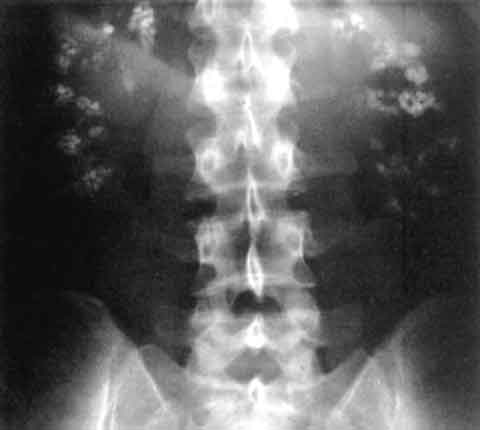
Stones?YES (calcium phosphate)
Bone effectsDemineralization, osteopenia

Why stones?

Basic urine pH causes calcium phosphate precipitationWhen urine is too basic (alkaline), calcium and phosphate can't stay dissolved · they crystallize into stones. That's why only Type 1 (basic urine) gets stones.. Type 1 is the ONLY RTA with kidney stones.

Causes · and WHY:

💊 Analgesic nephropathyKidney damage from chronic use of painkillers (NSAIDs, acetaminophen). Damages the medulla and papillae where the collecting duct lives. · Chronic painkillers damage the medulla (inner kidney) where the collecting duct lives. If you destroy the neighborhood, the acid-pumping cells can't do their job.
💊 Amphotericin BA powerful antifungal drug. Works by binding to ergosterol in fungal cell membranes and poking holes. Problem: it also pokes holes in human kidney tubule cells. · This antifungal works by literally poking holes in cell membranes. It kills fungi this way, but it also pokes holes in collecting duct cells. Leaky cells can't maintain the H⁺ gradient needed to pump acid out.
🧬 Sjogren's syndromeAutoimmune disease where the immune system attacks moisture glands (dry eyes, dry mouth). The same autoimmune attack can target the kidney's intercalated cells. · Autoimmune attack doesn't just hit salivary glands. It can target the alpha-intercalated cells directly. Your own immune system destroys the acid pumps.

Treatment · and WHY:

💊 Alkali therapyGiving sodium bicarbonate (NaHCO₃) or potassium citrate by mouth. You're directly replacing the base the body can't keep, and the citrate binds calcium to prevent stones. · The collecting duct can't pump acid out, so acid builds up. Solution: give base (bicarb) by mouth to neutralize the acid directly. Potassium citrate is preferred because citrate also binds calcium in urine, preventing those kidney stones.
4
Type 2 RTA · The Proximal Leak

PCT cellsProximal Convoluted Tubule cells. The workhorses of the nephron · they reabsorb ~85% of filtered bicarbonate, plus glucose, amino acids, and phosphate. can't reabsorb HCO₃⁻. Base leaks into the urine early, but the collecting duct still works fine.

💡 Urine pH < 5.5 · because the collecting duct CAN still acidify. The defect is upstream.
FeatureType 2
Serum K+Low-normal
Urine pH< 5.5
Acidosis severityModerate
Stones?No
Bone effectsRickets/osteomalacia (Vit D-resistant)

Key associations:

Fanconi syndromeThe proximal tubule loses its ability to reabsorb EVERYTHING · glucose, amino acids, phosphate, uric acid, AND bicarbonate all spill into urine. Like a broken shopping bag. (proximal tubule dysfunction loses everything · glucose, amino acids, phosphate, uric acid, HCO₃⁻). Also: acetazolamideA carbonic anhydrase inhibitor (used for glaucoma, altitude sickness). Blocks the enzyme that helps the proximal tubule reabsorb HCO₃⁻ · intentionally causes Type 2 RTA as a side effect. (carbonic anhydrase inhibitor).

Treatment · and WHY it's harder:

💊 Alkali therapy · Same idea as Type 1 (give bicarb), but here's the catch: the proximal tubule is the broken part, and that's WHERE bicarb gets reabsorbed. So you give bicarb... and it leaks right back out into urine. You need much higher doses to overwhelm the leak and keep enough in the blood. It's like filling a bucket with a hole · you just pour faster.
5
boards Speed Run · 4 Questions

RTAs aren't super high-yield on boards · maybe one diagnosis question. But if you know these four things, you'll get it right:

1. Hyperkalemia? = Type 4. Done. Move on.
2. Urine pH > 5.5 = Type 1 (distal, can't acidify).
Urine pH < 5.5 = Type 2 (proximal, can acidify).
3. Kidney stones? = Type 1 only.
4. Fanconi syndrome? = Type 2.
FeatureType 1Type 2Type 4
Where?DistalProximalCollecting duct
What breaks?H+ secretionHCO₃⁻ reabsorptionAldosterone
K+LowLowHIGH
Urine pH> 5.5 < 5.5 < 5.5
Urine AGUrine Anion Gap = (Na⁺ + K⁺ - Cl⁻) in urine. Positive = kidney can't dump acid. Negative = kidney IS dumping acid fine, problem is elsewhere.PositiveCollecting duct is broken, can't make NH4⁺. Less NH4⁺ = less Cl⁻ carried out = positive gap.NegativeCollecting duct works! Lots of NH4⁺ being made and excreted, bringing Cl⁻ with it = negative gap. Problem is upstream (proximal leak).PositiveEven though the collecting duct structure is fine, high K⁺ blocks NH3 synthesis. Less NH4⁺ = less Cl⁻ = positive gap.
Stones?YesNoNo
SeveritySevereModerateMild
TreatmentAlkaliAlkali (high dose)Fludrocortisone + furosemide
🎭
The RTA Villains · Flip to Expose Each Type

Each RTA type breaks a different part of the nephron. Know their signature moves.

🔐

Type 1 RTA

The Acid Trap
Distal · Collecting Duct
Tap to reveal stats

Type 1 · Distal RTA

Problem: Alpha-intercalated cells can't secrete H+
Urine pH: Always > 5.5 (can't acidify)
Serum K+: Low (potassium wasting)
Stones: Calcium phosphate (alkaline urine)
UAG: Positive
Causes: Sjogren, amphotericin B, analgesic nephropathy
Rx: Alkali therapy (K-citrate)
🐷

Type 2 RTA

The Proximal Leak
Proximal Tubule
Tap to reveal stats

Type 2 · Proximal RTA

Problem: PCT can't reabsorb HCO3-
Urine pH: < 5.5 (CD still acidifies)
Serum K+: Low (bicarbonaturia drags K+)
Stones: No
UAG: Negative
Causes: Fanconi, acetazolamide, tenofovir, myeloma
Rx: Alkali (high dose · leaky bucket)
🍌

Type 4 RTA

The Banana Backup
Collecting Duct · Aldosterone
Tap to reveal stats

Type 4 · Hyporeninemic

Problem: No aldosterone signal
Urine pH: < 5.5
Serum K+: HIGH (the only one!)
Stones: No
UAG: Positive
Causes: Diabetes (#1), ACEi/ARBs, NSAIDs, adrenal insufficiency
Rx: Fludrocortisone + furosemide
🧬

Healthy Nephron

The Reference
All systems go
Tap for what normal looks like

Normal Function

Proximal: Reabsorbs 85% of HCO3-
Collecting duct: Secretes H+ and K+ freely
Urine pH: 4.5 to 6.0 (appropriately acidic)
Serum K+: 3.5 to 5.0
Serum HCO3-: 22 to 26
Anion gap: 8 to 12 (normal)
UAG: Negative (dumping NH4+ normally)

Tap any card to flip it and see the full board stats.

🏠
RTA Type Differentiation Tree · Work Through It

The board gives you labs. You follow the branches. Start at the top every time.

Step 1: Is the serum anion gap elevated?

Anion gap = Na+ minus (Cl- + HCO3-). Normal is 8 to 12. All RTAs have a normal anion gap with high Cl-.

This is NOT an RTA.

High anion gap metabolic acidosis = think MUDPILES: Methanol, Uremia, DKA, Propylene glycol, Isoniazid/Iron, Lactic acidosis, Ethylene glycol, Salicylates. RTAs are always non-anion gap (hyperchloremic).

Step 2: What is the serum potassium?

This is the fastest single question in all of RTA decision-making.

Diagnosis: Type 4 RTA

Type 4 is the ONLY RTA with hyperkalemia. Mechanism: aldosterone deficiency or resistance. No aldosterone = collecting duct can't secrete K+ or H+. Urine pH is < 5.5 (the collecting duct still makes acidic urine, just can't handle K+). Most common cause: diabetes with hyporeninemic hypoaldosteronism. Other causes: ACEi/ARBs, NSAIDs, adrenal insufficiency. Treatment: fludrocortisone, furosemide, low-K+ diet.

Step 3: What is the urine pH?

You have hypokalemia + NAGMA. Now check whether the collecting duct can acidify urine.

Diagnosis: Type 1 RTA (Distal)

Type 1: urine pH persistently > 5.5 even with systemic acidosis. The alpha-intercalated cells in the collecting duct are broken. They can't pump H+ out no matter how acidic the blood gets. Consequences: alkaline urine precipitates calcium phosphate = kidney stones + nephrocalcinosis. Bone is buffered = demineralization. Associations: Sjogren syndrome, amphotericin B, analgesic nephropathy. UAG is positive (no NH4+ excretion). Treatment: potassium citrate (replaces base AND prevents stones).

Diagnosis: Type 2 RTA (Proximal)

Type 2: urine pH < 5.5 because the collecting duct still works. The defect is upstream: proximal tubule can't reabsorb bicarbonate. HCO3- pours into urine early, but the collecting duct acidifies the final urine normally. Key: UAG is NEGATIVE (collecting duct is healthy, dumping NH4+ fine). Associated with Fanconi syndrome (all proximal transport fails: glucose, amino acids, phosphate, K+, HCO3-). Causes: tenofovir, acetazolamide, multiple myeloma, Wilson disease. Treatment: high-dose alkali (the bucket has a hole, you pour faster).
💡
Memory Hooks · Tap Each to Lock It In

High-yield board phrases. Tap any underlined hook for the mnemonic behind it.

🎯 If K+ is high, it's always Type 4🍌 The BANANA BACKUP. Bananas are full of K+. Type 4 = too much K+. Aldosterone is gone, K+ has nowhere to go. Banana backup = K+ piling up.. No other RTA raises potassium. Hyperkalemia + NAGMA = Type 4. Done.
🔎 Type 1 urine is permanently basicType 1 cannot acidify urine EVER. Even when blood is screaming acid. The pH stays above 5.5 no matter what. Think: the drain is clogged. H+ can't escape. Basic urine = Type 1 = stones.. The board tests this: acidosis with urine pH > 5.5 = collecting duct can't pump H+.
🧩 Type 2 has a leaky bucketThe proximal tubule is a bucket that holds bicarbonate. In Type 2, there's a hole. You pour bicarb in (therapy) and it leaks right back out. That's why Type 2 needs MUCH higher doses of alkali therapy than Type 1.. Bicarb leaks out proximally. Collecting duct is fine. That's why UAG is negative: the distal nephron is working perfectly.
The UAG splits 1 from 2Urine Anion Gap = Na+ + K+ - Cl- (in urine). POSITIVE = Types 1 and 4 (collecting duct broken, no NH4+ out, Cl- low). NEGATIVE = Type 2 (collecting duct fine, lots of NH4+ exits, Cl- high). UAG tells you: is the collecting duct working?. Both types 1 and 2 have hypokalemia. You can't split them by K+ alone. Urine pH and UAG together give the diagnosis.
💊 Stones only happen in Type 1Basic urine (pH > 5.5) + hypercalciuria (acidosis pulls calcium out of bone) = calcium phosphate precipitation. Only Type 1 has persistently alkaline urine. Types 2 and 4 have acidic urine, so no stones.. Calcium phosphate precipitates in alkaline urine. Type 2 and Type 4 both have acidic urine, so no stones. Only Type 1's persistent alkaline urine creates the conditions for nephrocalcinosis.
📷
Clinical Context · RTA-Associated Findings

Visual anchors for the conditions that cause or mimic RTAs. Tap any image for detail.

Loading images...

Which RTA?

Non-anion gap metabolic acidosis + normal albumin. Follow the branches.

Non-anion gap metabolic acidosis (normal anion gap, low bicarb) + normal albumin?
6
Practice Vignette · Walk Through It
📋 Patient with hyperkalemia and a long history of poorly controlled diabetes. Current medications aren't controlling her sugars well.

Think through it:

Hyperkalemia + diabetes? That's the pattern.

Diabetes causes hyporeninemic hypoaldosteronismDiabetes damages the kidney cells that make renin. No renin = no angiotensin II = no signal to make aldosterone. Result: aldosterone is low, K⁺ and H⁺ build up. = no aldosterone = Type 4 RTA.

A. Adrenal insufficiency
CAN cause Type 4, but this patient has no signs of it (no nausea/vomiting, confusion, hypoglycemia, hyperpigmentation). Most common cause of adrenal insufficiency = long-term steroids.
B. Metformin side effect
Metformin's big adverse effect is lactic acidosis in renal insufficiency. Different mechanism entirely. Her poorly controlled sugars suggest she needs an A1c check.
C. Type 1 RTA
Type 1 = hypokalemia (not hyperkalemia). Also: urine pH > 5.5, calcium phosphate stones. Causes: analgesic nephropathy, amphotericin B.
D. Type 4 RTA ✓
Hyperkalemia + diabetes = Type 4. Urine pH < 5.5. Aldosterone deficiency. The hyperkalemia is what makes this easy · it's the ONLY RTA with high K+.
7
Board Traps · Don't Fall For These
Trap 1: Seeing "acidic urine" and picking Type 1. WRONG. Type 1 has BASIC urine (> 5.5). Types 2 and 4 have acidic urine.
Trap 2: Confusing "distal" and "proximal" labels. Type 1 = distal (end of nephron). Type 2 = proximal (beginning). The numbers don't match the location order.
Trap 3: Assuming adrenal insufficiency = Type 4 without checking for symptoms. It CAN cause Type 4, but diabetes is by far the #1 cause.
Trap 4: Forgetting that ALL RTAs share hyperchloremic non-anion gap metabolic acidosis. If the anion gap is elevated, it's NOT an RTA.
Board Drill

RTA Clinical Cases

Five clinical stems. One RTA type each. Use the hyperkalemia shortcut and pH to nail them all.

Board-Style Walkthrough

Board-Style Walkthrough

Original board-style vignettes. Shuffled, never-repeat, full explanations for every choice.