Day four of a bad asthma admission, the mind goes foggy and the hands start to shake, and the reflex is to blame low oxygen or call a stroke. Most of the time the suspect is already taped to the IV pole. Steroids blur the thinking. The beta-2 agonist shakes the hands. The job is to convict the medication and clear the innocent diagnoses, not to order a bigger scan.
From the Attending
When a hospitalized patient gets confused, the room reaches for the CT scanner. Slow down. If the scan is clean, the exam is nonfocal, and the brain waves are normal, the structural suspects are already cleared. Look at the medication list before you look for a clot. Find the source.
Opening challenge
A 38-year-old man is on day 4 of treatment for status asthmaticus with continuous albuterol, intravenous prednisone, and ipratropium. He now has impaired attention, poor concentration, and slow recall, plus a fine resting and postural tremor of both hands. He has no focal weakness, his speech is clear, his asthma is improving, and his social history is negative for alcohol use. Brain MRI and EEG are both normal. What is driving the picture?
Right. The normal MRI and nonfocal exam clear the stroke, the normal EEG clears a seizure, the negative social history clears withdrawal, and improving asthma with no rising carbon dioxide clears narcosis. Prednisone scrambles attention and recall; albuterol drives the fine tremor. The drugs did it.
The line-up
Convict the drug, clear the rest
Five suspects stand in the line-up for this confused, trembling asthmatic. Tap one to see which single finding convicts it or clears it. Then flip to the drug panel to read each medication CNS fingerprint.
Open the file
Tap a suspect on the left. The board shows the one finding that breaks the alibi, or the evidence that makes the arrest.
0 of 4 alibis broken
RouteTwo drugs, two halves of the syndrome, one clean structural workup
PatternInattention and poor recall from the steroid, fine tremor from the beta-2 agonist
PearlNormal MRI plus normal EEG plus no focal sign means look at the chart, not the clot
CNS fingerprints
Each drug leaves a different mark
The asthma trio and the methylxanthine each touch the brain in a distinct way. Match the finding to the offender so you stop blaming the whole list at once.
Prednisone
Steroid: the cognition wrecker
Corticosteroids produce neuropsychiatric effects that run on a spectrum: impaired attention, concentration, and recall, mood lability, insomnia, and at higher doses frank steroid psychosis. This is the drug that explains the foggy thinking.
Prednisone · structure of the cognition wrecker
Albuterol
Beta-2 agonist: the shake
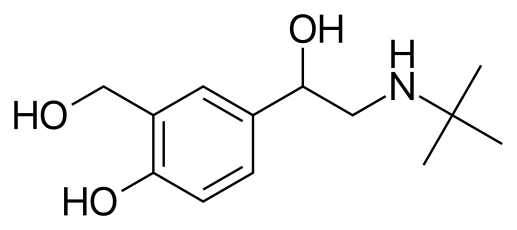
Albuterol drives a fine action and postural tremor through skeletal muscle beta-2 receptors, plus tachycardia, anxiety, and hypokalemia as potassium shifts into cells. The patient looks wired, never obtunded. This is the drug that explains the tremor.
Salbutamol (albuterol) · beta-2 agonist structureMetered-dose inhaler · albuterol deliveryNebulizer · continuous beta-2 agonist in a severe attack
Ipratropium
Inhaled antimuscarinic: usually innocent
Ipratropium is inhaled and barely absorbed, so it rarely scrambles the mind on its own. The lesson is the class: systemic anticholinergicsDiphenhydramine, oxybutynin, scopolamine, tricyclics, and atropine. Strong central antimuscarinic load drives confusion, especially in older adults. are a top medication cause of delirium in older adults.
Theophylline
Methylxanthine: the live wire
Theophylline has a narrow therapeutic index. Toxicity is vomiting, tremor, tachyarrhythmias, and seizures. Levels jump when a CYP1A2 inhibitorCiprofloxacin, cimetidine, and macrolides raise theophylline levels. Stopping smoking also raises levels, because smoking induces metabolism. is added or when a patient stops smoking.
Theophylline · narrow-index methylxanthine
From the Attending
Do not write off the whole medication list as guilty. Steroids do cognition.The beta-2 agonist does tremor and low potassium.The inhaled antimuscarinic is usually the bystander.Theophylline seizes when its level climbs. Assign the finding to the right drug and the management writes itself.
The asthmatic on the steroid and the beta-2 agonist has a fine tremor and a potassium of 3.0 mEq/L. Which drug owns the tremor and the low potassium?
Beta-2 receptors in skeletal muscle make the hands shake, and beta-2 activation of the sodium-potassium pump drives potassium into cells. One receptor, both findings.
Next: the thinking is foggy. Which drug owns the cognition?
The same patient has impaired attention and poor recall with a clean structural workup. Which drug owns the cognitive change?
Corticosteroids blunt attention, concentration, and recall and can push into mood change or psychosis. The beta-2 agonist makes patients jittery, not inattentive, and the inhaled antimuscarinic is barely absorbed.
Next: a different patient on theophylline starts vomiting and seizes. What changed?
A patient stable on theophylline is started on ciprofloxacin, then develops vomiting, tremor, and a seizure. What is the mechanism?
Ciprofloxacin inhibits CYP1A2, which clears theophylline. The level climbs, and a narrow-index methylxanthine shows vomiting, tremor, tachyarrhythmia, and seizures.
Pattern locked: assign each finding to the right drug, then fix that drug.
Toxic versus structural
Read the workup, name the lane
The five suspects each have one finding that hands them an alibi. Flip the tabs to see the single discriminator that clears each diagnosis and routes you to the medication lane.
Medication effect: the one nothing clears
Every other suspect has an alibi here. The steroid explains the cognition, the beta-2 agonist explains the tremor, and the structural and electrical workups are clean. When the labs and scans exonerate everyone else, the drug list is the answer.
Hypercapnia: needs a rising carbon dioxide
Carbon dioxide narcosis depresses the sensorium toward somnolence and brings asterixis, the coarse flap, with a climbing carbon dioxide level. An alert patient with a fine tremor whose asthma is improving has a falling carbon dioxide, so this suspect walks.
Stroke: needs a focal sign or a lesion
A stroke earns its diagnosis with a focal deficit and an abnormal scan. This patient has clear speech, symmetric strength, and a normal brain MRI. No focal sign and no lesion means the structural suspect is cleared.
Normal brain MRI · clears the structural suspect
Withdrawal: needs the exposure
Alcohol withdrawal needs a drinking history and brings autonomic surge, then risks seizures and delirium tremens on its own timeline. A social history negative for alcohol use removes the exposure, and the case is built on no flushing crisis. No substrate, no withdrawal.
Seizure: needs the electrical signature
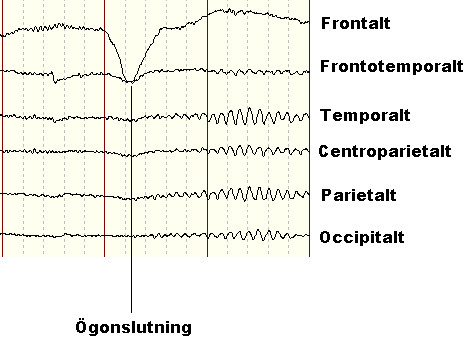
A seizure or nonconvulsive status would leave epileptiform activity, and a postictal state would show on the tracing. A normal EEG with no epileptiform discharges clears the seizure suspect and pushes you back toward a toxic or medication cause.
Normal EEG · clears the seizure suspect
Clean scan, clean waves, no focal sign. That trio names a toxic, metabolic, or medication cause, not a structural one.
Flap is not the same as shake.Asterixis with a rising carbon dioxide is narcosis. A fine tremor in an alert patient is the beta-2 agonist.
Read the medication list first. In a confused inpatient, the offending drug is often already running through the line.
Keep studying
Asthma versus COPD
Where these medications come from, and why the reversible airway behaves differently from the one that gave up.
Use the exam tools before you answer: right-click or long-press to cross out a choice, double-click or double-tap to highlight one. The locking clues glow only after you commit.
Bone Wizardry is an independent educational resource for visual learning in the medical sciences. It is not affiliated with, endorsed by, or sponsored by any licensing or examination board, contains no real or recalled examination questions, and does not guarantee any educational or examination outcome.