Every autonomic question becomes simple when you ask three things in order: which wire fired, which receptor got hit, and what the organ does when that receptor moves.
Medically reviewed by Fatima Ali, DO and Kaitlyn Cocuzzo, MD
The Wire Room
Start with the wiring before memorizing receptors. Somatic is one voluntary wire to skeletal muscle. Autonomic is a two-neuron relay through a ganglion, except the adrenal medulla acts like a ganglion that dumps hormone into blood.
Choose the route
A nervous signal leaves the spinal cord and needs to make a target move. Pick the route that matches the target. The readout will explain why the route fits.
Pick a route.
The answer is not "sympathetic or parasympathetic" yet. First ask whether the target is skeletal muscle, a gland, smooth muscle, cardiac muscle, adrenal medulla, or sweat gland.
Whole-system map Sympathetic and parasympathetic routes become testable once the receptor is named.Adrenal exception Sympathetic preganglionic ACh triggers catecholamine release into blood.Sweat exception Sympathetic goal, cholinergic tool: ACh at M3 makes sweat.
Receptor Locks
A neurotransmitter is only half the answer. The receptor decides the organ move. Pick a lock and the board-side effect appears.
Choose a receptor.
Receptor subtype turns memorization into a map. M2 slows the heart. M3 runs glands and smooth muscle. Alpha 1 squeezes. Beta 1 drives heart and renin. Beta 2 relaxes smooth muscle.
Sticky lock: all beta receptors are Gs. M2 is Gi. Alpha 1 and M3 are Gq. That is enough to predict heart squeeze, bronchodilation, vascular squeeze, secretion, bladder contraction, and bradycardia.
Organ Console
Choose an organ, then flip sympathetic or parasympathetic mode. The console shows the receptor, organ move, and drug trap.
Board move: organ effects are not random. Heart is beta 1 versus M2. Lung is beta 2 versus M3. Bladder filling is beta 3 plus alpha 1, and voiding is M3 detrusor contraction plus sphincter relaxation. Skin mostly has sympathetic control.
Exceptions That Save Points
These are the places where the phrase "sympathetic means norepinephrine" will betray you. Commit them as route exceptions, not random facts.
Exception 1
Adrenal medulla
Preganglionic sympathetic fiber releases ACh onto nicotinic receptors on chromaffin cells. The medulla then releases mostly epinephrine and some norepinephrine into blood.
Why it matters: epinephrine can hit beta 2 hard enough to bronchodilate and vasodilate skeletal muscle vessels during a fight-or-flight surge.
Exception 2
Sweat glands
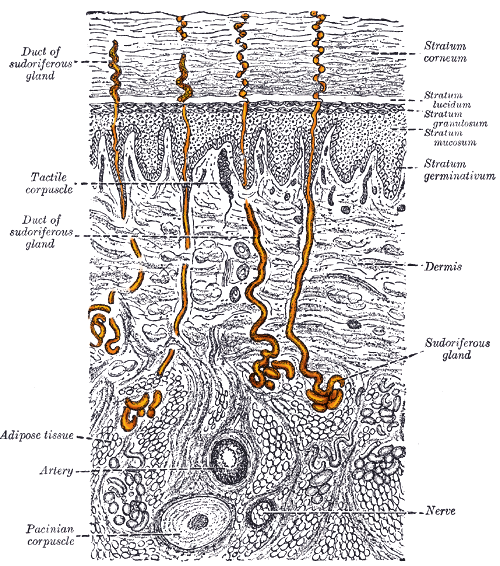
Sweat glands are sympathetic targets, but their postganglionic neurotransmitter is ACh, not norepinephrine. The receptor is M3.
Why it matters: beta blockers can leave sweating intact, and antimuscarinic poisoning makes the patient hot and dry because sweating is blocked.
Exception 3
Dopamine dose dial
Low dopamine dose favors D1 renal and mesenteric vasodilation. Medium dose adds beta 1 cardiac stimulation. High dose brings alpha 1 vasoconstriction.
One case at a time. Right-click or long-press to cross out a choice. Double-click or double-tap to mark the one you are torn on. The bank shuffles and uses currentOrder never-repeat tracking until the set is spent.