Every connective tissue disease has a signature antibody. The board gives you a clinical picture and expects you to name the antibody. Match them cold.
A 62-year-old man on hydralazine for refractory hypertension presents with a 2-week history of fever, myalgias, and symmetric polyarthralgias. He has a maculopapular rash on his trunk. ANA is positive. Anti-dsDNA is negative. Which autoantibody is most likely positive?
Anti-Smith
Anti-Histone
Anti-dsDNA
Anti-Jo-1
Anti-Histone = drug-induced lupus. Hydralazine is the highest-risk drug. The dead giveaway: anti-dsDNA is NEGATIVE. In true SLE, anti-dsDNA would be positive. Drug-induced lupus resolves when the drug is stopped.
Explore
Clinical Photos
Tap any image to expand. These are the clinical findings the board pairs with autoantibodies.
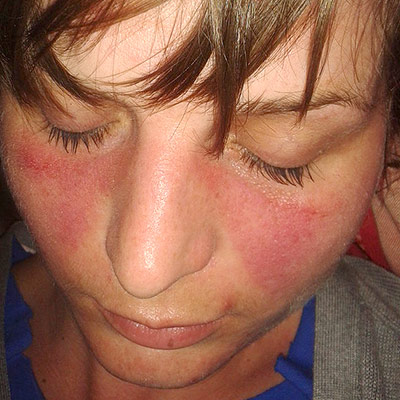
Butterfly (Malar) Rash · SLE
Raynaud Phenomenon
Sclerodactyly · Scleroderma
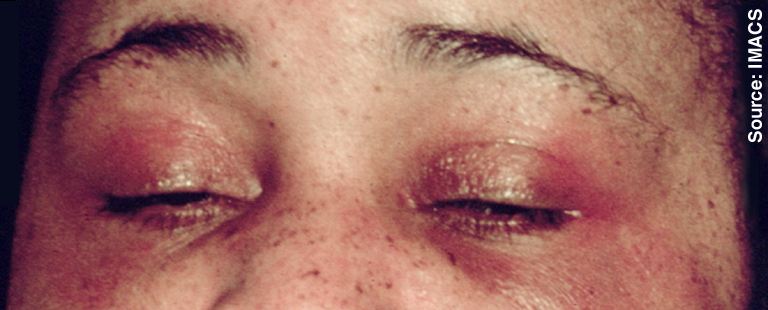
Heliotrope Rash · Dermatomyositis
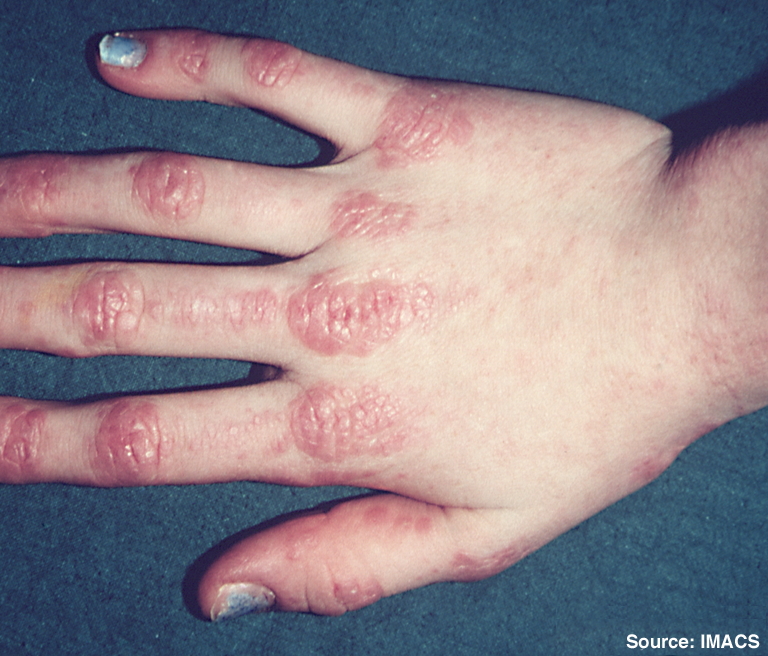
Gottron Papules · Dermatomyositis
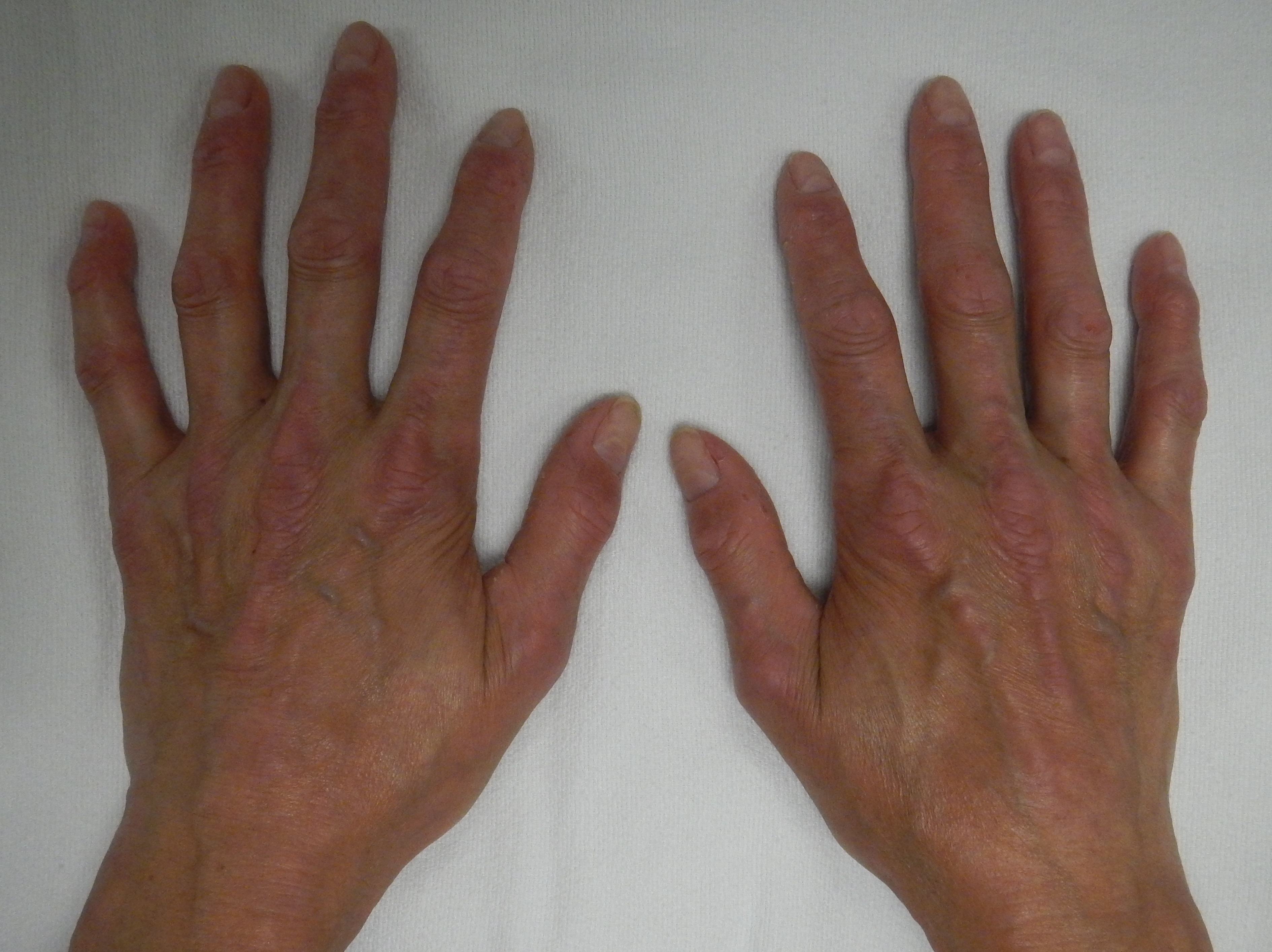
RA Hands · Ulnar Deviation
The Antibody Map
Click a disease on the left, then click its matching antibody on the right. 12 pairs total.
Matched: 0 / 12
All 12 matched.
Most specific for SLE = anti-Smith. Correlates with nephritis = anti-dsDNA. Drug-induced lupus = anti-histone (anti-dsDNA is NEGATIVE). Crosses the placenta = anti-SSA/Ro (neonatal lupus, congenital heart block).
Drug-Induced Lupus
The board loves this trap. Know the drugs, know the antibody, know what's ABSENT.
Gold standard: symptoms resolve when the drug is stopped.
Board distinguisher from true SLE: anti-dsDNA is ABSENT, renal involvement is RARE, it resolves with drug discontinuation.
SLE vs Drug-Induced
How to Tell Them Apart
Tap to compare
True SLE
Anti-Smith (most specific) + Anti-dsDNA (nephritis marker) · Young women (F:M = 9:1) · Renal involvement common · Chronic relapsing
Drug-Induced Lupus
Anti-histone positive · Equal M:F, older patients (50-70) · Renal involvement RARE · Resolves when drug stopped
The two questions that distinguish them in clinical practice: (1) Is anti-dsDNA present? If NO = drug-induced. (2) Is there renal disease? If NO = drug-induced.
Drug-induced lupus = fever + rash + joint pain. That's LUPUS territory. Polymyositis does NOT cause diffuse rash with polyarthralgias. The drug history (hydralazine/procainamide/INH) seals the diagnosis.
Elimination Game
Read the vignette. Reveal clues one at a time. Eliminate antibodies that don't fit.
A 65-year-old male on lisinopril, hydralazine, and atorvastatin presents with a 5-day fever, diffuse maculopapular rash over his chest and arms, and symmetric pain and swelling of his wrists and ankles. Labs show a positive ANA but negative anti-dsDNA. What autoantibody is most likely positive?
Anti-Jo-1
Anti-Histone
Anti-dsDNA
Anti-SSA
Anti-CCP
Clue 1: Anti-dsDNA is already reported as negative in the labs. It cannot be the answer.
Clue 2: Anti-Jo-1 = proximal muscle weakness + elevated CK. This patient has fever, rash, and joint pain with NO muscle complaints. Anti-Jo-1 does not fit.
Clue 3: Anti-SSA = Sjogren (dry eyes/mouth) or neonatal lupus. Anti-CCP = rheumatoid arthritis (symmetric small joint disease, not acute febrile rash). Neither matches.
Clue 4: The patient is on hydralazine. This is the #1 high-risk drug for drug-induced lupus. ANA positive + anti-dsDNA negative = textbook drug-induced lupus.
Anti-Histone. Hydralazine triggers drug-induced lupus. Anti-histone is present in >95% of cases. The negative anti-dsDNA is the key distinguisher from true SLE. Symptoms resolve when the drug is stopped.
A 32-year-old woman with a recent positive pregnancy test presents with a history of photosensitive rash, oral ulcers, and recurrent pleurisy. Labs show ANA positive at 1:640. Her physician is concerned about renal involvement and orders a urine analysis showing proteinuria with RBC casts. Which autoantibody is most likely to correlate with her renal disease activity?
Anti-Smith
Anti-dsDNA
Anti-Histone
Anti-SSB
Anti-Centromere
Clue 1: Photosensitive rash + oral ulcers + serositis (pleurisy) + high-titer ANA = this is SLE. Multiple organ systems involved.
Clue 2: Anti-histone = drug-induced lupus. No drug history mentioned. Anti-centromere = CREST/limited scleroderma. Wrong disease entirely.
Clue 3: Anti-SSB = Sjogren (dry eyes/mouth). Anti-Smith is specific for SLE but does NOT correlate with nephritis activity.
Clue 4: The question asks which antibody correlates with renal disease activity. Anti-dsDNA levels rise and fall with lupus nephritis flares. It is the monitoring antibody.
Anti-dsDNA. It correlates with lupus nephritis activity. Levels track with flares: rising anti-dsDNA + falling complement (C3/C4) = impending renal flare. Anti-Smith is MOST SPECIFIC for SLE but does not track disease activity.
A 28-year-old woman with known Sjogren syndrome is 20 weeks pregnant. Her obstetrician orders fetal echocardiography. The ultrasound reveals the fetus has a heart rate of 55 bpm with complete heart block. Which maternal autoantibody most likely crossed the placenta and caused this?
Anti-SSA (Ro)
Anti-SSB (La)
Anti-Smith
Anti-Scl-70
Clue 1: This is neonatal lupus: a mother with autoimmune disease + fetal/neonatal heart block. Only one antibody crosses the placenta and attacks the fetal conduction system.
Clue 2: Anti-Smith = SLE (does not cause neonatal heart block). Anti-Scl-70 = diffuse scleroderma (unrelated to neonatal complications).
Clue 3: Anti-SSB (La) is associated with Sjogren but does NOT cross the placenta to cause congenital heart block. Only anti-SSA (Ro) does this.
Anti-SSA (Ro). It is an IgG antibody that crosses the placenta and damages the fetal cardiac conduction system, causing congenital heart block. This occurs in mothers with Sjogren or SLE who are anti-SSA positive. The heart block is often irreversible and may require a pacemaker.
clinical Walkthrough
25 full vignettes with clue highlights. Pick your answer, then walk through every option.
QUESTION 1 OF 25
Bone Wizardry · Medical Education
Medically reviewed by Kaitlyn Cocuzzo, MD and Fatima Ali, DO · Last updated June 30, 2026 at 2:55 PM ET
Bone Wizardry is an independent educational resource for visual learning in the medical sciences. It is not affiliated with, endorsed by, or sponsored by any licensing or examination board, contains no real or recalled examination questions, and does not guarantee any educational or examination outcome.
Mechanism contrast.
Compare the objective finding with the nearest distractor, then commit to the answer that explains the HPI, exam, and objective result together.
Elimination checkpoint.
Reject any option that explains only the symptom while missing the discriminating objective finding.