Endocrine · Pancreatic Tumors

The Pancreatic Villains

Islet cell tumors that hijack one hormone and wreck everything downstream. Learn the labs, the C-peptide trap, and the one drug that buys time against all of them.

A 52-year-old woman presents with a crusting, weeping rash that started around her mouth, spread to her groin, healed in one spot, then flared in another. She also reports a 20-pound unintentional weight loss. Fasting glucose: 290 mg/dL. What is driving this?
Type 2 diabetes with secondary skin infection
Glucagonoma: alpha-cell tumor secreting excess glucagon
Insulinoma causing reactive hypoglycemia
Somatostatinoma suppressing all pancreatic hormones
Good thinking with type 2 diabetes, because the glucose is sky high. But a migrating rash that heals in one place and erupts in another? That is not a skin infection. That is necrolytic migratory erythema, and it is pathognomonic for glucagonoma. Glucagon is catabolic. It strips amino acids from your skin to burn as fuel. No amino acids, no skin integrity. The rash migrates because it literally follows the depletion. Migrating blistering rash + diabetes + weight loss = glucagonoma. Period.

Diagnosis Challenge

Read the labs and tap the tumor. Five patients, five tumors. No peeking at the cards first.

Glucagonoma alpha cell
Insulinoma beta cell
Somatostatinoma delta cell
VIPoma non-islet
Gastrinoma G cell

The Lineup

Front: key facts. Back: mechanism + boards trap. Tap to flip.

From the Attending

Pancreatic neuroendocrine tumors (PNETs) split on what they secrete. Insulinoma · beta cell. Whipple triad: low glucose + neuroglycopenic symptoms + relief with glucose. C-peptide HIGH (endogenous). Gastrinoma (ZES) · non-beta. Refractory ulcers (especially distal duodenum/jejunum), high serum gastrin + high BAO; secretin test paradoxically raises gastrin. Glucagonoma · alpha cell. 4 Ds: dermatitis (necrolytic migratory erythema), diabetes, DVT, depression. Somatostatinoma · delta. Diabetes + cholelithiasis + steatorrhea (somatostatin shuts off insulin/CCK/secretin). VIPoma · WDHA: watery diarrhea + hypokalemia + achlorhydria. Match the hormone to the syndrome · that's the whole differential.
Alpha Cell
Glucagonoma
Pancreatic alpha-cell tumor · MEN 1
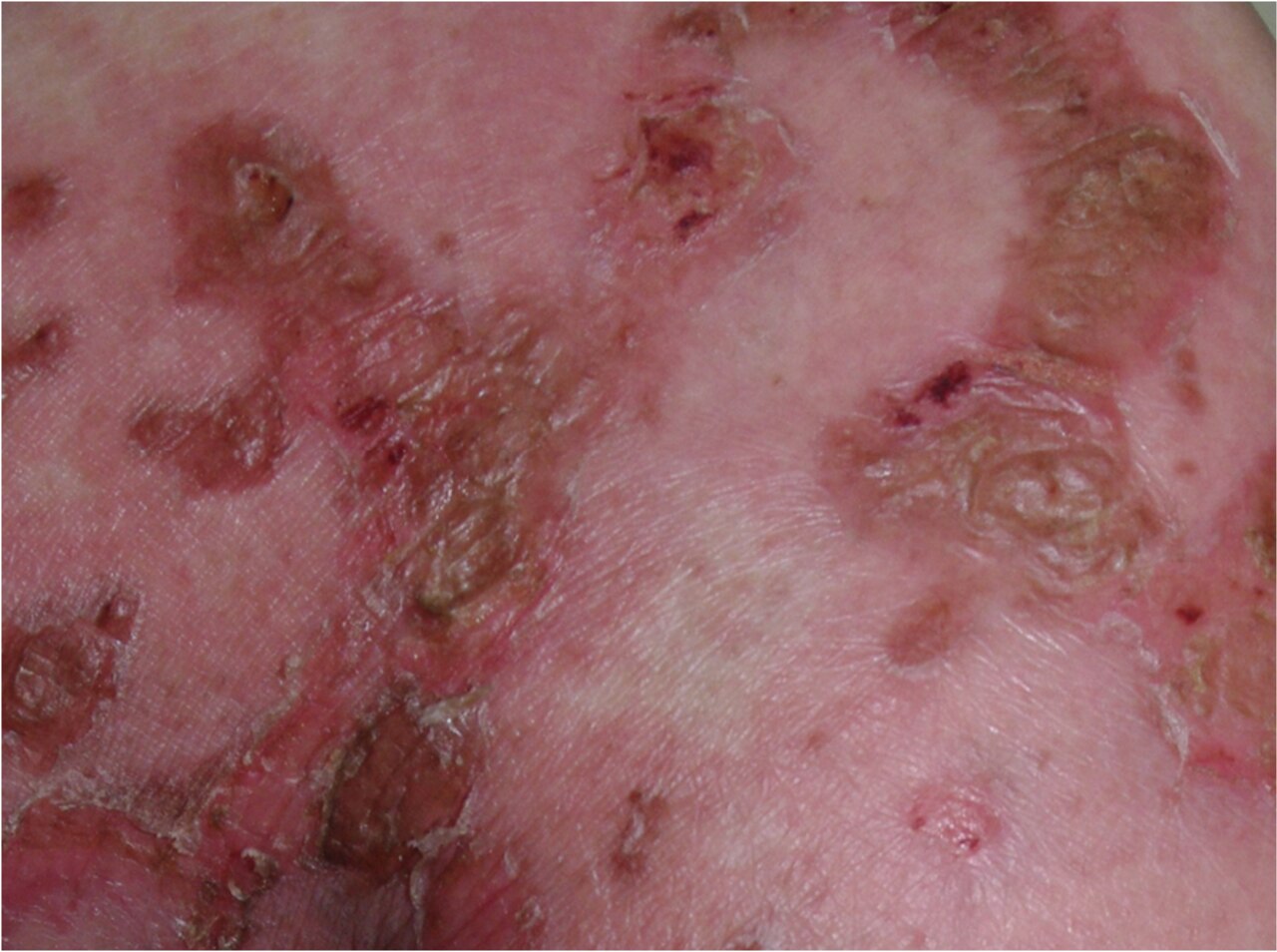
Necrolytic migratory erythema rash in glucagonoma
📷 NME Rash · tap to expand
Key labHigh glucose + high lipids
Classic skinNecrolytic migratory erythema
TreatmentOctreotide + resection
Part ofMEN 1 or sporadic
🔴 HALLMARK: Migrating blistering rash (NME)
tap to flip →
Why the Rash Happens
Trace It
Glucagon is catabolicTears things down for fuel. Glucagon tells your body: burn amino acids, raise blood sugar. Great in starvation, catastrophic when a tumor does it 24/7.. Excess glucagon burns amino acids for fuel. Skin needs amino acids to rebuild. No amino acids = skin breaks down, blisters, and crusts. When the depletion moves to a new area, the old spot heals and a new one erupts. That is the "migratory" part.
Board Trap
The hyperglycemia will look like type 2 diabetes at first glance. The rash is the tell. If you see a rash that migrates + diabetes + weight loss: this is glucagonoma until proven otherwise. Type 2 diabetes does not give you a migratory erosive rash.
Beta Cell
Insulinoma
Pancreatic beta-cell tumor · MEN 1
Insulinoma gross pathology specimen
📷 Insulinoma · gross specimen · tap
LabsHigh insulin + High C-peptide
TriadWhipple triad
TreatmentResection + octreotide
🏹 HALLMARK: Fasting hypoglycemia, both insulin AND C-peptide elevated
tap to flip →
The C-Peptide Rule
Why C-Peptide Matters
ProinsulinThe precursor to insulin. Your pancreas makes proinsulin, then cleaves it into insulin + C-peptide in equal amounts. One insulin out = one C-peptide out. gets cleaved into insulin and C-peptide in a 1:1 ratio. So endogenous (your own) insulin production always comes with C-peptide attached. Exogenous injected insulin has NO C-peptide. The tumor makes more of your own insulin, so C-peptide is sky high along with insulin.
Whipple Triad
1. Symptoms of hypoglycemia during fasting. 2. Documented low blood glucose. 3. Relief with glucose administration. All three together = Whipple triad = insulinoma confirmed clinically.
Nesidioblastosis (PEDS)
Instead of one tumor, all islet cells proliferate. Seen in infants. Same result: hypoglycemia. Labs look like insulinoma but you will not find a discrete mass.
Delta Cell
Somatostatinoma
Pancreatic delta-cell tumor · MEN 1
Phase contrast microscopy of pancreatic islets of Langerhans
📷 Islets of Langerhans · tap to expand
LabsHigh somatostatin
GI effectSteatorrhea + constipation
Other effectsDiabetes + gallstones
TreatmentOctreotide + resection
🔴 HALLMARK: Somatostatin inhibits EVERYTHING
tap to flip →
The Great Inhibitor
What Somatostatin Turns Off
Somatostatin is the body's master brake pedal. It inhibits: insulin, glucagon, growth hormone, gastric acid secretion, and pancreatic enzyme secretion. When the tumor overproduces it, all those things crash. Result: blood sugar dysregulation (diabetes), no stomach acid (achlorhydria), no pancreatic enzymes (steatorrhea), bile stasis (gallstones), and motility slows to a crawl (constipation).
Memory Hook
Think of somatostatin as the "STOP" hormone. The tumor makes too much STOP, so everything that needs to go: stops. Digestion stops. Acid stops. Sugar regulation stops. That is four different problems from one hormone.
VIP Tumor
VIPoma
Vasoactive intestinal peptide tumor
CT scan of well-differentiated neuroendocrine tumor of the pancreatic tail
📷 Pancreatic NET · CT scan · tap to expand
SyndromeWDHA
Diarrhea>3 liters/day, watery
Key labHypokalemia
AcidAchlorhydria
💧 HALLMARK: WDHA = Watery Diarrhea, Hypokalemia, Achlorhydria
tap to flip →
Why So Much Water
The Mechanism
VIP triggers intestinal cells to dump chloride and water into the gut lumen. More than three liters a day. Your kidneys cannot keep up. The diarrhea washes potassium out through stool, causing hypokalemia. VIP also inhibits stomach acid secretion, causing achlorhydria. None of this is osmotic. The gut is actively secreting.
Key Board Test
To confirm VIPoma vs other secretory diarrhea: the diarrhea PERSISTS after a 48-hour fast. Osmotic diarrhea (e.g., lactose intolerance) stops when you stop eating. Secretory diarrhea (VIPoma) keeps going because the tumor keeps secreting VIP regardless of food intake.
Treatment
Octreotide buys time. Resection is the cure. Potassium replacement urgently.
G Cell
Gastrinoma
Zollinger-Ellison syndrome · MEN 1
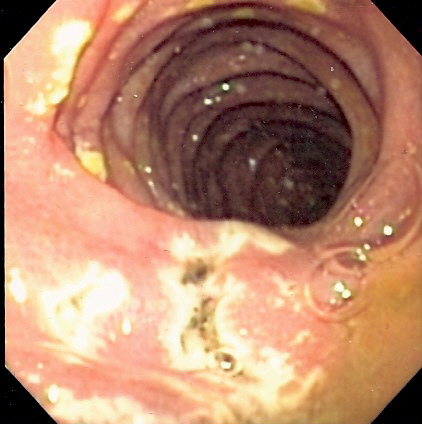
Endoscopy showing multiple duodenal ulcers in Zollinger-Ellison syndrome
📷 ZES endoscopy · multiple ulcers · tap
LabsElevated fasting gastrin
UlcersMultiple, distal (jejunum)
Dx testSecretin stimulation
🔴 HALLMARK: Multiple ulcers + elevated gastrin at all times
tap to flip →
Zollinger-Ellison: The Anatomy
Why Multiple Ulcers
Normally gastrin is released from the stomach, works locally, and turns off. In gastrinoma, a tumor secretes gastrin constantly. Constant gastrin = constant acid production = acid floods the duodenum and even reaches the jejunum. Multiple peptic ulcers form in places they normally would not. A jejunal ulcer by itself should make you think ZE syndrome.
Secretin Stimulation Test (The Paradox)
In normal tissue, secretin suppresses gastrin. In a gastrinoma, secretin paradoxically raises gastrin. This is the confirmatory test. Secretin in, gastrin goes UP = gastrinoma. Secretin in, gastrin stays flat or drops = normal or H. pylori ulcer.
MEN 1 Link
Gastrinoma is the most common functional pancreatic tumor in MEN 1. If you see MEN 1, always screen for ZE syndrome. Rule of 3s: pituitary, parathyroid, pancreas.

Signature Moves

The three patterns boards love. One look and you should know the tumor.

Signature Move · Glucagonoma
The Furnace

Glucagon is the catabolic switch. One signal fires from the alpha cell. Three fuels rise at once.

Ignition Sequence
Glucagon fires. Watch three pathways ignite.
Pattern Locked
The 3-High Signature

One alpha-cell signal, three catabolic outputs. Type 2 diabetes only nudges the first.

Route
α-cell glucagon → liver, adipose, body
Pattern
Glucose ↑ + Lipids ↑ + Ketones ↑
Pearl
Three pinned + a migrating rash = glucagonoma. Period.
Signature Move · Insulinoma
The Crash

A beta-cell tumor pumps insulin even when blood sugar is empty. The fuel gauge falls. The brain dims.

Fasting State · Insulin Pulses
Tumor fires insulin without checking the tank.
Pattern Locked
Whipple Triad

Symptoms appear when glucose drops; relief comes only when glucose returns. The trap is the C-peptide.

Route
β-cell hyperinsulinism → CNS + sympathetic drive
Pattern
Hypoglycemia + Symptoms + Relief with glucose
Pearl
C-peptide high = tumor (endogenous). C-peptide low = factitious insulin.
Signature Move · Somatostatinoma
The Big Silence

The delta-cell tumor floods the body with the master off-switch. Four downstream systems go quiet.

Master Brake · Engaged
Insulin
Beta-cells firing
Diabetes
Gastric Acid
Parietal cells active
Achlorhydria
Pancreatic Enzymes
Lipase, amylase out
Steatorrhea
Gallbladder
Motility intact
Gallstones
Somatostatin floods the system. Each output goes dark.
Pattern Locked
The DASH Quartet

Somatostatin is the master inhibitor. Four organ outputs shut down at once. The tetrad is unique.

Route
δ-cell somatostatin → pancreas, stomach, gallbladder
Pattern
Diabetes + Achlorhydria + Steatorrhea + Gallstones
Pearl
All four together → somatostatinoma. Octreotide does the same thing on purpose.
Signature Move · VIPoma
The Flood

VIP commandeers the gut. Water, potassium, and bicarb pour out of the body. The diarrhea ignores fasting.

Secretory Storm
VIP fires from the tumor. Enterocytes dump fluid.
Pattern Locked
WDHA Storm

Cholera-like watery diarrhea, potassium falling, bicarb gone. The giveaway: a fast does not stop it.

Route
VIP → enterocyte cAMP storm → lumen secretion
Pattern
Watery diarrhea + Hypokalemia + Achlorhydria
Pearl
Persists through 48h fast = secretory, not osmotic. Replace K⁺ first, then octreotide.
Signature Move · Gastrinoma
The Acid Storm

Tumor gastrin storms the parietal cells. Acid floods the stomach, the duodenum, then burns past them.

Acid Drop · Distal Reach
Parietal cells fire under tumor gastrin. Acid drops.
Pattern Locked
Zollinger-Ellison

PPI does not hold. Ulcers march distally. The jejunal lesion is the tell.

Route
Tumor gastrin → parietal H⁺/K⁺ ATPase storm
Pattern
Refractory ulcers + Multiple sites + Diarrhea
Pearl
Jejunal ulcer = ZE until proven otherwise. Fasting gastrin > 1000 or secretin stim test.
MEN 1 · The Three Ps
All five pancreatic villains can run with this crew.
P
Pituitary
Prolactinoma most common
P
Parathyroid
Hyperparathyroid + high calcium
P
Pancreas
Gastrinoma most common
Boards trap: find one of these and screen for the other two. The MEN 1 patient who shows up for headaches has the pituitary adenoma. The same patient with kidney stones has the parathyroid adenoma. Spot any P, hunt the other two.

The C-Peptide Trap

Same labs. Two completely different stories. C-peptide picks the side.

From the Attending

C-peptide HIGH · endogenous insulin source · insulinoma or sulfonylurea-induced (sulfa screen). C-peptide LOW · exogenous insulin (factitious or accidental injection). Always check the screen for surreptitious insulin in a healthcare worker / diabetic family member. Insulinoma workup: supervised 72-hour fast · document hypoglycemia with simultaneously inappropriately HIGH insulin, HIGH C-peptide, HIGH proinsulin. Then localize: small (<2cm), often missed on CT · endoscopic ultrasound is the modality of choice. If C-peptide is low · it's NOT insulinoma. Move on.

Patient found unconscious. Glucose 38 mg/dL. Insulin 3x normal.
Check C-peptide
HIGH ↑
Insulinoma
Pancreas making it. C-peptide rides shotgun with every endogenous insulin molecule. 1:1 ratio. Image the pancreas.
LOW ↓
Injected Insulin
Someone brought insulin in from outside. Exogenous insulin has zero C-peptide. Suspect factitious. Pull the labs again.
Lock it in: insulin alone tells you nothing. C-peptide picks the side of the fork.

Now walk it as a case. Each tap reveals the next step.

A nursing unit calls you about a patient who was found unconscious with a blood glucose of 38 mg/dL. Insulin level comes back 3x the upper limit of normal. What is your next test?
C-peptide level
Repeat insulin level in 1 hour
CT abdomen to find the tumor
Exactly. C-peptide tells you whether that insulin came from the patient's own pancreas or from a syringe. That distinction changes everything: tumor vs. factitious. CT comes later, once you know which you are dealing with.
Reasonable reflex, but more insulin levels will not tell you the source. You already know insulin is high. The question is: where did it come from? C-peptide is the answer.
You are jumping ahead. CT will find a mass if there is one, but first you need to know if this is endogenous (tumor) or exogenous (injection). Half the time the answer is factitious hypoglycemia, and there is no mass to find.
C-peptide is the single most important test in hypoglycemia with high insulin. It is the fork in the road between insulinoma and self-injection.
Classic Board Setup
"A 34-year-old nurse is found unresponsive in the break room. Glucose 28 mg/dL. Insulin level: markedly elevated. C-peptide: undetectable." The boards love this vignette. The career detail (nurse, pharmacist, someone with insulin access) is the tell. Undetectable C-peptide = injected insulin = NOT insulinoma.

Memory Hooks

Tap to unblur. See if you can recall before you look.

🍏
Glucagonoma: The Rash
Glucagonoma = Glucose up + Going skin. Glucagon breaks down amino acids for fuel. Skin runs out. Rash migrates to wherever depletion is worst at the moment. No amino acids = no new skin = necrolytic migratory erythema.
tap to reveal
💉
C-Peptide: The Source Detector
C-peptide only comes with homemade insulin. If C-peptide is high: the pancreas is making too much (insulinoma or sulfonylurea). If C-peptide is undetectable: the insulin was injected from outside. Zero factory output means someone brought insulin in from the street.
tap to reveal
🧠
Somatostatinoma: The Brake
Somatostatin = STOP everything. Inhibits insulin (sugar dysregulation), glucagon, GH, gastric acid (achlorhydria), pancreatic enzymes (steatorrhea), and motility (constipation + gallstones). A somatostatinoma is the pancreas stuck with its foot on the brake 24/7.
tap to reveal
💧
VIPoma: WDHA
WDHA: Watery Diarrhea, Hypokalemia, Achlorhydria. The "Verner-Morrison syndrome." VIP dumps water and chloride into the gut non-stop. 3+ liters a day. It keeps going even when fasting. That last part separates secretory from osmotic diarrhea on boards.
tap to reveal
🔵
Gastrinoma: The Paradox
Normal tissue: secretin in, gastrin drops. Gastrinoma: secretin in, gastrin shoots UP. The gastrinoma cannot respond normally. Multiple ulcers beyond the duodenal bulb is the other giveaway. If you see a jejunal ulcer, the boards want you to think Zollinger-Ellison immediately.
tap to reveal
🌞
MEN 1: The Trio
Wermer syndrome. The three Ps: Pituitary adenoma + Parathyroid adenoma + Pancreatic endocrine tumor. All five pancreatic tumors on this page can be part of MEN 1.
tap to reveal

One Drug Rules Them All

Bridge to surgery for every villain on this page. Tap to reveal.

Challenge
One drug buys time before surgery for every tumor in the lineup. Which one?
Glucagonoma
Insulinoma
Somatostatinoma
VIPoma
Gastrinoma
Octreotide
a synthetic somatostatin analog
Remember somatostatin is the body's master brake pedal. Octreotide is that brake in a syringe with a long half-life. It binds somatostatin receptors on the tumor cells themselves, so it works upstream. Less hormone secreted means the downstream chaos calms down: rash heals, diarrhea slows, hypoglycemia stabilizes, ulcers get a chance to heal. Resection is still the cure. Octreotide is the bridge. One mechanism, five villains.

What You Will See

Boards test recognition. Tap to expand.

Endoscopy showing multiple duodenal ulcers in Zollinger-Ellison syndrome gastrinoma
📷 Gastrinoma (ZES): Multiple duodenal ulcers · tap to expand
Necrolytic migratory erythema associated with glucagonoma
📷 Glucagonoma: Necrolytic migratory erythema (NME) · tap to expand
Insulinoma gross pathology
📷 Insulinoma: Pancreatic tumor gross pathology · tap to expand

Prove It

Five drawn at random per load. No running score shown. You either know it or you learn it.

From the Attending

Two stem patterns to know cold: (1) MEN1 association · any PNET in a patient with hypercalcemia (parathyroid) or pituitary symptoms (acromegaly, prolactinoma, amenorrhea) = MEN1 syndrome · tumors of 3 P's: Parathyroid, Pancreas (gastrinoma most common), Pituitary. (2) ZES + diarrhea-predominant ulcer + MEN1 family history is the classic gastrinoma vignette · localize to the gastrinoma triangle (junction of cystic + CBD, neck/body of pancreas, 2nd/3rd duodenum). Treatment first-line for PNETs: surgical resection if localized + somatostatin analogs (octreotide/lanreotide) to control symptoms. Recognize the syndrome, then recognize MEN1 lurking behind it.

Keep Going

Up one level
Endocrine
All endo topics including diabetes, adrenals, thyroid, and pituitary.
Related
MEN Syndromes
MEN 1, 2A, 2B: the full picture of inherited endocrine tumors.
Home
All Topics
Pick another deep dive.