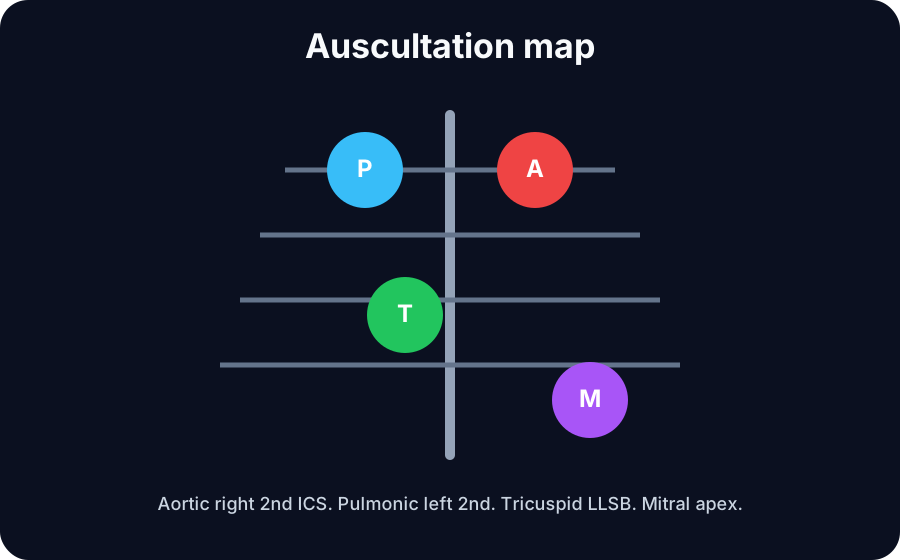
Where you put the stethoscope tells you which valve. Move two inches and the same noise means a different disease. The apex is not the tricuspid. Let us prove it.
The Miss · Identify Before You Learn
A 24-year-old man comes to the office because of fatigue that worsens after he plays soccer. His temperature is 37.0 C, blood pressure is 118/72 mmHg, and pulse is 76/min. On auscultation you work the standard order: right second interspace, left second interspace, left lower sternal border, then the apex. At the left fifth intercostal space in the midclavicular line you hear a coarse holosystolic murmur that radiates toward the left axilla and grows louder when he grips your hands hard. He runs the listening order in his head, lands on "holosystolic," and writes down tricuspid regurgitation.
Which of the following is the correct diagnosis?
Mitral regurgitation. The error was not the murmur. He heard it perfectly: holosystolic. The error was the map. The left fifth intercostal space in the midclavicular line is the cardiac apex, and the apex is the mitral listening post, not the tricuspid. A holosystolic murmur at the apex that radiates to the axilla and gets louder with handgrip is mitral regurgitation every time.
Tricuspid regurgitation is also holosystolic, but it lives one interspace up and toward the sternum at the left lower sternal border, and its tell is that it gets louder with inspiration (the Carvallo sign), not handgrip. He ran the order correctly and then dropped the last letter. The order is aortic, pulmonic, tricuspid, mitral. The apex is M, for mitral. Lock the map first, then the murmur means something.
From the Attending
Stop hunting for the fanciest diagnosis. Find the spot first. Apex, fifth space, midclavicular line, that is mitral. A pansystolic blow there heading for the armpit is mitral regurgitation, and handgrip drives it louder because you just raised the wall it has to push against. Tricuspid is a different address one rib up. Get the address right and the murmur tells you the disease. Get the address wrong and you will treat the wrong heart. Know your posts.
The Listening Posts
Tap a Post, Read the Valve
Four spots on the chest. Each one is a valve. Tap a listening post and the valve, the murmur it makes, the lesion, and the radiation all light up.
Listening post
Pick a post
Tap any glowing dot on the chest to load its valve, murmur, and lesion.
Valve
—
Systolic murmur
—
Lesion
—
Radiation
—
Best maneuver
—
Surface projection of the heart on the chest wall. The apex sits lowest and most to the patient's left: that is why it is the easiest post to misplace.
Surface projection of the valves on the chest wall. Sound travels with blood flow, so each valve is heard downstream of where it sits, not directly over it. Wikimedia Commons.
From the Attending
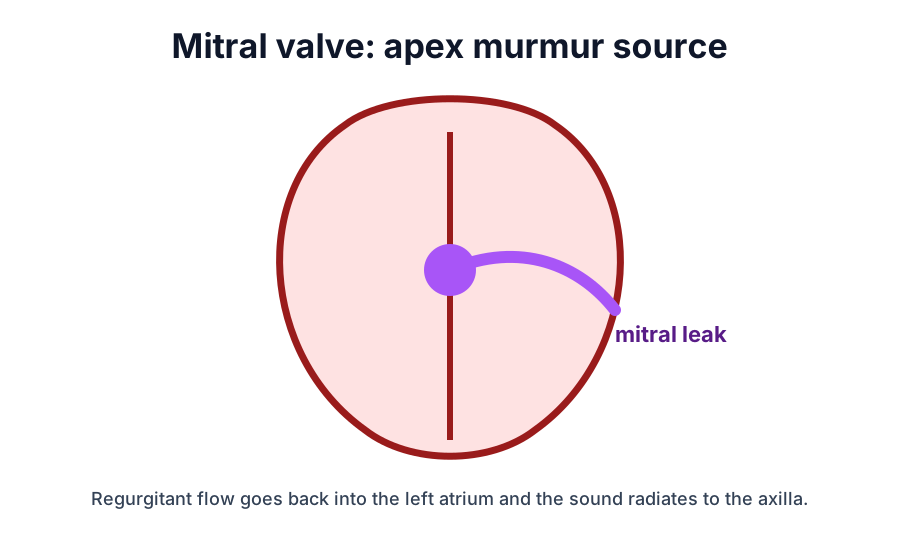
Why is the aortic valve heard up on the right when the valve itself is dead center? Because you hear a murmur where the blood is going, not where the valve sits. Aortic flow shoots up and to the right into the ascending aorta, so you listen at the right second space and follow it to the carotids. Mitral flow regurgitates back and to the left into the atrium, so you listen at the apex and follow it to the axilla. Radiation is just the murmur pointing at its own exit. Follow the blood.
Maneuver Simulator
Make It Louder, Name the Lesion
Location narrows it down. The bedside maneuver confirms it. Press a maneuver and watch every murmur grow or shrink. Two murmurs break the rules, and that is the whole point.
Mitral regurgapex, holosystolic
Tricuspid regurgLLSB, holosystolic
VSDLLSB, harsh + thrill
Aortic stenosisRUSB to carotids
Pulmonic stenosisLUSB, ejection
HOCMLLSB / apex, dynamic
Mitral prolapseapex, click + murmur
Resting state. Each bar is the baseline loudness of that murmur. Now pick a maneuver and watch which ones move.
From the Attending
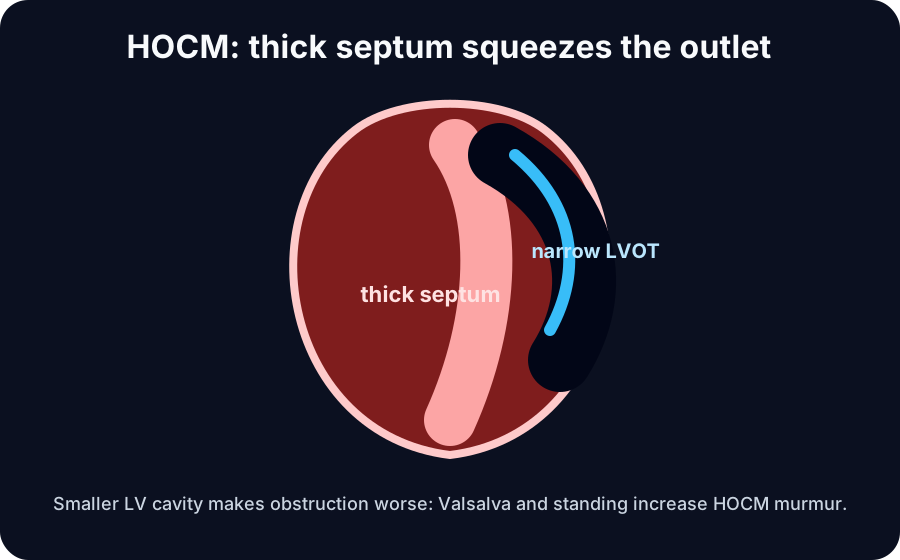
Here is the one that wins points. Valsalva and standing drop blood return, so almost every murmur gets quieter. Two get louder instead: hypertrophic cardiomyopathy and mitral valve prolapse. Less blood means a smaller ventricle. A smaller ventricle lets the thick HOCM septum crowd the outflow, and it lets the floppy prolapse leaflet buckle sooner. So if a systolic murmur gets louder when the patient stands or strains, you are down to two answers. That distinction drives everything.
Right In, Left OutRight-sided murmurs (TR, PS) get louder with Inspiration. Left-sided murmurs get louder with Expiration. Breathe IN for the RIGHT heart.Stand for the CardiomyopathyStanding and Valsalva drop preload. Only HOCM and MVP get LOUDER. Everything else gets softer. Stand up to find the dynamic two.Grip Splits AS from MRHandgrip raises afterload. MR and VSD get LOUDER (more backward flow). AS and HOCM get SOFTER. One squeeze, opposite directions, instant separation.
The Field
Five Systolic Murmurs, One Tap Each
Same phase of the cycle, five different addresses. Tap a tab for the full profile: where, what, why, and which maneuver proves it.
Mitral Regurgitation
The apex holosystolic murmur. The one the case missed.
Where
Apex, left 5th ICS in the midclavicular line. Use the diaphragm.
Sound
Holosystolic (pansystolic) blowing murmur, even loudness from S1 to S2. Often a soft S1 and a wide split S2; an S3 if the leak is large.
Radiation
To the axilla (back-and-left, the direction the regurgitant jet travels into the left atrium).
Maneuvers
Louder: handgrip and squatting (raise afterload, more blood goes backward). Softer: Valsalva and standing.
Causes
Mitral valve prolapse (most common), prior rheumatic disease, papillary muscle rupture after inferior MI, dilated cardiomyopathy stretching the annulus, endocarditis.
The mitral valve guards the left atrium. A systolic leak drives blood backward and the murmur points to the axilla. Wikimedia Commons.
Tricuspid Regurgitation · VSD
Two holosystolic murmurs that share the left lower sternal border.
Where
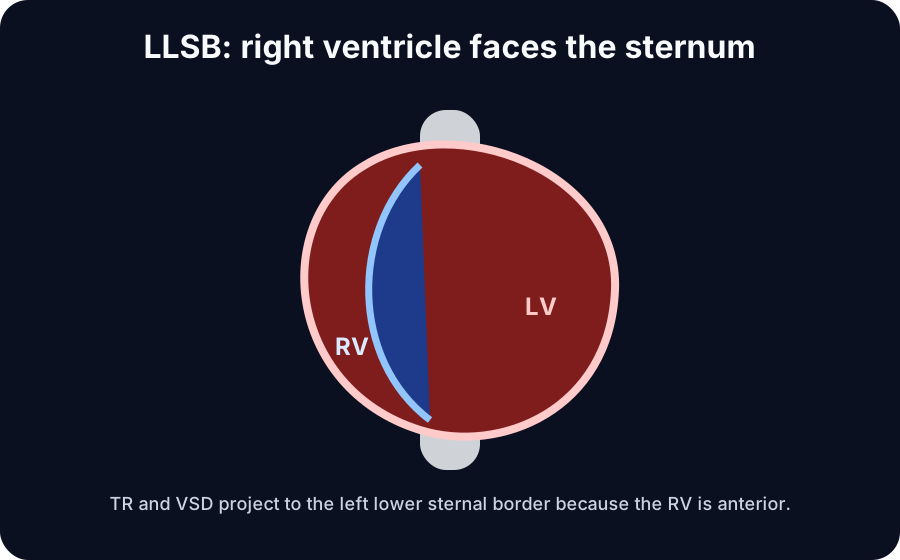
Left lower sternal border, around the 4th ICS. Both TR and a VSD live here, not at the apex.
TR sound
Holosystolic; the tell is louder with inspiration (the Carvallo signInspiration drops intrathoracic pressure and pulls more venous blood into the right heart. More flow across the leaky tricuspid valve makes a louder murmur. True for every right-sided murmur.). Look for a large jugular venous c-v wave, pulsatile liver, and edema.
VSD sound
Harsh holosystolic, often with a palpable thrill. Counterintuitive rule: a smaller defect is louder (more turbulence). Gets louder with handgrip (afterload raises the left-to-right shunt).
Causes
TR: pulmonary hypertension, right ventricular dilation, endocarditis in people who inject drugs (right-sided), carcinoid. VSD: congenital, or a septal rupture days after an anterior MI.
The right ventricle is the chamber against the lower sternum, so its murmurs are loudest at the left lower sternal border. Wikimedia Commons.
Aortic Stenosis
The ejection murmur that points at the neck.
Where
Right upper sternal border, right 2nd ICS.
Sound
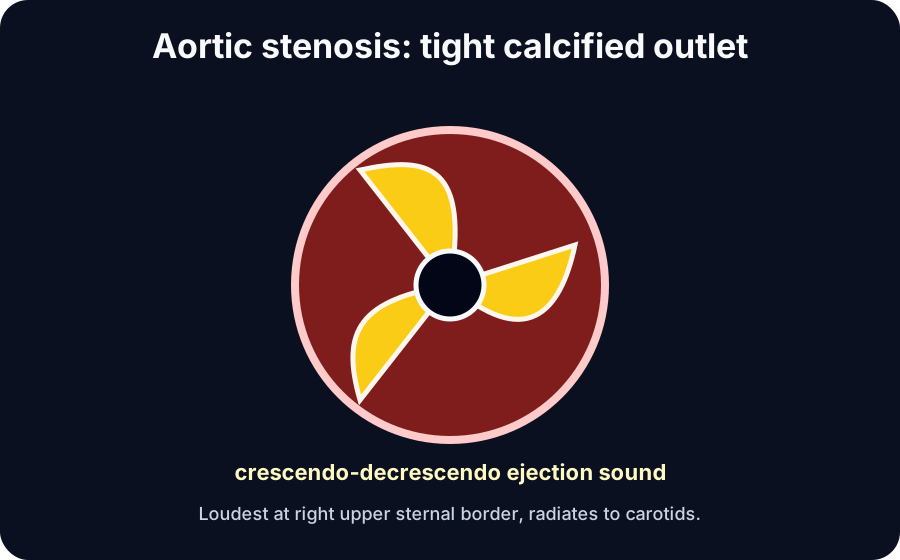
Crescendo-decrescendo ejection murmur (a diamond shape that rises then falls in mid-systole), harsh, with a soft single S2 and a slow-rising pulsus parvus et tardusA weak, late-peaking carotid upstroke. The narrowed valve takes time to push blood out, so the pulse is small and delayed. Classic for severe aortic stenosis. carotid.
Radiation
To the carotids (forward and up, the direction of ejected flow).
Maneuvers
Softer with handgrip (raised afterload shrinks the gradient): this is the single move that separates AS from MR, which gets louder. Louder with squatting.
Board triad
Syncope, Angina, Dyspnea (heart failure). Calcific in older adults; a bicuspid valve presents one to two decades earlier.
A calcified, narrowed aortic valve. The tight orifice is what makes the murmur harsh and the carotid upstroke weak and late. Wikimedia Commons.
Pulmonic Stenosis
The right-sided ejection murmur up top on the left.
Where
Left upper sternal border, left 2nd ICS.
Sound
Crescendo-decrescendo ejection murmur, often with a widely split S2 and a systolic ejection click that, unlike most right-sided sounds, gets softer with inspiration.
Maneuvers
Louder with inspiration (right-sided rule). Radiates toward the left shoulder and back.
Causes
Usually congenital. Associations: Tetralogy of Fallot, Noonan syndrome, congenital rubella, carcinoid (right-sided).
Look-alike
A benign flow murmur or an atrial septal defect also sits here. The fixed split S2 points to an ASD; a click and a thrill point to true pulmonic stenosis.
HOCM · Mitral Valve Prolapse
The dynamic outliers. They get louder when blood return drops.
HOCM where
Left lower sternal border toward the apex. A harsh systolic murmur with no carotid radiation (separates it from AS).
HOCM tell
Louder with Valsalva and standing, softer with handgrip and squatting. Less blood means a smaller cavity, the septum crowds the outflow tract. Young athlete with syncope or sudden death.
MVP where
Apex: a mid-systolic click followed by a late systolic murmur.
MVP tell
Valsalva and standing move the click earlier and lengthen the murmur (smaller ventricle, leaflet buckles sooner). Squatting and handgrip move the click later. Young woman, often with a connective tissue trait.
Thickened ventricular walls. The smaller the cavity gets, the worse the outflow obstruction, which is why HOCM is the murmur that loves Valsalva. Wikimedia Commons.
Self Test
Predict the Row, Then Reveal
The grid is blurred on purpose. For each lesion, say the location, radiation, and key maneuver out loud, then tap the row to check yourself. One row at a time.
Lesion
Where
Sound
Radiation
Key maneuver
Mitral regurgitation
Apex, 5th ICS midclavicular
Holosystolic blow
To the axilla
Louder with handgrip
Tricuspid regurgitation
Left lower sternal border
Holosystolic
Little; large JVP c-v wave
Louder with inspiration (Carvallo)
Ventricular septal defect
Left lower sternal border
Harsh holosystolic + thrill
Across the precordium
Louder with handgrip
Aortic stenosis
Right upper sternal border
Crescendo-decrescendo
To the carotids
Softer with handgrip
Pulmonic stenosis
Left upper sternal border
Crescendo-decrescendo
Left shoulder / back
Louder with inspiration
HOCM
LLSB toward apex
Harsh, no carotid radiation
None to carotids
Louder with Valsalva / standing
Mitral valve prolapse
Apex
Mid-systolic click + late murmur
Axilla if it leaks
Click earlier with Valsalva
Tap any blurred row to reveal just that row. Predict before you peek.
Where Points Are Lost
The Three Traps
Each one is a place the exam writer separates the people who localized from the people who pattern-matched.
Trap 1: The apex is mitral, not tricuspid
A holosystolic murmur is correctly heard, but the spot gets mislabeled. The apex (left 5th ICS, midclavicular) is the mitral post. Tricuspid is the left lower sternal border one interspace up and toward the sternum. If the murmur radiates to the axilla, it is mitral regurgitation. If it gets louder with inspiration, it is tricuspid. Same phase, different address.
Trap 2: A systolic murmur louder with Valsalva is not aortic stenosis
AS and HOCM can both be harsh systolic murmurs near the sternum. But AS gets softer with Valsalva and radiates to the carotids, while HOCM gets louder with Valsalva and standing and does not radiate to the carotids. A young athlete with syncope and a murmur that grows when he stands is HOCM until proven otherwise. Do not reach for AS.
Trap 3: Handgrip and Valsalva point opposite directions
Handgrip raises afterload and increases MR and VSD while decreasing AS and HOCM. Valsalva drops preload and increases only HOCM and MVP while softening the rest. Memorize the two odd ones (HOCM and MVP love a small ventricle) and everything else falls out of the rule that less flow equals a quieter murmur.
Decision Tool
Localize the Systolic Murmur
Tap through the discriminators. The tree lands on the lesion. Every leaf states the diagnosis and the one rule that seals it.
Step 1: What is the shape of the murmur across systole?
Flat, equal loudness from S1 to S2 (holosystolic)
Rises then falls in mid-systole (crescendo-decrescendo ejection)
Mid-systolic click, then a late systolic murmur
Holosystolic means a pressure gap that stays open the entire beat: mitral or tricuspid regurgitation, or a VSD. Location is the next fork. Move to Step 2.
Crescendo-decrescendo is blood forced through a tight outflow: aortic stenosis, pulmonic stenosis, or dynamic HOCM. Move to Step 3.
MITRAL VALVE PROLAPSE (MVP). A mid-systolic click at the apex followed by a late systolic murmur is the MVP signature. The click moves EARLIER toward S1 with standing and Valsalva (smaller ventricle, leaflet buckles sooner) and LATER with squatting and handgrip. Rule: click that migrates earlier on standing = MVP.
Step 2: Holosystolic murmur. Where is it loudest and what changes it?
Apex, radiates to the axilla
Left lower sternal border, louder on inspiration
Left lower sternal border, harsh, palpable thrill, no change with breathing
MITRAL REGURGITATION. Apex plus radiation to the axilla is the mitral address. Handgrip confirms it by raising afterload and pushing more blood backward. Rule: holosystolic at the apex radiating to the axilla, louder with handgrip = MR.
TRICUSPID REGURGITATION (Carvallo sign). Inspiration drops intrathoracic pressure and fills the right heart, amplifying any right-sided murmur. The LLSB plus inspiratory increase is the tricuspid address. Rule: holosystolic at the LLSB louder on inspiration = TR.
VENTRICULAR SEPTAL DEFECT (VSD). Harsh holosystolic at the LLSB with a palpable thrill and no respiratory variation is a VSD. A smaller defect is louder (higher-velocity jet). Louder with handgrip (more left-to-right shunt). Rule: harsh LLSB murmur with a thrill, no breathing change = VSD.
Step 3: Ejection murmur. Where, and what does the maneuver do?
Right upper sternal border, radiates to the carotids, louder with squatting, softer with handgrip
Left lower sternal border, no carotid radiation, louder with Valsalva and standing
Left upper sternal border, louder with inspiration
AORTIC STENOSIS. Ejection to the carotids, louder with squat, softer with handgrip (raised afterload lowers the transvalvular gradient). Rule: RUSB ejection to the carotids that softens with handgrip = AS.
HYPERTROPHIC CARDIOMYOPATHY (HOCM). Louder with Valsalva and standing (smaller cavity lets the septum crowd the outflow), no carotid radiation. Softer with handgrip and squatting. Rule: ejection murmur louder with Valsalva, no carotid radiation = HOCM.
PULMONIC STENOSIS. Left upper sternal border ejection murmur louder on inspiration: right-sided amplification. Rule: LUSB ejection murmur louder on inspiration = PS.
The Tracing
Where Systole Lives
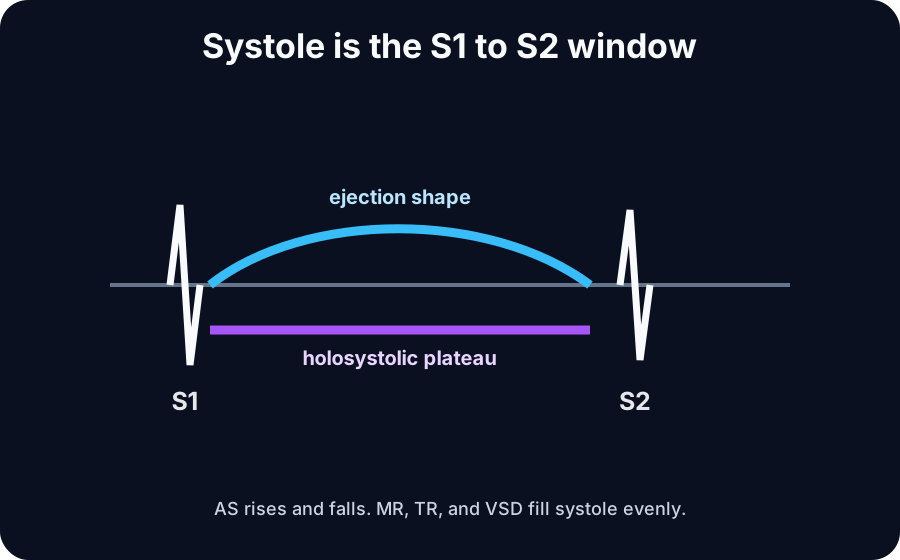
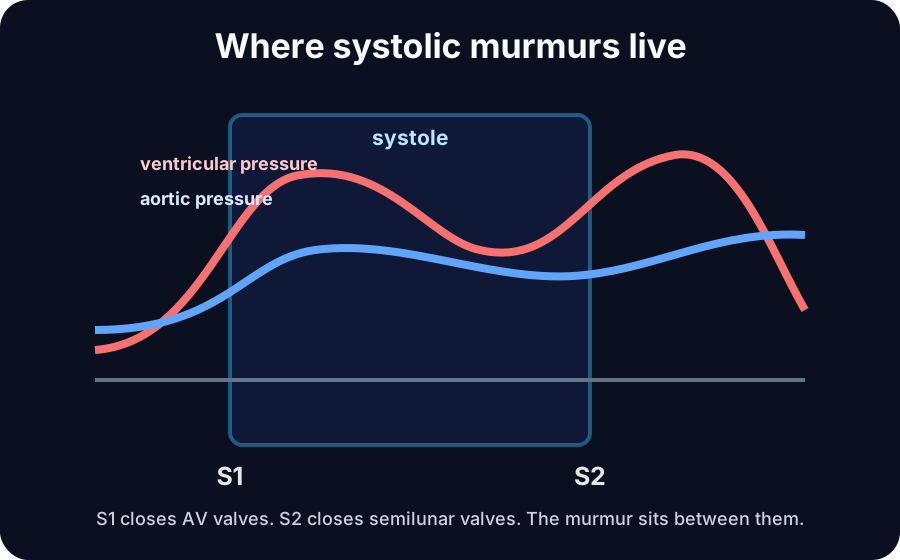
Systolic means between S1 and S2, while the ventricle ejects. Holosystolic fills that whole gap; an ejection murmur peaks in the middle of it. See it on the phonocardiogram and the cardiac cycle.
Systolic murmurs fall between S1 and S2. A holosystolic murmur (MR, TR, VSD) fills the whole interval; an ejection murmur (AS, PS) peaks in mid-systole. Wikimedia Commons.The cardiac cycle. Systole runs from S1 to S2. Every murmur on this page lives in that window, which is why location and maneuver, not timing alone, name the lesion. Wikimedia Commons.
Walk It
Derive It, Then Prove It
First rebuild the localization logic one beat at a time. Then take a stack of board-style cases, one at a time, reshuffled every run.
Tap each beat. Build the framework the way you would talk yourself through it at the bedside.
Why does location come before everything else?
Because timing alone cannot separate the systolic murmurs: they all live between S1 and S2. Location is the first hard fork. The apex is mitral, the left lower sternal border is tricuspid and VSD, the right upper sternal border is aortic, the left upper sternal border is pulmonic. Fix the post first; only then does the sound mean something.
Why does radiation point to a specific place?
A murmur radiates in the direction its blood is moving. Aortic stenosis ejects forward and up the aorta, so it points to the carotids. Mitral regurgitation drives backward into the left atrium, which sits behind and to the left, so it points to the axilla. Radiation is the murmur showing you its exit.
Why does inspiration single out the right heart?
Breathing in lowers intrathoracic pressure and pulls more venous blood into the right atrium and ventricle. More flow across a right-sided lesion makes a louder murmur, so tricuspid regurgitation and pulmonic stenosis swell on inspiration. Left-sided murmurs do not. Louder on inspiration equals right-sided: that is the Carvallo sign.
Why do HOCM and MVP get louder when blood return drops?
Valsalva and standing shrink the left ventricle. A smaller cavity lets the thick HOCM septum crowd the outflow tract, worsening the obstruction, and it lets the floppy prolapse leaflet buckle sooner, moving the click earlier. Every other murmur gets quieter with less flow. The two that love a small ventricle are HOCM and MVP.
Put it together: what is the localizer in one line?
Find the post, follow the radiation, then run one maneuver to confirm. Apex plus axilla plus louder-with-handgrip is mitral regurgitation. Right upper sternal border plus carotids plus softer-with-handgrip is aortic stenosis. Louder-with-Valsalva, no carotid radiation, is HOCM. Location, radiation, maneuver. Every time.
Board-style cases, one at a time, reshuffled every run. Cross out the wrong choices first (right-click on desktop or long-press on mobile), then read the explanation for every option.
Rapid Fire
Localize on the Clock
Short board-style items pulled from a larger pool, reshuffled each run. Right-click or long-press to cross out, double-tap to highlight.
Lock It In
The Localizer in One Breath
Apex to the axilla is mitral regurgitation. Left lower sternal border louder on inspiration is tricuspid. Right upper sternal border to the carotids is aortic stenosis. Louder with Valsalva, no carotids, is HOCM. Location, radiation, maneuver.
From the Attending
You will never auscultate a label that says "mitral." You get a spot, a shape, a radiation, and one maneuver. That is enough. Put the bell where the apex actually is, follow the sound to the armpit, squeeze a hand, and the diagnosis writes itself. The student in our case heard the murmur perfectly and still missed it because he never fixed the address. Localize first. The heart will tell you the rest.
Medically reviewed by Fatima Ali, DO and Kaitlyn Cocuzzo, MD · Last updated July 2, 2026 at 4:07 PM ET
Sources: Bates' Guide to Physical Examination and History Taking · Harrison's Principles of Internal Medicine · Braunwald's Heart Disease · Gray's Anatomy.
Bone Wizardry is an independent educational resource for visual learning in the medical sciences. It is not affiliated with, endorsed by, or sponsored by any licensing or examination board, contains no real or recalled examination questions, and does not guarantee any educational or examination outcome.