More stretch, more force. The cardiac law that explains volume resuscitation, heart failure, and why exercise works.
A patient in decompensated heart failure receives an IV fluid bolus. His stroke volume does NOT increase. Where on the Frank-Starling curve is he operating?
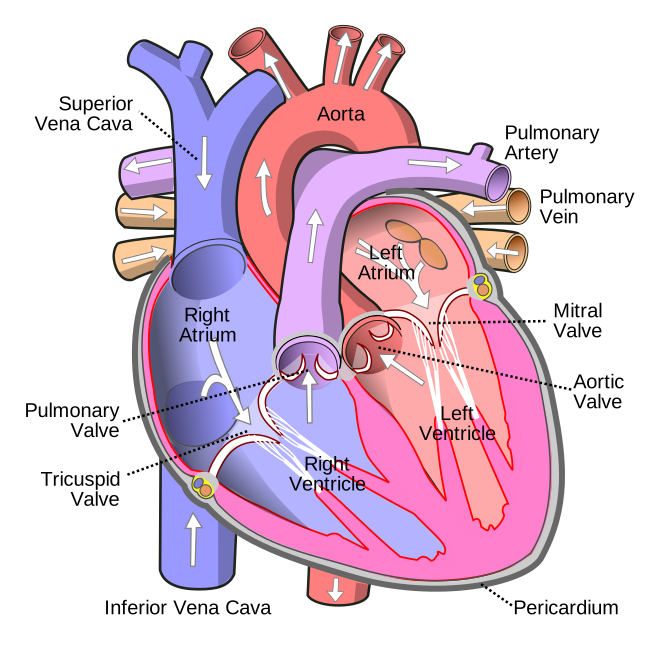


The heart is a demand-driven pump. The more blood fills it, the harder it squeezes, up to a physiological limit.
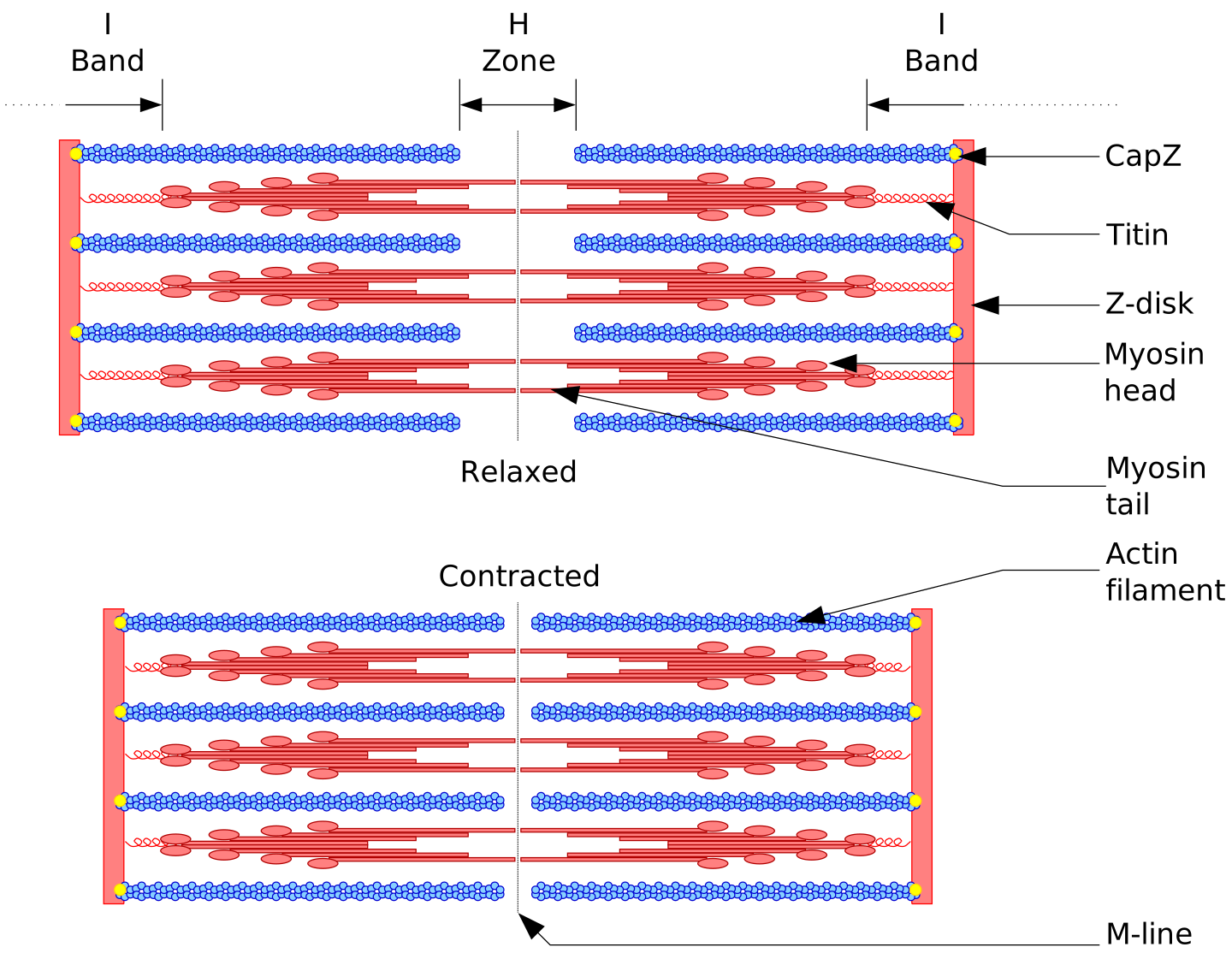
When venous return increases, the ventricle fills with more blood (increased end-diastolic volume / preload). This stretches the cardiac sarcomeres, optimizing the overlap between actin and myosin filaments. More cross-bridges form, producing a more forceful contraction and a larger stroke volume.
X-axis: preload (end-diastolic volume or LVEDP). Y-axis: stroke volume (or cardiac output). The curve rises steeply at first (small increases in preload produce large gains in SV), then plateaus.
The entire curve can shift up and left (increased contractility) or down and right (decreased contractility). Moving along the curve is different from shifting the curve itself.
Tap the buttons to see how different conditions move you along or shift the Frank-Starling curve.
Tap each card to reveal the definition and clinical relevance.
Volume of blood in the ventricle at end-diastole (EDV). Determined by venous return. Increased by IV fluids, supine position, leg elevation. Decreased by hemorrhage, diuretics, nitrates (venodilators).
Moves you along the Frank-Starling curve.
Resistance the ventricle must overcome to eject blood. For the LV: systemic vascular resistance (SVR). For the RV: pulmonary vascular resistance (PVR). Increased afterload = decreased stroke volume (inverse relationship).
Increased by aortic stenosis, HTN, vasopressors. Decreased by vasodilators.
Intrinsic force of contraction independent of preload and afterload. Increased by catecholamines, digoxin, dobutamine. Decreased by beta-blockers, heart failure, acidosis.
Shifts the entire Frank-Starling curve up or down.
How Frank-Starling plays out in real patients.
In heart failure, the curve is shifted down and right. The ventricle generates less stroke volume for any given preload. The patient operates on the flat portion: increasing preload (fluids) does NOT increase output but DOES cause pulmonary edema.
During exercise: skeletal muscle pump + venoconstriction increase venous return, raising preload. Frank-Starling increases stroke volume. Simultaneously, catecholamines shift the curve up-left (increased contractility + heart rate). Both mechanisms work together to increase cardiac output 4 to 5x.
When cardiac output drops, the body activates compensatory mechanisms. These work short-term but cause long-term damage:
25 clinical vignettes. Answers shuffle each round. Right-click or long-press to cross out options. Double-tap to highlight.

