CARDIOLOGY · FRANK-STARLING

Frank-Starling Mechanism

More stretch, more force. The cardiac law that explains volume resuscitation, heart failure, and why exercise works.

Quick Challenge

A patient in decompensated heart failure receives an IV fluid bolus. His stroke volume does NOT increase. Where on the Frank-Starling curve is he operating?
In decompensated heart failure, the ventricle operates on the flat (plateau) portion of the Frank-Starling curve. Additional preload (IV fluids) does NOT increase stroke volume because the sarcomeres are already maximally stretched. More volume just causes pulmonary congestion without improving output.
↓ scroll to explore
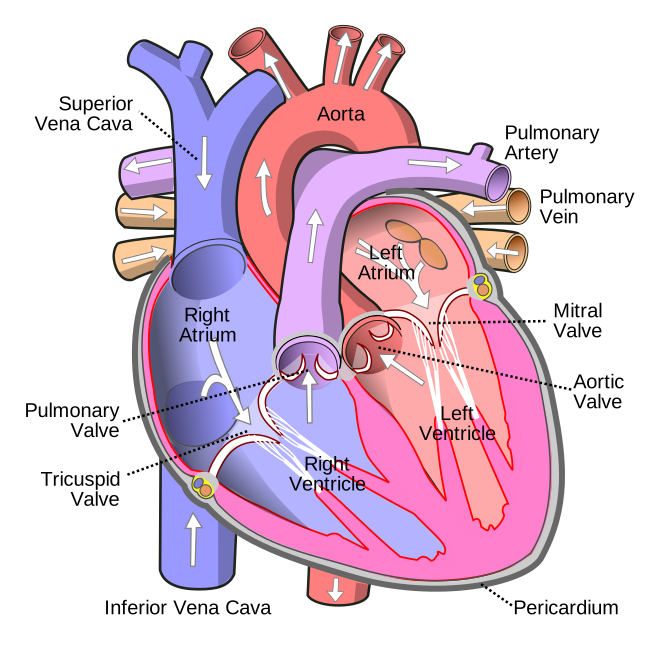
Human heart anatomy
Heart chambers and great vessels
PV loop of left ventricle
PV loop: left ventricle pressure-volume
Sarcomere structure
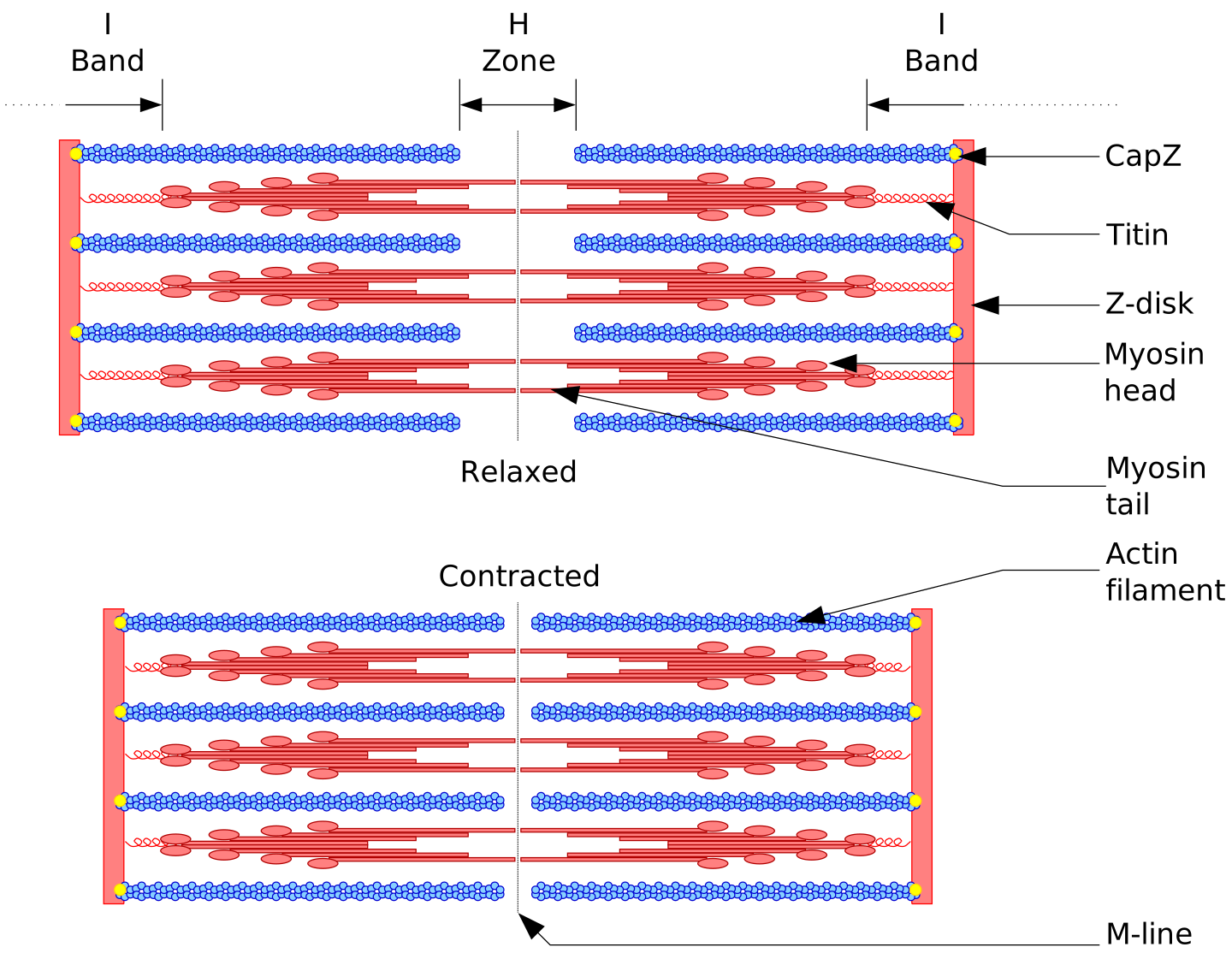
Sarcomere: actin-myosin overlap
Wiggers diagram
Wiggers diagram: cardiac cycle timing

The Law

The heart is a demand-driven pump. The more blood fills it, the harder it squeezes, up to a physiological limit.

Sarcomere Level
Stretch = Force

When venous return increases, the ventricle fills with more blood (increased end-diastolic volume / preload). This stretches the cardiac sarcomeres, optimizing the overlap between actin and myosin filaments. More cross-bridges form, producing a more forceful contraction and a larger stroke volume.

Molecular Basis
At the optimal sarcomere length (~2.2 micrometers), actin-myosin overlap is maximized. Stretch also increases calcium sensitivity of troponin C, further boosting contractile force.
The Limit
Overstretch (>2.4 micrometers) pulls actin and myosin apart. Cross-bridges cannot form. Force DECREASES. This is the flat/descending portion of the curve.
Think of a rubber band: stretch it more, it snaps back harder. But stretch it TOO far, it loses its elastic recoil. The heart works the same way.
The Graph
The Frank-Starling Curve

X-axis: preload (end-diastolic volume or LVEDP). Y-axis: stroke volume (or cardiac output). The curve rises steeply at first (small increases in preload produce large gains in SV), then plateaus.

Steep Portion
Healthy, preload-responsive heart. Volume resuscitation works here: more fluid = more output.
Flat Portion
Maximally filled. More preload does NOT increase output. Giving fluids here causes pulmonary edema without benefit. This is where the failing heart operates.
Steep portion = "thirsty heart" (wants more fluid). Flat portion = "drowning heart" (fluid makes it worse). Know which part your patient is on before giving fluids.
Inotropes vs Volume
Shifting the Curve

The entire curve can shift up and left (increased contractility) or down and right (decreased contractility). Moving along the curve is different from shifting the curve itself.

Up-Left Shift (Increased Contractility)
Digoxin, dobutamine, milrinone, catecholamines, exercise. More stroke volume for the SAME preload. The heart pumps harder at every filling level.
Down-Right Shift (Decreased Contractility)
Heart failure, beta-blockers (acute), calcium channel blockers, myocardial infarction, dilated cardiomyopathy. Less stroke volume for the SAME preload.
Board Trap
IV fluids move you ALONG the curve (increase preload). Inotropes SHIFT the curve up. These are different interventions with different mechanisms. Do not confuse them.
Shifting = changing the engine. Moving along = filling the tank. Inotropes change the engine. Fluids fill the tank. The failing heart needs a better engine (inotropes), not a bigger tank (fluids).

Interactive Curve

Tap the buttons to see how different conditions move you along or shift the Frank-Starling curve.

Preload (EDV) Stroke Volume Normal +Fluids +Inotrope Heart Failure HF+Fluids
Normal heart. Operating on the steep portion of the curve. Preload-responsive: more filling = more output.

The Three Determinants

Tap each card to reveal the definition and clinical relevance.

PRELOAD
Definition

Volume of blood in the ventricle at end-diastole (EDV). Determined by venous return. Increased by IV fluids, supine position, leg elevation. Decreased by hemorrhage, diuretics, nitrates (venodilators).

Moves you along the Frank-Starling curve.

AFTERLOAD
Definition

Resistance the ventricle must overcome to eject blood. For the LV: systemic vascular resistance (SVR). For the RV: pulmonary vascular resistance (PVR). Increased afterload = decreased stroke volume (inverse relationship).

Increased by aortic stenosis, HTN, vasopressors. Decreased by vasodilators.

CONTRACTILITY
Definition

Intrinsic force of contraction independent of preload and afterload. Increased by catecholamines, digoxin, dobutamine. Decreased by beta-blockers, heart failure, acidosis.

Shifts the entire Frank-Starling curve up or down.

Clinical Applications

How Frank-Starling plays out in real patients.

The Flat Curve
Heart Failure

In heart failure, the curve is shifted down and right. The ventricle generates less stroke volume for any given preload. The patient operates on the flat portion: increasing preload (fluids) does NOT increase output but DOES cause pulmonary edema.

Treatment Implication
Diuretics (furosemide) reduce preload, moving the patient LEFT on the curve. This reduces congestion without significantly dropping output because they were on the flat part anyway. Inotropes (dobutamine) shift the curve UP, improving output at the same preload.
A failing heart is drowning, not thirsty. Diuretics drain the flood. Inotropes make the pump stronger. Fluids make the flood worse.
The Steep Curve
Exercise Physiology

During exercise: skeletal muscle pump + venoconstriction increase venous return, raising preload. Frank-Starling increases stroke volume. Simultaneously, catecholamines shift the curve up-left (increased contractility + heart rate). Both mechanisms work together to increase cardiac output 4 to 5x.

CO = HR x SV
Exercise increases BOTH HR (chronotropic) and SV (Frank-Starling + increased contractility). Resting CO ~5L/min can reach 20 to 25L/min in trained athletes.
Exercise = double boost. More venous return (filling the tank) + catecholamines (upgrading the engine). Frank-Starling handles the filling. Sympathetic activation handles the engine.
Compensatory Mechanisms
When the Heart Fails

When cardiac output drops, the body activates compensatory mechanisms. These work short-term but cause long-term damage:

1. SNS Activation
Increased heart rate + contractility. But: increases myocardial oxygen demand, promotes arrhythmias.
2. RAAS Activation
Angiotensin II causes vasoconstriction (increases afterload) + aldosterone causes sodium/water retention (increases preload). Short-term: maintains BP. Long-term: fluid overload, cardiac remodeling.
3. Ventricular Remodeling
Eccentric hypertrophy (volume overload): sarcomeres added in SERIES, ventricle dilates. Concentric hypertrophy (pressure overload): sarcomeres added in PARALLEL, wall thickens.
The body's HF compensations are like credit cards: they maintain function now but accumulate debt. SNS = high-interest stress. RAAS = fluid debt. Remodeling = structural damage. Every HF drug targets one of these compensations: beta-blockers (SNS), ACEi/ARBs (RAAS), diuretics (volume).

Board-Style Walkthrough

25 clinical vignettes. Answers shuffle each round. Right-click or long-press to cross out options. Double-tap to highlight.