One child barks like a seal and is loud but stable. The other sits drooling in a tripod, eerily quiet, and is minutes from a closed airway. Learn to tell the noisy nuisance from the silent emergency, and the bacterial impostor hiding between them.
Steeple sign · croup
Thumbprint sign · epiglottitis
Cherry-red epiglottis · endoscopy
Normal vs swollen epiglottis
Both diseases narrow a small child's airway, but at different floors. Croup swells the airway below the vocal cords (subglottic). Epiglottitis swells the lid above the cords (supraglottic). That single anatomic fact drives everything: the cough, the voice, the posture, the X-ray, and how fast you have to move.
The One-Glance
Loud but Stable vs Quiet but Dying
Read every row as a contrast. The patterns are mirror images of each other.
CROUP
CauseParainfluenza virus (viral)
Where it swellsSubglottic (below the cords)
Typical age6 months to 3 years
OnsetGradual, after a few days of cold, worse at night
CoughBarky, seal-like
VoiceHoarse
FeverLow grade
Drooling / postureNo drooling, usually comfortable
X-raySteeple sign (AP)
TreatmentDexamethasone, add racemic epinephrine if stridor at rest
EPIGLOTTITIS
CauseHaemophilus influenzae type b (bacterial)
Where it swellsSupraglottic (the epiglottis lid)
Typical ageClassic 3 to 6 years, any age if unvaccinated
OnsetSudden, over hours, toxic fast
CoughUsually none (the cough is absent)
VoiceMuffled, hot potato
FeverHigh, toxic appearance
Drooling / postureDrooling, tripod, sniffing position
X-rayThumbprint sign (lateral)
TreatmentSecure airway in the OR first, then IV ceftriaxone. Do NOT examine the throat.
Pathophysiology
Same Symptom, Different Floor
Trace the chain from the bug to the bedside finding. The anatomy explains every clue.
Croup: the virus that swells below the cords
Parainfluenza virus lands in the upper airway after a few days of a common cold
↓
It inflames the subglottic larynx and trachea, the segment just below the vocal cords
↓
In a small child that segment is ringed by the rigid cricoid cartilageThe cricoid is the only complete cartilage ring in the airway. It cannot expand, so any swelling here pushes inward and chokes the airway. It is the narrowest point in a young child., so swelling has nowhere to go but inward
↓
Narrowed airway plus inflamed cords → the classic barky seal cough, hoarse voice, and inspiratory stridor
↓
On AP film the tapered subglottis looks like a church steeple
Punch: croup is loud because the cords are involved, but the child is usually stable. A barking, hoarse, low-fever toddler who gets worse at night is croup until proven otherwise.
Epiglottitis: the bacteria that swell the lid
Haemophilus influenzae type b invades the supraglottic tissue (most often in an unvaccinated child)
↓
It causes a rapid bacterial cellulitis of the epiglottis, the lid that covers the airway during swallowing
↓
The epiglottis swells cherry red and balloons over the airway within hours
↓
Swallowing hurts and the lid will not seal → the child drools, refuses to lie back, and leans forward in a tripod to keep the airway open
↓
Sound is muffled by the swollen lid → a hot potato voice, no barky cough, soft stridor
↓
On lateral film the fat swollen epiglottis casts a thumbprint
Punch: epiglottitis is quiet because the cords are spared. The danger is that the lid can slam shut. A toxic, drooling, tripod child with a muffled voice is an airway emergency, not a cough.
Bacterial tracheitis: the impostor in the middle
A child has ordinary viral croup for a few days
↓
Staphylococcus aureus superinfects the already inflamed trachea
↓
Thick purulent secretions and pseudomembranes coat the windpipe
↓
The child turns toxic with high fever and stridor that does NOT improve with dexamethasone or racemic epinephrine
Punch: croup that suddenly looks toxic and stops responding to the usual croup care is bacterial tracheitis. The pus, not a swollen lid, is the obstruction.
The Three Villains
Tap a Card to Flip It
Front is the headline. Tap to flip for the high-yield detail.
Croup
Viral, subglottic, loud but stable
Tap to flip
Croup at a glance
Parainfluenza, ages 6 months to 3 years
Barky seal cough, hoarse, inspiratory stridor
Low grade fever, worse at night
Steeple sign on AP film
Dexamethasone for all, add racemic epinephrine if stridor at rest
Epiglottitis
Bacterial, supraglottic, quiet emergency
Tap to flip
Epiglottitis at a glance
Hib in the unvaccinated child
The 4 D's: Drooling, Dysphagia, Dysphonia, Distress
Tripod posture, muffled hot potato voice, high fever, no cough
Thumbprint sign on lateral film
Secure the airway in the OR, then IV ceftriaxone. Do not touch the throat.
Bacterial Tracheitis
The Staph impostor
Tap to flip
Bacterial tracheitis at a glance
Staphylococcus aureus, often after viral croup
Toxic, high fever, brassy cough, thick purulent secretions
Does NOT respond to dexamethasone or racemic epinephrine
Often needs intubation for airway toilet plus IV antibiotics
Diagnosis
The Films, and When NOT to Order Them
Both are clinical diagnoses first. Imaging confirms a stable case and never delays an unstable airway.
Steeple sign (croup)
Order: AP neck radiograph. The subglottic narrowing tapers upward to a point like a church steeple.
Most croup needs no film at all. The barky cough plus stridor is enough. Image only when the picture is unclear.
Thumbprint sign (epiglottitis)
Classic: lateral neck radiograph shows the swollen epiglottis as a thumbprint pressed into the airway.
The catch: a child with suspected epiglottitis who is unstable does NOT go to radiology. Do not lay them flat and do not leave the airway team. The airway comes before the picture.
Key fact
A radiograph is optional in croup and dangerous to chase in unstable epiglottitis. If the child looks like epiglottitis, the next move is the operating room, not the X-ray suite.
Management
Grade the Croup, Pick the Move
Severity is decided by one question: is there stridor at rest? Tap an option to see the management.
A toddler with a barky cough is in front of you. What do you hear?
Why the racemic epinephrine rebound matters
Racemic epinephrine constricts the swollen mucosal vessels → fast shrink of the edema → the stridor melts away in minutes
↓
But the drug wears off in roughly 2 hours, and the underlying swelling is still there
↓
If you discharge too early, the stridor can come back at home
Punch: after racemic epinephrine, observe the child for 3 to 4 hours. Dexamethasone (given alongside) is what carries the anti-inflammatory effect for the next day or two.
The epiglottitis sequence (order is everything)
1. Keep the child calm and upright. Let a parent hold them. No needles, no tongue blade, no agitation.
2. Mobilize ENT and anesthesia. Take the child to the operating room for a controlled, awake intubation with a surgical airway ready as backup.
3. Only after the airway is secured: draw cultures and start IV ceftriaxone (add vancomycin if MRSA is a concern).
4. Give rifampin prophylaxis to close contacts for Hib.
Do not examine the throat
In suspected epiglottitis, a tongue depressor or any forced inspection can trigger laryngospasm and complete airway obstruction. The swollen lid is already crowding the opening; one reflex can slam it shut. Visualization happens only in a controlled setting (the OR) with the team and equipment ready to secure the airway in the same breath. The same rule covers anything that upsets the child: no blood draws, no forcing them to lie flat, no IV until the airway plan is set.
From the Attending
When a kid is drooling in a tripod with a muffled voice, your hands go in your pockets. The most dangerous instinct in medicine is the urge to look. You confirm epiglottitis in the OR, where the next move after seeing it is securing it. A barking, hoarse toddler who is otherwise comfortable is croup, give the steroid and breathe. Tell the two apart by the cough and the posture, every time.
Lock It In
Memory Hooks
Tap each card to reveal the hook.
Steeple vs Thumbprint
Tap to reveal
A steeple points UP to the sky, and croup is the one you can usually send up and home. The thumbprint belongs to epiglotTHUMB.
The 4 D's
Tap to reveal
Drooling, Dysphagia, Dysphonia, Distress. Four D's mean Don't Delay and Don't look in the throat. That is epiglottitis.
Loud vs Quiet
Tap to reveal
Croup is loud and stable (barky cough, hoarse voice). Epiglottitis is quiet and deadly (muffled voice, no cough, drooling). The quiet one is the emergency.
Prove It
Board Walkthrough
A bank of original 3rd-order vignettes, 5 dealt per round, answer choices shuffled. Tap a wrong answer first to see why it almost works, then read the rule.
Medically reviewed by Kaitlyn Cocuzzo, MD and Fatima Ali, DO · Last updated June 30, 2026 at 1:10 AM ET
Bone Wizardry is an independent educational resource for visual learning in the medical sciences. It is not affiliated with, endorsed by, or sponsored by any licensing or examination board, contains no real or recalled examination questions, and does not guarantee any educational or examination outcome.
 Steeple sign · croup
 Thumbprint sign · epiglottitis
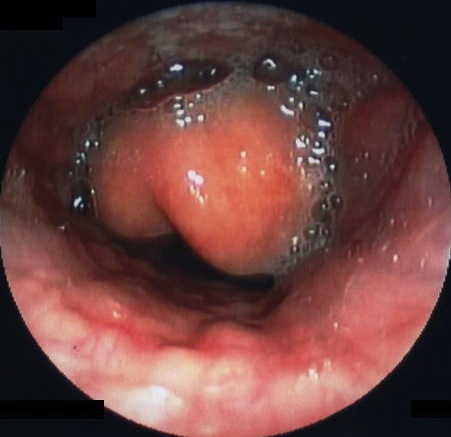 Cherry-red epiglottis · endoscopy
 Normal vs swollen epiglottis
