Viscerosomatic reflex gangliform contractions, where to find them, what they mean, and how to treat them
Opener Challenge
A 35-year-old woman with recurrent sinusitis is evaluated osteopathically. The physician finds tender, firm nodules ("BB-like") in the intercostal space between the first and second ribs bilaterally, both anteriorly and posteriorly. These are characteristic of which Chapman point finding?
A. Lung (lower lobe) Chapman points, anterior ribs 4-5
B. Heart Chapman points, anterior ribs 2-3, left side
C. Sinus Chapman points, anterior ribs 1-2; posterior OA-C2
D. Pharynx/tonsil Chapman points, medial clavicle, bilateral
Correct. Chapman points are gangliform contractions (lymphatic and fascial nodules) representing viscerosomatic reflex arcs. The sinus Chapman points sit anteriorly between ribs 1 and 2 (near the sternum) and posteriorly in the OA-C2 region of the upper cervical spine. Bilateral tenderness at ribs 1-2 in a patient with recurrent sinusitis is a classic board presentation. Anterior points = diagnosis; posterior points = treatment. Common trap: choosing a lower rib level because sinuses feel like a chest problem, or choosing the wrong side. The anterior sinus point is at ribs 1-2 precisely because the upper thoracic sympathetics (T1-T2) innervate the head and sinuses. Think of the rib number as the area code: the area code for head and sinus calls is 1-2, not a lower number. Break it down: sinus anterior Chapman point = ribs 1-2 anteriorly near the sternum; posterior point = OA-C2 upper cervical spine; anterior = diagnose, posterior = treat.
Section 1 of 6
What Are Chapman Points?
The mechanism behind the nodules and how anterior vs. posterior points differ.
Trace It
Anterior vs. Posterior
Where Did These Come From?
The original osteopathic description described these reflex points in the 1930s. The modern interpretation: viscerosomatic reflex arcs produce neurogenic inflammation in the fascia and lymphatics, creating nodular contractions at predictable anatomic locations.
What they feel like: firm, discrete, smooth, pea-sized nodules in the fascia. Described as "BB pellets" or "gangliform contractions." May be tender or non-tender. Bilateral findings carry more clinical weight than unilateral.
Anterior points are used for diagnosis, palpate for tenderness, which indicates visceral dysfunction of the associated organ.
Posterior points are used for treatment, apply rotary friction to the posterior point for 10-30 seconds until the nodule softens and the patient reports improvement.
Distinguish from trigger points: Chapman points are in the fascia/lymphatics at predictable organ-specific locations. Trigger points are in the muscle belly and refer pain along myofascial trigger-point maps, they are NOT organ-specific.
Two Points, Two Purposes
Anterior Chapman points are located on the anterior chest, abdomen, and pelvis. Their primary role is diagnostic: tenderness at an anterior point suggests visceral dysfunction of the corresponding organ. You are reading the body's signal, not treating it.
Posterior Chapman points are located on the posterior spine, transverse processes, and posterior thorax. Their primary role is treatment: apply direct rotary friction over the posterior transverse process or spinous area for 10-30 seconds until softening occurs. Recheck the anterior point after treatment, decreased tenderness confirms success.
Both an anterior and a posterior point exist for every organ. They are not interchangeable. Diagnosing from the posterior or treating the anterior is incorrect technique.
Rule to commit: Anterior = assess the organ. Posterior = treat the organ. Anterior tenderness tells you the organ is involved. Posterior pressure is where the treatment hand goes.
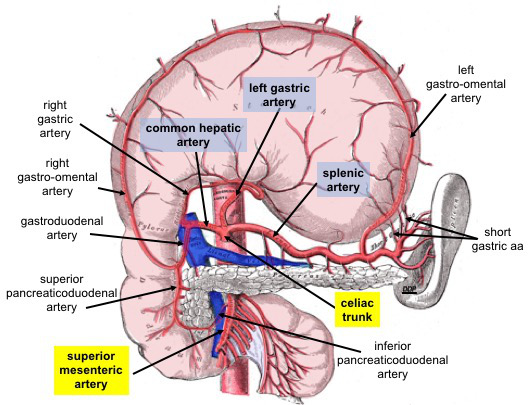
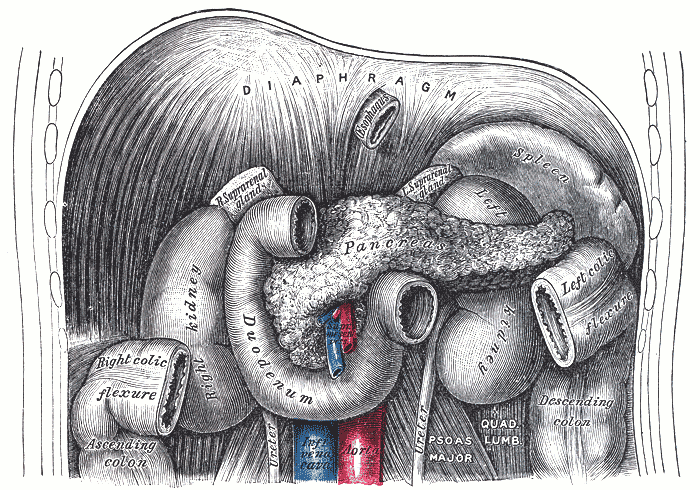
Upper abdominal organs: rib-side points separate stomach, liver, gallbladder, and spleen.Abdominal landmarks: same rib level can still mean a different organ when the side changes.
Section 2 of 6
High-Yield Locations
The full board-testable reference table. Anterior in blue, posterior in green.
Organ / System
Anterior Point
Posterior Point
Upper sinuses BOARD
Ribs 1-2 (ant chest, near sternum)
OA-C2
Lower sinuses
Ribs 2-3
C2-C3
Pharynx / Tonsils
Medial end of clavicle
C1 transverse process
Trachea
Medial end of 2nd rib
C2
Esophagus (upper)
Ribs 2-3, R side
C2-C3 R
Heart BOARD
Ribs 2-3, L side
T2-T3 L
Lungs (upper) BOARD
Ribs 3-4
T3-T4
Lungs (lower) BOARD
Ribs 4-5
T4-T5
Liver / Gallbladder BOARD
Ribs 5-6, R side
T5-T6 R
Stomach
Ribs 5-6, L side
T5-T6 L
Spleen
Ribs 7-8, L side
T7 L
Small intestine
Around umbilicus (variable)
T8-T9
Appendix / Cecum BOARD
Tip of right 12th rib
T11 R
Colon (ascending)
Iliotibial band, R thigh
T11-L1 R
Colon (descending)
Iliotibial band, L thigh
T11-L1 L
Kidney
1 inch above umbilicus, lateral to rectus
T11-T12
Bladder
Umbilicus (and pubic symphysis area)
L2
Uterus / Prostate
Above pubic symphysis, midline
L2 bilateral
Ovaries
Anterior ASIS (iliac fossa)
L4-L5
clinical medicine priority list: Sinuses (ribs 1-2 ant, OA-C2 post) · Heart (ribs 2-3 L) · Lungs (ribs 3-4 upper, ribs 4-5 lower) · Liver/GB (ribs 5-6 R) · Appendix (tip of right 12th rib). These five get asked most.
Section 3 of 6
Clinical Integration
How Chapman points are actually used in diagnosis and treatment.
1. Diagnostic Use▶
A patient with vague right upper quadrant discomfort comes in. On osteopathic exam, you find tenderness at the anterior Chapman point between ribs 5-6 on the right.
This suggests liver or gallbladder visceral dysfunction contributing to somatic findings via the viscerosomatic reflex arc. The body is broadcasting the organ's distress to a predictable fascial location.
Do NOT use Chapman points alone to diagnose gallstones or organic disease. This is an adjunct finding that complements your clinical workup, not a replacement for imaging or labs.
2. Treatment Technique▶
Locate the posterior Chapman point for the involved organ (e.g., T5-T6 R for liver/GB). Use your fingertip to apply firm rotary friction, a small circular motion, directly over the transverse process or spinous area.
Duration: 10-30 seconds per treatment session. The endpoint is softening of the nodule. The patient may feel local warmth or a mild referral sensation.
After treating the posterior point, recheck the anterior point. Decreased tenderness at the anterior confirms treatment success. Do not overtreat, 1-2 minutes maximum per visit.
3. Differentiating from Trigger Points▶
Chapman points: fascial and lymphatic tissue, located at predictable anatomic positions, each relates to a specific visceral organ. Treat by applying rotary friction to the posterior point.
Trigger points: located in the muscle belly, produce referred pain in patterns mapped by Travell and Simons, NOT organ-specific. Treated with ischemic compression, dry needling, or spray-and-stretch.
The clinical medicine will try to swap these. The tell: if the question mentions an organ (sinuses, liver, lungs) and a predictable fascial location, it is a Chapman point. If it mentions a muscle and a referred-pain pattern, it is a trigger point.
Cross-check rule: Before treating any Chapman point, confirm both the anterior and posterior points are involved for the same organ. Isolated anterior tenderness with no posterior finding = less confidence in the Chapman pattern.
Section 4 of 6
Elimination Game
Eliminate the wrong answers one clue at a time.
A patient with known right-sided lower lobe pneumonia is examined osteopathically. The physician finds bilateral tender nodules between ribs 4 and 5 anteriorly. Which organ's Chapman points are these?
Upper lung field
Lower lung field
Liver / Gallbladder
Esophagus
Clue 1: Ribs 4-5 anteriorly eliminates the upper lung field (which sits at ribs 3-4) and the esophagus (ribs 2-3, right side only). Those two are off the board.
Clue 2: Liver/GB lives at ribs 5-6 on the right side only, not bilateral. The stem says bilateral ribs 4-5. That bilateral distribution is classic for the lower lung field Chapman points, which sit at ribs 4-5 and represent both lungs.
Lower lung field wins. Ribs 4-5 bilateral = lower lung Chapman points. The right-sided pneumonia context confirms viscerosomatic reflex activity in the lower lobe distribution.
Section 5 of 6
Lab Pattern Decoder
Chapman point on exam. What lab is on the stem? Pick the value the writer is steering you toward.
The board pattern: the stem opens with vague visceral symptoms, drops a Chapman point finding, then asks you to predict the abnormal lab. Anterior point = the organ. The lab they want is whatever that organ leaks, secretes, or stops secreting when it is dysfunctional. Seven stems below. Pick the lab. Tap a wrong answer first if you want to see why it almost works.
Stem 1 · Thyroid
A 34-year-old woman reports six months of fatigue, cold intolerance, constipation, and a 9-pound weight gain despite no diet change. Her hair has been thinning at the lateral eyebrows.
Chapman finding: tender, BB-like nodule in the second intercostal space near the sternum, bilaterally.
Which lab is most likely abnormal?
AElevated TSH
BSuppressed TSH with elevated free T4
CElevated AM cortisol
DLow serum sodium with elevated potassium
A is correct. Anterior thyroid Chapman point sits at the second intercostal space near the sternum. Hypothyroid signs (cold intolerance, weight gain, lateral eyebrow thinning, constipation) plus that point points to a sluggish thyroid leaking too little T4, so TSH climbs to chase it. Picture the pituitary as a thermostat yelling louder when the heater stops working: louder yelling means higher TSH. B is the same point but the wrong direction: suppressed TSH with high T4 is hyperthyroid (Graves, toxic nodule), and the stem has none of the heat intolerance, palpitations, or weight loss that profile carries. C would map to the adrenal Chapman point, which lives 1 inch lateral and 2 inches superior to the umbilicus, not the second intercostal space. D is an electrolyte signature of adrenal insufficiency (low aldosterone, hyponatremia, hyperkalemia), again the adrenal point and the wrong location entirely. Break it down: 2nd ICS near sternum = thyroid Chapman; hypothyroid stem = elevated TSH; suppressed TSH would need a hyperthyroid story; adrenal labs need the periumbilical adrenal point.
Stem 2 · Thyroid (flip)
A 28-year-old woman is brought in for palpitations, tremor, heat intolerance, and a 12-pound weight loss over two months. She reports loose stools and trouble sleeping.
Chapman finding: tender nodule between the first and second ribs anteriorly near the sternum, bilateral.
Which lab pattern best fits?
AElevated TSH with low free T4
BSuppressed TSH with elevated free T4 and free T3
CElevated calcitonin
DElevated AST and ALT
B is correct. Same Chapman point as Stem 1 (thyroid, anterior 2nd ICS near sternum) but the clinical story flips: heat intolerance, weight loss despite eating, tremor, loose stools, palpitations. That is too much T4. The pituitary thermostat sees a furnace running on its own and shuts down its yell, so TSH is suppressed while T4 and T3 are high. A is the hypothyroid pattern from Stem 1: same point, opposite direction, wrong story. C elevated calcitonin tags medullary thyroid carcinoma, a different problem on a different cellular level (parafollicular C cells), not picked up by the visceral Chapman reflex; the stem also has no neck mass, MEN history, or flushing. D AST and ALT are liver labs, and the liver Chapman point lives at ribs 5-6 on the right, not the 2nd ICS. Break it down: 2nd ICS near sternum = thyroid Chapman; hyperthyroid story = suppressed TSH plus high T4/T3; thyroid Chapman tracks circulating hormone (TSH/T4), not C-cell tumors (calcitonin).
Stem 3 · Adrenal
A 47-year-old man with a history of fatigue, lightheadedness on standing, and salt cravings has lost 8 pounds over three months. His skin appears tanned despite winter and minimal sun exposure.
Chapman finding: tender point approximately 1 inch lateral and 2 inches superior to the umbilicus, bilaterally.
Which lab finding fits best?
AElevated TSH
BLow AM cortisol with elevated ACTH; hyponatremia and hyperkalemia
CElevated AM cortisol with suppressed ACTH
DElevated bilirubin
B is correct. The point 1 inch lateral and 2 inches superior to the umbilicus is the anterior adrenal Chapman point. Tanned skin in winter, salt craving, orthostatic lightheadedness, and weight loss are textbook primary adrenal insufficiency (Addison): the adrenal glands are not making enough cortisol or aldosterone, ACTH climbs to compensate (and its precursor pigment is what tans the skin), sodium leaks out, potassium piles up. A elevated TSH fits the thyroid Chapman (2nd ICS near sternum), not the periumbilical adrenal point. C elevated cortisol with suppressed ACTH is the opposite (adrenal adenoma making too much cortisol), and the stem has no Cushing features (truncal obesity, striae, hypertension, moon face). D elevated bilirubin maps to liver/biliary, which sits at ribs 5-6 on the right, not the periumbilical region. Break it down: 1 inch lateral + 2 inches superior to umbilicus = adrenal Chapman; Addison story = low cortisol, high ACTH, low Na, high K; tanned skin in winter is the ACTH fingerprint.
Stem 4 · Liver
A 51-year-old man with a long history of heavy alcohol use reports right upper quadrant fullness, easy bruising, and worsening fatigue. Examination shows mild scleral yellowing.
Chapman finding: tender nodule in the 5th and 6th intercostal spaces on the right side anteriorly.
Which lab pattern is most likely on the stem?
AElevated AST and ALT with elevated total bilirubin
BElevated lipase
CElevated BUN and creatinine
DElevated WBC count with bandemia
A is correct. Anterior liver Chapman point sits at ribs 5 and 6 on the right side. Heavy alcohol use, RUQ fullness, easy bruising (failing clotting factor synthesis), scleral icterus, and fatigue all point at hepatocellular injury. Hepatocytes leak AST and ALT when they die, and a struggling liver cannot conjugate or excrete bilirubin, so it builds up in serum and skin. B elevated lipase is pancreatic, and the pancreas does not have a classical anterior Chapman point at ribs 5-6 right; pancreatitis would also bring epigastric or back pain, not RUQ fullness alone. C renal labs go with the kidney Chapman point at the 12th rib tip / iliac crest area, not at right ribs 5-6. D a WBC plus bandemia (left shift) suggests an infectious process, more aligned with the spleen point at left ribs 7-8 or with a primary infectious source, not the liver point. Break it down: ribs 5-6 RIGHT = liver/gallbladder Chapman; alcoholic stem = elevated AST/ALT and bilirubin; lipase needs the pancreas; BUN/Cr need the kidney point.
Stem 5 · Spleen
A 19-year-old college student presents with two weeks of sore throat, fatigue, and swollen cervical lymph nodes. He notes mild left upper quadrant fullness after meals.
Chapman finding: tender nodule in the 7th intercostal space on the left side anteriorly.
Which lab pattern fits the visceral mapping?
AElevated lymphocyte count with reactive (atypical) lymphocytes on smear
BSuppressed TSH
CElevated cardiac troponin
DElevated bilirubin only
A is correct. Anterior spleen Chapman point sits at the 7th intercostal space on the left. The spleen is the lymphoid organ, so its visceral Chapman finding tracks with WBC patterns, especially lymphocyte-driven processes. A teen with sore throat, posterior cervical lymphadenopathy, fatigue, and LUQ fullness after meals (splenic enlargement) reads as infectious mononucleosis (EBV), which produces a lymphocytosis with reactive (atypical) lymphocytes on smear. B suppressed TSH belongs to the thyroid point at the 2nd ICS, not the spleen. C elevated troponin maps to the heart point at left ribs 2-3 (much higher and a different organ); the stem has no chest pain or cardiac risk profile. D isolated bilirubin elevation without transaminase or alkaline phosphatase changes suggests a hemolytic or hereditary hyperbilirubinemia process, not the splenic infectious pattern this stem describes. Break it down: 7th ICS LEFT = spleen Chapman; spleen = lymphoid organ = WBC/lymphocyte labs; mono stem = lymphocytosis with reactive lymphs; thyroid and heart are different ICS levels.
Stem 6 · Kidney
A 62-year-old man with poorly controlled type 2 diabetes for 18 years presents with worsening fatigue, ankle swelling, and reduced urine output over the last week. He has been told his sugars run high most days.
Chapman finding: tender point approximately 1 inch above the umbilicus, lateral to the rectus muscle, bilaterally; also tender at the tip of the 12th rib bilaterally posteriorly.
Which lab pattern best fits the visceral mapping?
AElevated BUN and creatinine with proteinuria on urinalysis
BElevated AST and ALT
CElevated TSH
DElevated D-dimer
A is correct. Anterior kidney Chapman point sits about 1 inch above the umbilicus lateral to the rectus, with a posterior counterpart near the 12th rib tip. Long-standing diabetes plus rising fatigue, ankle edema, and oliguria is diabetic nephropathy heading toward renal failure: the kidneys cannot clear urea or creatinine, so both rise, and damaged glomeruli leak protein into the urine. B AST and ALT belong to the liver point at right ribs 5-6, not the periumbilical kidney point. C elevated TSH is the thyroid pattern at the 2nd ICS; the stem has no hypothyroid story. D elevated D-dimer signals clot turnover (DVT, PE, DIC) and would not be the predicted lab from a kidney Chapman point in a diabetic with edema and falling urine output, even though edema can show up in both pictures. Break it down: 1 inch above umbilicus lateral to rectus + posterior 12th rib tip = kidney Chapman; diabetic nephropathy stem = elevated BUN/Cr plus proteinuria; liver labs need the right rib 5-6 point.
Stem 7 · Bladder
A 26-year-old sexually active woman presents with two days of dysuria, urinary frequency, and suprapubic discomfort. She has no flank pain, no fever, and no vaginal discharge.
Chapman finding: tender point at the periumbilical region and just superior to the pubic symphysis at the midline.
Which lab finding fits best?
AUrinalysis with positive leukocyte esterase, positive nitrites, and pyuria
BElevated BUN and creatinine
CElevated AST and ALT
DElevated cardiac troponin
A is correct. Anterior bladder Chapman point lives at the periumbilical area extending toward the pubic symphysis (midline). Suprapubic pain plus dysuria and frequency without flank pain or fever is uncomplicated cystitis confined to the bladder. The lab the writer wants is a UA showing leukocyte esterase (PMNs in urine), nitrites (gram-negative urease activity from organisms like E coli), and pyuria. B elevated BUN/Cr would mean kidneys are involved (pyelonephritis or AKI) and would map to the kidney Chapman point above the umbilicus lateral to the rectus, plus you would expect flank pain and fever in the stem. C liver labs need the right rib 5-6 point. D troponin is heart at left ribs 2-3 and is not part of any urinary picture. Break it down: periumbilical to pubic symphysis midline = bladder Chapman; cystitis stem = UA with LE, nitrites, pyuria; flank pain and fever would push you up to the kidney point and BUN/Cr.
Pattern locked. Chapman point on a stem → map to organ → predict the abnormal lab. Score: 0 of 7 on first attempt.
Section 6 of 6
Quiz
8 original questions. clinical stems, full explanations.
A 34-year-old woman comes to clinic with recurrent sinus pressure and congestion. Physical examination reveals small, firm, tender nodules in the anterior upper chest near ribs 1 to 2 and similar tenderness in the upper cervical region. Laboratory studies show WBC 8.4 K/uL (4.0 to 11.0), temperature 37.1 C (36.5 to 37.5), and oxygen saturation 99 percent (95 to 100). Which answer best classifies this palpable tissue finding and its tissue layer?
A
Gangliform contractions located in the fascia and lymphatic tissue
B
Tender points located in the muscle belly at predictable patterns
C
Bony periosteal thickenings at vertebral transverse processes
D
Visceral peritoneal adhesions palpable through the abdominal wall
Tempting to call Chapman points "trigger points in the fascia" since both are palpable soft-tissue nodules that refer pathology to a distant location, but trigger points are in muscle belly and refer pain in a nondermatomal pattern while Chapman points are in fascia and lymphatic tissue and map to specific organs via viscerosomatic reflex arcs. Think of trigger points as localized muscle knots and Chapman points as postal addresses: the address does not hurt the organ, it just tells you which organ sent the letter. A is correct. Chapman points are gangliform contractions, nodular reflexes in the fascia and lymphatic tissue produced by viscerosomatic reflex arcs. They are NOT muscle belly findings (that would be trigger points), NOT periosteal thickenings, and NOT peritoneal adhesions. The key word in clinical practice is "gangliform." Common trap: choosing trigger points because both are palpable nodules that indicate referred pathology. Trigger points are in muscle belly, refer pain in a non-dermatomal pattern, and are NOT viscerosomatic reflexes. Chapman points are in fascia and lymphatic tissue, map to specific organs, and represent neurogenic reflex activity. Think of trigger points as localized muscle knots and Chapman points as postal addresses for specific organs: each address routes to a different organ. Break it down: Chapman points = gangliform contractions in fascia/lymphatic tissue = viscerosomatic reflex arcs; NOT muscle belly (trigger points), NOT periosteal, NOT peritoneal.
A 48-year-old man presents with epigastric pain and nausea for two weeks. On osteopathic exam, the physician palpates tender anterior Chapman points between ribs 5-6 on the LEFT side. Which organ's visceral dysfunction is most consistent with this finding?
A
Liver
B
Gallbladder
C
Stomach
D
Spleen
Tempting to pick liver or gallbladder since epigastric pain and nausea are classic biliary symptoms and ribs 5-6 anterior sounds like the right upper quadrant, but laterality is the entire discriminator here: ribs 5-6 RIGHT is liver and gallbladder, ribs 5-6 LEFT is stomach. Think of the rib level as the floor of a building and left and right as opposite apartments: same floor, different tenant depending on which side you knock. C is correct. Ribs 5-6 LEFT is the stomach Chapman point. Ribs 5-6 RIGHT would be liver or gallbladder. Spleen is ribs 7-8 left. The laterality is the key discriminator here: liver/gallbladder and stomach share the same rib level but are on opposite sides. Epigastric pain + nausea fits the stomach distribution perfectly. Common trap: choosing liver/gallbladder because epigastric pain and nausea can suggest biliary pathology. The SIDE flips the diagnosis: ribs 5-6 right points to liver/gallbladder, ribs 5-6 left points to stomach. Think of rib levels as floors in a building and left/right as the east and west wings: same floor, different wing, different tenant. Break it down: stomach anterior Chapman = ribs 5-6 LEFT; liver and gallbladder anterior Chapman = ribs 5-6 RIGHT; laterality at the same rib level distinguishes these three organs.
A 29-year-old woman presents for osteopathic evaluation after three episodes of dysuria over the past year. Urine culture from last week grew E coli, and her symptoms improved with antibiotics. Physical examination reveals a tender anterior Chapman point near the pubic region and a matching posterior tender nodule around the L2 area. Laboratory studies show creatinine 0.8 mg/dL (0.6 to 1.1) and WBC 7.1 K/uL (4.0 to 11.0). Which technique and location is correct for posterior Chapman point treatment?
A
Ischemic compression at L2 for 90 seconds until the twitch response resolves
B
HVLA thrust at L2 to restore restricted motion
C
Rotary friction at L2 for 10-30 seconds until the nodule softens
D
Muscle energy technique at L2 to reduce posterior rotation of the transverse process
Tempting to use ischemic compression since it is also a manual technique for palpable nodules and sustained pressure on a tender point sounds intuitive, but ischemic compression is the trigger point technique while Chapman points require rotary friction applied in a circular motion. Think of one as pressing a doorbell and holding until someone answers (ischemic compression) versus using a combination dial lock with a circular turn to open it (rotary friction). Different mechanisms, different locks, different tools. C is correct. The posterior Chapman point treatment technique is rotary friction (firm circular motion with the fingertip) applied for 10-30 seconds until the nodule softens. The bladder's posterior point is at L2. Ischemic compression is the trigger point technique. HVLA is for somatic dysfunction. Muscle energy addresses restricted motion, not Chapman nodules. Common trap: choosing ischemic compression because it is also a manual technique for palpable nodules. The key difference: ischemic compression sustains pressure until the trigger point releases, while rotary friction uses a circular motion to soften the Chapman nodule. Think of one as pressing a doorbell and holding (ischemic compression) versus using a dial lock with a circular turn (rotary friction). Different tools for different locks. Break it down: posterior Chapman point treatment = rotary friction for 10-30 seconds until nodule softens; ischemic compression is the trigger point technique, not the Chapman technique.
A 22-year-old woman is brought to urgent care with 10 hours of worsening right lower quadrant abdominal pain, nausea, and pain with walking. Physical examination reveals localized tenderness at McBurney point and a tender Chapman point at the tip of the right 12th rib anteriorly. Laboratory studies show WBC 14.2 K/uL (4.0 to 11.0), beta-hCG negative, and temperature 38.1 C (36.5 to 37.5). This Chapman point finding is most consistent with dysfunction of which structure?
A
Right kidney
B
Small intestine
C
Ascending colon
D
Appendix / Cecum
Tempting to pick the right kidney since the 12th rib is at flank level and is anatomically adjacent to the retroperitoneal kidney in every anatomy course, but the kidney anterior Chapman point is at the umbilical level lateral to the rectus, not the rib tip. Think of the 12th rib tip as a finger pointing directly toward the right lower quadrant where the appendix sits: the pointing anatomy matches the organ, even though the location feels counterintuitive. D is correct. The appendix/cecum anterior Chapman point is at the tip of the right 12th rib. This is one of the highest-yield clinical medicine Chapman locations. Right kidney is approximately 1 inch above the umbilicus lateral to rectus. Small intestine is periumbilical. Ascending colon is the iliotibial band of the right thigh. The 12th rib tip = appendix/cecum. Commit this one. Common trap: choosing the right kidney because the 12th rib is at flank level and associated with renal anatomy. The kidney's Chapman point is at the umbilical level (lateral to rectus), not the rib tip. Think of the 12th rib tip as a pointing finger: it literally points toward the appendix region in the right lower quadrant. The location is counterintuitive but clinical medicine rely on exactly that. Break it down: appendix/cecum anterior Chapman = tip of right 12th rib; right kidney anterior Chapman = 1 inch above umbilicus lateral to rectus; these two are commonly confused because both are right-sided and flank-adjacent.
A physician performing an osteopathic structural exam on a patient with chronic recurrent urinary tract infections palpates the anterior abdominal wall. She finds a tender nodular point approximately at the level of the umbilicus, lateral to the rectus abdominis muscle, on the right side. Which organ's anterior Chapman point does this most likely represent?
A
Bladder
B
Small intestine
C
Right kidney
D
Right ovary
Tempting to pick the bladder since the patient has chronic UTIs and bladder pathology sounds anatomically adjacent to the kidney point, but the bladder anterior Chapman point is AT or below the umbilicus while the kidney is one inch ABOVE it and offset laterally. Think of the two points as neighbors on the same street but different house numbers: kidney is a few doors north of the bladder, close enough to confuse, far enough to matter. C is correct. The kidney anterior Chapman point is located approximately 1 inch above the umbilicus, lateral to the rectus abdominis muscle. The bladder is at or near the umbilicus itself and near the pubic symphysis, not lateral to the rectus. Small intestine has a more diffuse periumbilical location. The right ovary is at the anterior ASIS (iliac fossa), distinctly inferior and lateral. Common trap: choosing the bladder because chronic UTI suggests bladder pathology and the bladder point sounds like it should be near the kidney point. The bladder is AT the umbilicus level or lower; the kidney is ABOVE it and offset laterally. Think of the two points as neighbors on the same street but different house numbers: kidney is a few blocks north of the bladder, not at the same address. Break it down: kidney anterior Chapman = approximately 1 inch above umbilicus, lateral to rectus abdominis; bladder anterior Chapman = umbilicus or pubic symphysis level; lateral-to-rectus position above the umbilicus = kidney, not bladder.
A 46-year-old woman comes to an osteopathic clinic with constipation-predominant bowel symptoms and intermittent right-sided abdominal cramping. Physical examination reveals mild right lower quadrant fullness, normal bowel sounds, and a small tender nodule along the lateral right thigh where her prior physician tracked colon-related Chapman findings. Laboratory studies show Hgb 13.1 g/dL (12.0 to 15.5), WBC 6.6 K/uL (4.0 to 11.0), and TSH 2.1 uIU/mL (0.4 to 4.0). Which anatomical location would the anterior Chapman point for the ascending colon be found?
A
Tip of the right 12th rib anteriorly
B
Ribs 7-8 on the right side anteriorly
C
Iliotibial band of the right thigh
D
Anterior superior iliac spine, right side
Tempting to pick a rib-level or abdominal location since every other Chapman point is on the torso and it seems logical that an abdominal organ maps to the abdomen, but the colon points are the major exception: ascending colon maps to the right iliotibial band and descending colon maps to the left. Think of the colon as framing the outer edges of the abdomen and extending its frame down into the leg: the anatomy of the organ follows the anatomy of the point further than you would expect. C is correct. The ascending colon anterior Chapman point is located on the iliotibial band of the right thigh. This is one of the most counterintuitive Chapman locations, and exactly why clinical medicine test it. The descending colon mirror point is on the left iliotibial band. The tip of the right 12th rib is the appendix/cecum. The ASIS is the ovary point. When a question places a Chapman point on the thigh, think colon. Common trap: choosing a rib-level location because all Chapman points seem like they should be on the torso. The colon points are the major exception: ascending colon is on the right IT band, descending colon is on the left IT band. Think of the colon as a frame around the abdomen: its Chapman points follow the outer frame down to the legs rather than staying on the abdomen. Break it down: ascending colon anterior Chapman = right iliotibial band; descending colon anterior Chapman = left iliotibial band; colon points are on the thighs, not the torso; this is the most counterintuitive Chapman location and high-yield in clinical practice.
A 41-year-old man comes to clinic for osteopathic treatment of recurrent epigastric discomfort after evaluation shows no acute abdominal emergency. Physical examination reveals a tender anterior Chapman point at ribs 5 to 6 on the left and a corresponding posterior point that softens after rotary friction. Laboratory studies show lipase 28 U/L (10 to 140), Hgb 14.2 g/dL (13.5 to 17.5), and WBC 6.8 K/uL (4.0 to 11.0). Why should the physician recheck the anterior point after treating the posterior point?
A
To ensure the physician's hand position did not shift during treatment
B
Decreased tenderness at the anterior point after treating the posterior point confirms that treatment was successful
C
To decide which antibiotic to prescribe for the visceral dysfunction
D
The anterior point must be treated directly after the posterior point is addressed
Tempting to treat the anterior point directly since it is also tender and working both sides sounds thorough and symmetrical, but the anterior Chapman point is a diagnostic indicator only and is never directly treated. Think of the anterior point as a dashboard warning light: you check it to confirm the problem and you check it again to confirm the fix, but you do not repair the warning light itself. You fix the engine (posterior point) and watch the light go out (anterior tenderness decreases). B is correct. After treating the posterior Chapman point with rotary friction, the standard practice is to recheck the anterior point. Decreased tenderness at the anterior point is the endpoint that confirms successful treatment: the viscerosomatic reflex arc has been interrupted and the neurogenic inflammation is resolving. The anterior point is never directly treated (it is for diagnosis only). Common trap: treating the anterior point directly because it is tender and it seems logical to work on both sides. The rule is: diagnose via anterior, treat via posterior. The anterior point is a read-only indicator. Think of the anterior point as a dashboard warning light: you check it to confirm the problem and to confirm the fix, but you do not repair the warning light itself. You fix the engine (posterior point) and watch the light go out (anterior tenderness decreases). Break it down: posterior Chapman point = treatment target (rotary friction); anterior Chapman point = diagnostic indicator and treatment endpoint; treat posterior only, recheck anterior to confirm success.
A 52-year-old man with known ischemic heart disease presents for a routine follow-up. On osteopathic exam, the physician notes tender anterior Chapman points between ribs 2-3 on the LEFT side. The posterior Chapman points at T2-T3 left are also tender. These findings are most consistent with viscerosomatic reflex involvement of which organ?
A
Esophagus (upper)
B
Right lung (upper lobe)
C
Heart
D
Stomach
Tempting to pick the esophagus since ribs 2-3 are at the upper chest level and the esophagus runs through that mediastinal territory, but the heart is at ribs 2-3 LEFT while the esophagus mirrors it exactly on ribs 2-3 RIGHT. Think of the second floor of a building with two apartments: left is the heart and right is the esophagus. Same floor, opposite wings, different tenants. Laterality at the same rib level is the entire discriminator. C is correct. The heart anterior Chapman point is at ribs 2-3 on the LEFT side, with the posterior point at T2-T3 left. The laterality and rib level are both essential here. Esophagus (upper) is at ribs 2-3 RIGHT (same rib level, opposite side). Right lung upper lobe is at ribs 3-4. Stomach is at ribs 5-6 left, same side as heart but lower ribs. Common trap: choosing the esophagus because ribs 2-3 and left-sided seem like esophageal territory. The key is that the esophagus Chapman point mirrors the heart level but flips to the RIGHT. Think of ribs 2-3 as the second floor of a building: the left apartment is the heart and the right apartment is the esophagus. Same floor, opposite side, different organ. Break it down: heart anterior Chapman = ribs 2-3 LEFT; esophagus anterior Chapman = ribs 2-3 RIGHT; same rib level, opposite sides; posterior heart Chapman = T2-T3 left.
0/8
Keep grinding.
Perfect score, Chapman territory mastered.
Q 1 / 8
Medically reviewed by Fatima Ali, DO and Kaitlyn Cocuzzo, MD · Last updated July 1, 2026 at 10:03 PM ET
Bone Wizardry is an independent educational resource for visual learning in the medical sciences. It is not affiliated with, endorsed by, or sponsored by any licensing or examination board, contains no real or recalled examination questions, and does not guarantee any educational or examination outcome.