Neuromuscular Junction Disorders

MG vs LEMS vs Botulism. The board's favorite "which direction does the weakness go?" question. Let's make sure you never mix them up again.

LEMS in cancer: Small cell lung paraneoplastic ›
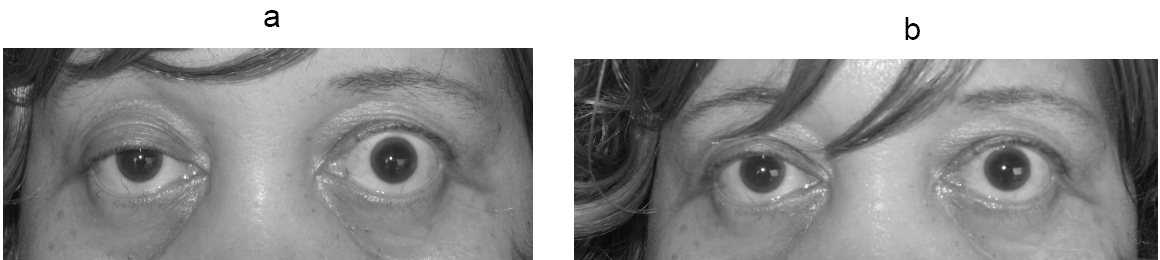
A 32-year-old woman presents with 3 weeks of drooping eyelids and double vision, worse in the evening. She says her jaw gets tired halfway through dinner, and by the end of the day she can barely keep her eyes open. This morning she felt fine. A CT chest shows an anterior mediastinal mass.
What's the most likely diagnosis?
Lambert-Eaton Myasthenic Syndrome
Myasthenia Gravis
Botulism
Multiple Sclerosis
The Junction, Why This All Makes Sense

Every NMJ disorder attacks a different part of the same synapse. Once you know WHERE the problem is, the clinical picture writes itself.

NERVE TERMINAL ACh ACh ACh ACh VGCC VGCC synaptic cleft MUSCLE MEMBRANE AChR AChR LEMS anti-VGCC MG anti-AChR Botulism blocks release Each disorder attacks a different target in the same synapse WHERE the attack is = WHAT the symptoms are

The Normal NMJ in 30 Seconds

Action potential arrives at nerve terminal → VGCCsVoltage-Gated Calcium Channels. When the action potential depolarizes the nerve terminal, these channels open and let calcium flood in. Calcium is the signal that tells vesicles to fuse with the membrane and dump ACh into the cleft. No calcium entry = no ACh release. open → Ca2+ floods in → AChAcetylcholine. The neurotransmitter at the NMJ. Synthesized from choline + acetyl-CoA by choline acetyltransferase. Released in quanta (packets) from vesicles. Degraded by acetylcholinesterase in the cleft. Every step here is a potential drug target. vesicles fuse and release → ACh crosses the cleft → binds AChRsNicotinic Acetylcholine Receptors. These are ligand-gated ion channels (not muscarinic). When ACh binds, the channel opens, Na+ enters, the muscle depolarizes. In MG, antibodies block or destroy these receptors, fewer receptors = weaker signal = fatigable weakness. on muscle → muscle contracts.

Now break each step and watch what happens.

MG → Attacks the Postsynaptic Receptor

Anti-AChR antibodiesFound in ~85% of MG patients. These IgG antibodies bind to the nicotinic AChR, causing: (1) complement-mediated destruction of the postsynaptic membrane, (2) accelerated internalization of receptors, (3) direct blocking of ACh binding. Fewer functional receptors = each successive nerve impulse is less effective = fatigue. destroy or block AChRs on the muscle. The nerve releases ACh just fine, but there are fewer receptors to catch it.

First few contractions? Enough receptors still available. But with repeated use, the safety factor drops, each impulse recruits fewer and fewer receptors. The muscle gets weaker and weaker and weaker.

Worsens with repeated use. Better after rest.

LEMS → Attacks the Presynaptic Channel

Anti-VGCC antibodiesAntibodies against P/Q-type voltage-gated calcium channels on the presynaptic nerve terminal. These channels are what let calcium in to trigger vesicle fusion. Block them = less calcium = less ACh released per impulse. But with repeated stimulation, residual calcium BUILDS UP inside the terminal, eventually enough to trigger release. That's why repeated use HELPS. block calcium channels on the nerve terminal. Less Ca2+ gets in → less ACh gets released.

But here's the twist: with repeated nerve firing, residual calcium accumulates inside the terminal. Eventually enough builds up to trigger vesicle release despite the blocked channels. The muscle starts weak and gets stronger.

Improves with repeated use. The exact opposite of MG. 🔑 LEMS = Less at first, Eventually More Strength

Botulism → Blocks Vesicle Release Entirely

Botulinum toxinClostridium botulinum produces the most potent toxin known. It's a zinc metalloprotease that cleaves SNARE proteins (SNAP-25, synaptobrevin, syntaxin), the machinery that fuses vesicles with the membrane. No fusion = no ACh release = no muscle contraction. Same mechanism as Botox injections (which just use tiny, localized doses). cleaves SNARE proteins, the molecular machinery that fuses ACh vesicles with the membrane. The calcium channels work fine. The receptors work fine. The vesicles just can't release their contents.

Unlike MG or LEMS, this doesn't wax and wane, it's an acute, descending paralysis starting with cranial nerves (eyes, face, swallowing) and spreading downward.

⚠ THE Classic Board Trap: "Patient has weakness that improves with repeated muscle use." If you pick MG, you lose the point. MG worsens with use. That's LEMS. Improves with use = LEMS. Every time. The board loves this inversion.
Villain Cards

Each disorder is a villain with a signature attack. Tap to flip and read the full playbook.

Autoimmune, Postsynaptic
Myasthenia Gravis
Target
AChR on muscle (postsynaptic)
Antibody
Anti-AChR (85%) or anti-MuSK
Hallmark
Worsens with use, better with rest
First symptoms
Ptosis + diplopia (ocular first)
TAP TO FLIP
MG, The Mechanism
THE ATTACK: Anti-AChR antibodies destroy postsynaptic receptors via complement + accelerated internalization. Fewer receptors = weaker signal per impulse = fatigue builds with every contraction.
THE CHAIN: Normal nerve fires → ACh released fine → but receptors are gone → each successive impulse finds fewer targets → compound muscle action potential decrements on EMG.
CLINICAL SIGNATURE: Ptosis + diplopia that worsen through the day. Jaw tires chewing. Thymoma in 10-15% (CT chest every new MG). Treat: pyridostigmine (AChE inhibitor, more ACh stays in cleft).
THE BOARD TRAP: Stable MG patient crashes after aminoglycoside = drug-exacerbated crisis. Other offenders: fluoroquinolones, beta-blockers, Mg2+.
TAP TO FLIP BACK
Paraneoplastic, Presynaptic
Lambert-Eaton (LEMS)
Target
VGCC on nerve terminal (presynaptic)
Antibody
Anti-VGCC (P/Q-type)
Hallmark
IMPROVES with repeated use
Cancer link
Small cell lung cancer (50-60%)
TAP TO FLIP
LEMS, The Mechanism
THE ATTACK: Anti-VGCC antibodies block P/Q-type calcium channels on the presynaptic nerve terminal. Less Ca2+ enters → less ACh released per impulse. But with rapid firing, residual Ca2+ accumulates and overcomes the partial block.
THE CHAIN: First few contractions weak → rapid repeated firing → Ca2+ builds up inside terminal → vesicle release improves → strength increases. That's facilitation.
CLINICAL SIGNATURE: Proximal leg weakness (can't climb stairs). Dry mouth, constipation (autonomic). Reflexes absent but return after exercise. EMG: increment >100% at high-frequency stim.
THE BOARD TRAP: LEMS = hunt for SCLC. Can appear BEFORE the cancer is detectable. Treat: 3,4-DAP (amifampridine) + find the tumor.
TAP TO FLIP BACK
Toxin-mediated, Presynaptic
Botulism
Target
SNARE proteins (vesicle fusion machinery)
Trace It
Cleaves synaptobrevin/SNAP-25/syntaxin
Pattern
Descending paralysis, cranial nerves first
Pupils
Dilated (autonomic blockade)
TAP TO FLIP
Botulism, The Mechanism
THE ATTACK: Botulinum toxin is a zinc metalloprotease that cleaves SNARE proteins (the docking machinery for ACh vesicles). Ca2+ channels fine. Receptors fine. The vesicles simply cannot fuse with the membrane. Zero ACh release.
THE CHAIN: Toxin enters nerve terminal → cleaves SNARE proteins → vesicles stranded → no ACh in cleft → cranial nerve muscles fail first (diplopia, dysarthria, dysphagia) → descends to trunk and limbs → respiratory failure.
3 TYPES: Food-borne (canned food, 12-36h), Wound (IV drug users, skin-popping), Infant (honey spores in gut, floppy baby). All same toxin, different entry.
TREAT: Antitoxin (adults), BabyBIG (infants) + ICU support. No pyridostigmine (SNARE is the problem, not ACh levels).
TAP TO FLIP BACK
Autoimmune, Seronegative variant
Anti-MuSK MG
Target
MuSK (AChR clustering protein)
Test result
Anti-AChR NEGATIVE
Symptoms
Bulbar-predominant (speech, swallow)
Drug response
Pyridostigmine responds POORLY
TAP TO FLIP
Anti-MuSK MG, The Variant
THE ATTACK: Anti-MuSK antibodies prevent MuSK from clustering AChRs at the neuromuscular junction. Fewer clustered receptors = weaker transmission. Standard anti-AChR antibody test comes back negative, so labs can "miss" it.
CLINICAL SIGNATURE: More bulbar symptoms than classic MG: dysarthria, dysphagia, facial weakness. Ocular symptoms less common. Often harder to treat.
WHEN TO CHECK: MG-like presentation + negative anti-AChR → order anti-MuSK. If both negative = "double seronegative MG" (diagnose by clinical + EMG).
TREAT: Rituximab works better for anti-MuSK than for anti-AChR MG. Pyridostigmine often ineffective alone.
TAP TO FLIP BACK

Clinical Images

Loading images...
The Big Three, Side by Side

One table. Three disorders. Every board-tested difference.

Feature MG LEMS Botulism
Target Postsynaptic AChR Presynaptic VGCC SNARE proteins (presynaptic)
Antibody Anti-AChR (85%)
Anti-MuSK (5-8%)
Anti-VGCC (P/Q-type) None (toxin-mediated)
Repeated use WORSENS IMPROVES No significant change
Weakness pattern Ocular → bulbar → generalized
Ptosis, diplopia first
Proximal legs first
"Can't get out of a chair"
Descending
Cranial nerves → trunk → limbs
Reflexes Normal Decreased (improve after exercise) Decreased to absent
Autonomic Not typical Dry mouth, constipation, impotence Dilated pupils, constipation, urinary retention
Cancer link Thymoma (10-15%) Small cell lung cancer (50-60%) None
EMG pattern Decremental response on repetitive stim Incremental response at high-frequency stim Decremental; incremental at high freq
Treatment Pyridostigmine, thymectomy, immunosuppression 3,4-DAP, treat underlying cancer Antitoxin, supportive care
Crisis Myasthenic crisis (resp failure) → IVIG or plasmapheresis Rarely crises Respiratory failure, ICU
MG age demographics: Young women (20-30s) and older men (60-70s) = bimodal distribution. The young woman + ptosis + thymoma vignette is the boards' favorite.
LEMS cancer screening is mandatory: >50% of LEMS patients have an underlying small cell lung cancerSCLC expresses VGCCs on its surface. The immune system makes antibodies against the tumor's VGCCs, but those same antibodies cross-react with the VGCCs on nerve terminals. This is paraneoplastic, the cancer causes the syndrome. Finding LEMS = hunt for SCLC. CT chest + PET scan. If negative, repeat every 6 months for 2 years.. LEMS can be the FIRST sign of cancer, appearing months before the tumor is found.

Botulism, The Three Types (Boards Love #3)

  • Food-borne: Preformed toxin in improperly canned/preserved food. Symptoms within 12-36 hours.
  • Wound: C. botulinum infects a wound and produces toxin in vivo. Think IV drug users with skin-popping (black tar heroin).
  • Infant: Baby ingests spores (not preformed toxin), spores germinate in the immature gut. Classic board trigger: honey given to infant <1 year old. Presents with constipation, "floppy baby," weak cry, poor feeding. 🔑 Honey = Harmful to infants. Baby's gut can't Handle the spores.
⚠ Anti-MuSK MG: ~5-8% of MG patients have anti-MuSKMuscle-Specific Kinase. A receptor tyrosine kinase on the postsynaptic membrane that helps cluster AChRs. Anti-MuSK antibodies prevent AChR clustering = fewer functional receptors. These patients are often "seronegative" for anti-AChR but still have MG. They tend to have more bulbar symptoms (speech, swallowing) and respond POORLY to pyridostigmine. antibodies instead of anti-AChR. They're "seronegative" on the standard AChR antibody test but still have MG. Board clue: MG presentation + negative AChR antibodies → check anti-MuSK.
The Diagnostic Decision Tree

A patient walks in with weakness. You need to figure out if it's the junction. Let's practice the algorithm, you answer BEFORE the tree reveals.

Step 1: A patient has fluctuating weakness, some days better, some worse. It affects the eyes and face prominently. Does the weakness get BETTER or WORSE with repeated muscle use?
Worse with use (fatigable)
Better with use (facilitating)
Neither, it's constant and getting worse rapidly
The Branch:
Worse with use → Go to Step 2 (MG workup)
Better with use → Go to Step 3 (LEMS workup)
Acute descending → Go to Step 4 (Botulism)
Elimination Game, 5 Patients, 3 Diagnoses

Each clue eliminates one diagnosis. By the end, only the answer remains. Your working memory stays on the screen, not in your head.

Myasthenia Gravis
LEMS
Botulism
MG Treatment, The Board Loves This

Step 1: Symptom Control

PyridostigmineAn acetylcholinesterase inhibitor. It blocks the enzyme that breaks down ACh in the synaptic cleft. More ACh sticks around = more chances to bind to whatever AChRs remain. It treats symptoms but doesn't change the underlying autoimmune process. Side effects are cholinergic: diarrhea, cramping, salivation, bradycardia (think "SLUDGE", Salivation, Lacrimation, Urination, Defecation, GI distress, Emesis). (Mestinon) = first-line.

Blocks acetylcholinesterase → more ACh hangs around in the cleft → better chance of finding a receptor. Treats symptoms, NOT the autoimmune process.

Step 2: Immunosuppression

For moderate-severe MG beyond symptom control:

  • Corticosteroids (prednisone), fastest onset, but watch for initial worsening in first 2 weeks
  • Azathioprine, mycophenolate, steroid-sparing agents, take months to work
  • Rituximab, especially for anti-MuSK MG

Step 3: Thymectomy

Recommended for:

  • All patients with thymoma (surgical oncology indication)
  • Generalized MG patients age 18-50, even WITHOUT thymoma (MGTX trial showed benefit)

Myasthenic Crisis

Respiratory failure from MG = emergency. The diaphragm fatigues.

  • IVIG or plasmapheresis, both work fast (days)
  • Intubate if needed, watch for negative inspiratory forceNIF (Negative Inspiratory Force) measures diaphragm strength. Normal is about -60 cmH2O. In myasthenic crisis, if NIF weakens to less negative than -20 cmH2O, intubation is often needed. Serial NIF monitoring is how you track respiratory deterioration in MG. < -20 cmH2O
  • Hold pyridostigmine during crisis (excess cholinergic stimulation can worsen secretions)
⚠ Myasthenic vs Cholinergic Crisis: Both cause weakness + respiratory failure. Myasthenic crisis = too little ACh at receptors (underdose). Cholinergic crisis = too much ACh (overdose of pyridostigmine). Cholinergic crisis adds SLUDGE symptoms (salivation, lacrimation, urination, defecation, GI, emesis) + miosis. If they're drowning in secretions → cholinergic crisis. Stop the pyridostigmine.
⚠ Drugs that worsen MG: Aminoglycosides, fluoroquinolones, beta-blockers, magnesium, D-penicillamine. The board LOVES giving a stable MG patient a new medication and asking why they crashed. If they got an aminoglycoside for a UTI and now can't breathe → drug-induced MG exacerbation.
Quiz, 5 Patients, Don't Kill Them

12 questions in the pool, 5 random per load, shuffled answers. Every visit is different. Let's see if you were paying attention.

Board-Style Walkthrough

Board-Style Walkthrough

Original board-style vignettes. Shuffled, never-repeat, full explanations for every choice.