Phakomatoses: Neurocutaneous Syndromes

Skin findings + brain findings + tumor in a third organ. Pull at the skin clue, the brain follows. Three syndromes here · NF1 and NF2 live next door.

Step 1 · The Big Picture

All five phakomatoses, side-by-side

Each row is a discriminator. Scan the columns and the patterns jump out: TSC = tumors everywhere, Sturge-Weber = vascular face + brain, VHL = vascular cerebellum + kidney. NF1/NF2 abbreviated here · tap the chip in the hero for the full page.

  Tuberous Sclerosis Sturge-Weber VHL NF1 › NF2 ›
Phakomatoses comparison
Inheritance Autosomal dominant Sporadic (somatic mosaic) Autosomal dominant Autosomal dominant Autosomal dominant
Chromosome 9 (TSC1) or 16 (TSC2) Mosaic, not inherited 3p25 17 22
Gene / protein Hamartin / tuberin (mTOR brake) GNAQ somatic mutation VHL tumor suppressor (tags HIF-1α) Neurofibromin (Ras brake) Merlin (membrane organizer)
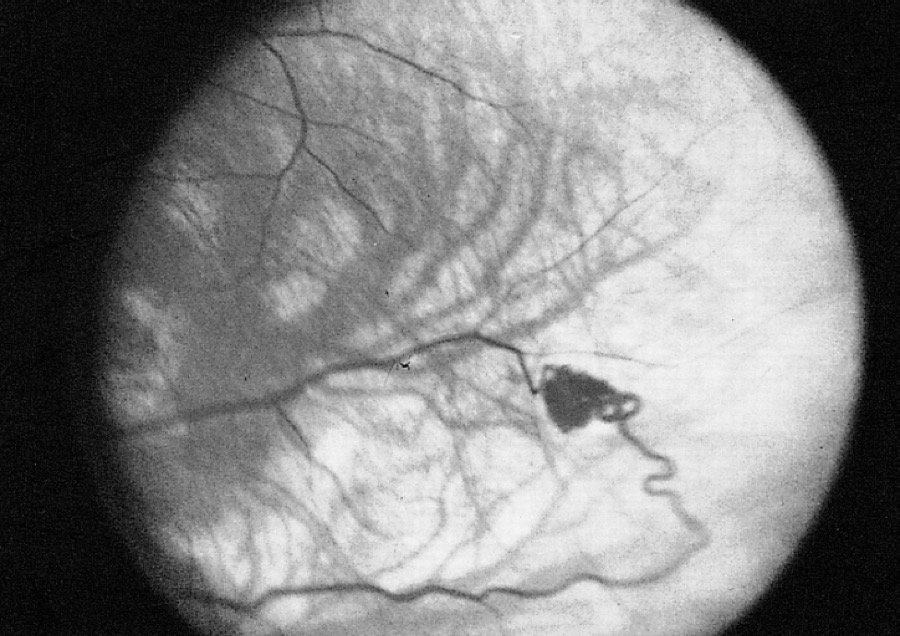
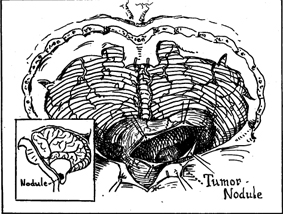
Brain finding Cortical tubers, subependymal nodules, SEGA at foramen of Monro · seizures + intellectual disability Leptomeningeal angioma, tram-track calcifications · seizures + intellectual disability CNS hemangioblastoma (cerebellum, brainstem, spinal cord) Optic pathway glioma (often pilocytic astrocytoma) Bilateral vestibular schwannomas, meningiomas
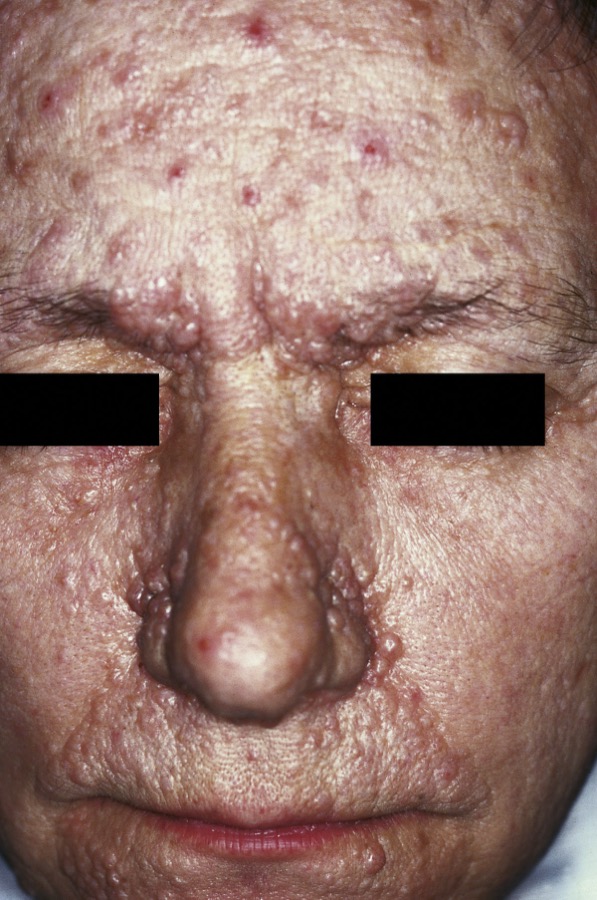
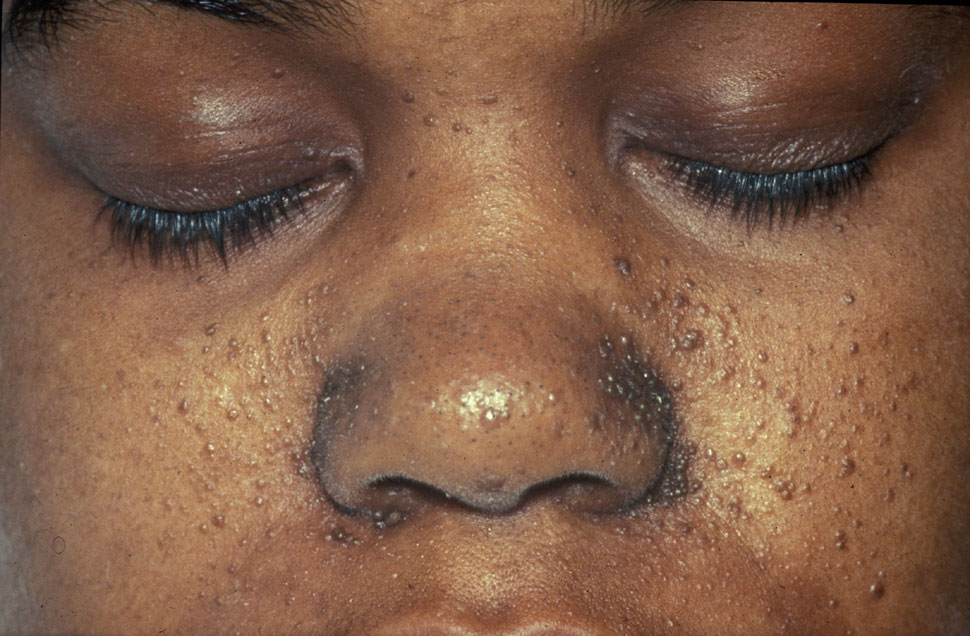
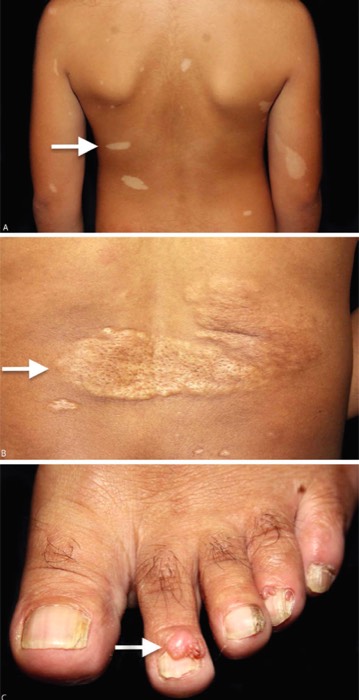
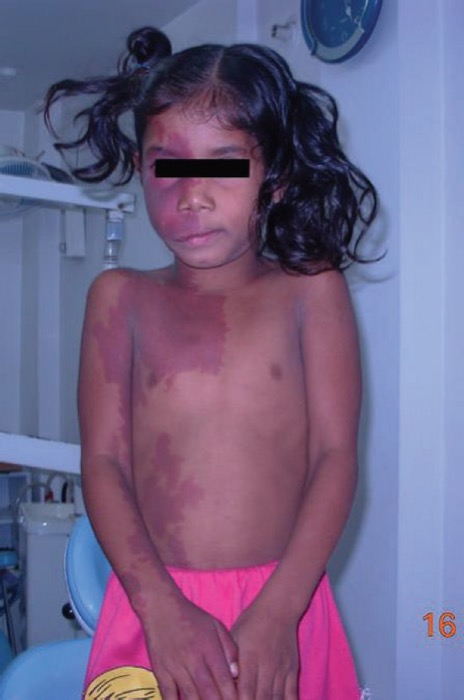
Skin finding Ash-leaf spots, shagreen patch, facial angiofibromas (adenoma sebaceum) Port-wine stain in trigeminal V1 distribution · present at birth Rare cutaneous angiomatosis Cafe-au-lait spots, axillary freckling, neurofibromas, Lisch nodules None typical (NF2 has no skin signature)
Other organ Cardiac rhabdomyoma, renal angiomyolipoma Choroid angioma → glaucoma, vision loss Clear-cell RCC, pheochromocytoma, pancreatic + epididymal cysts, retinal hemangioblastoma Pheochromocytoma (less common than VHL), scoliosis, learning disability Cataracts (juvenile), ependymomas
Step 2 · Tap a Syndrome

Open the case

Each card is a stem-style cluster of clues. Tap to expand into mnemonic, organ-by-organ findings, and the board trap.

Step 3 · The Body Map

"Tumors everywhere" · tap an organ

TSC drops a hamartoma in every system. Tap a glowing zone on the silhouette to see the finding and the board pearl.

Brain Heart Kidney Skin ANTERIOR VIEW
Tap a glowing zone to read the lesion.
TSC drops a hamartoma in every system · that is the whole shape of the disease.
Brain
Glial hamartomas, cortical tubers, SEGA
Subependymal nodules and cortical tubers cause seizures (often infantile spasms) and intellectual disability. SEGA (subependymal giant-cell astrocytoma) sits at the foramen of Monro and can obstruct CSF.
Pearl: SEGA at the foramen of Monro is the TSC brain tumor everyone gets quizzed on. New-onset hydrocephalus in a TSC patient = SEGA blocking the foramen.
Heart
Rhabdomyoma
Benign muscle tumor often picked up on prenatal ultrasound. Frequently regresses on its own by age 4. Can cause arrhythmias or outflow obstruction in infancy.
Pearl: Cardiac rhabdomyoma in a fetus or infant → check for TSC. It is the only phakomatosis with a cardiac tumor.
Kidney
Angiomyolipoma (AML)
Fat + vessels + smooth muscle. Often bilateral. Big AMLs bleed catastrophically (Wunderlich hemorrhage). Renal cysts may also be present.
Pearl: Painless flank mass or hematuria in a young TSC patient → image the kidneys. AML > 4 cm = consider embolization or mTOR inhibitor.
Skin
Ash-leaf spots · shagreen · angiofibromas
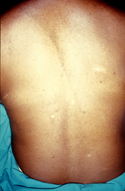
Ash-leaf spots: hypopigmented macules, brightest under Wood lamp. Shagreen patch: leathery raised plaque, usually lumbar. Facial angiofibromas (adenoma sebaceum): red papules across nose + cheeks, post-puberty.
Pearl: A baby with infantile spasms? Get a Wood lamp. Ash-leaf spots are often the first visible sign of TSC.
Step 4 · The V1 Rule

Port-wine stain plus V1 = think Sturge-Weber

A port-wine stain anywhere on the body is a capillary malformation. The one that drags brain and eye into the picture is the one that sits in the trigeminal V1 (ophthalmic) branch.

V1 · Ophthalmic V2 · Maxillary V3 · Mandibular PORT WINE
The Rule
Port-wine stain in V1 (ophthalmic) → suspect Sturge-Weber · image the brain, check eye pressure.
  • V1 (forehead, upper eyelid, scalp). The branch that shares vascular territory with the leptomeninges and eye. This is the high-risk zone.
  • V2 (cheek, upper lip). Lower risk, mostly cosmetic.
  • V3 (lower lip, jaw). Lower risk again.
  • Bilateral V1 involvement → even higher seizure and developmental risk.
  • Workup: MRI with contrast (look for leptomeningeal enhancement and tram-track calcifications), ophthalmology referral, EEG if seizures.
Step 5 · The VHL Engine

Why VHL grows vessels · tap the switch

VHL is a tumor suppressor whose only job is to tag HIF-1α for the shredder. Lose VHL, HIF-1α piles up, and the cell screams build more vessels. Every VHL tumor · hemangioblastoma, RCC, pheo, retinal hemangioma · is downstream of this one switch.

Oxygen sensedcell knows the state of perfusion
VHL proteinworking: tags HIF-1α
HIF-1αdegraded by proteasome
VEGF / PDGF / EPOgrowth signals: low
Vessels stableno abnormal growth
No tumorscerebellum, retina, kidney quiet
Normal: When oxygen is adequate, VHL tags HIF-1α for degradation. Growth signals stay low. Vessels stay calm. No tumor.
Step 6 · What It Looks Like

Clinical photo gallery

Real photos of the high-yield findings. Tap a photo to open the full image and caption.

Step 7 · The Quiz

Six discriminators. No second chances.

Original vignettes · pick A through E, read why the trap is a trap.

0/6
Reset and try again.
Wikimedia images, CC BY-SA. Cross-train next: brain tumors · classic skin findings · tumor suppressors.
Medically reviewed by Kaitlyn Cocuzzo, MD and Fatima Ali, DO · Last reviewed June 2026
Bone Wizardry is an independent educational resource for visual learning in the medical sciences. It is not affiliated with, endorsed by, or sponsored by any licensing or examination board, contains no real or recalled examination questions, and does not guarantee any educational or examination outcome.