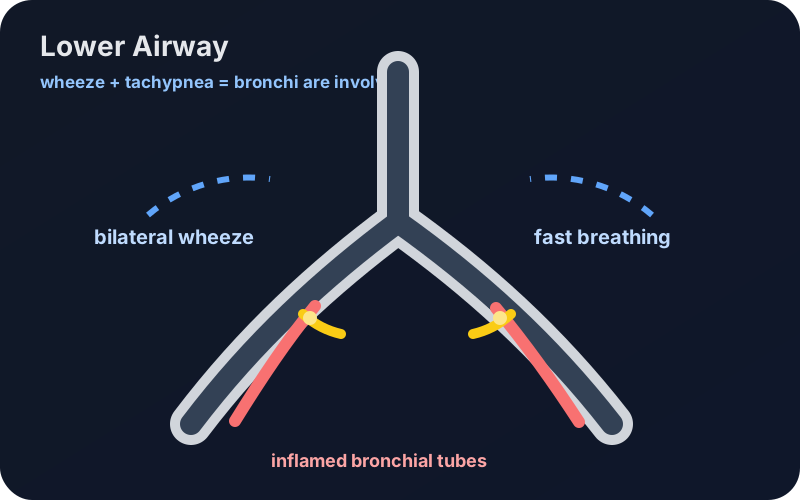
A cold can start the story, but the diagnosis changes the moment the exam moves from the nose and pharynx down into the bronchial tubes. Diffuse bilateral wheezes and faster breathing mean the lower airways are inflamed, so acute bronchitis beats the viral URI reflex. Locate the sound by anatomy first, then name the illness.
From the Attending
When a stem hands you a post-cold cough, do not autopilot to viral URI. Put the stethoscope on the anatomy. A quiet nose and throat with diffuse bilateral wheezes and a rising respiratory rate is the lower airway talking. That is acute bronchitis. Know your clues and the trap stops working on you.
Opening challenge
A healthy 27-year-old daycare worker has five days of cough after a mild scratchy throat. Temperature is 37.7 C, respiratory rate is 24/min, and oxygen saturation is 98% on room air. Lung exam reveals diffuse end-expiratory wheezes on both sides. The nasal mucosa is quiet, the oropharynx has no exudate, and there is no posterior pharyngeal drainage track. Which diagnosis best explains the pattern?
Right. The wheeze is not nasal. It is turbulent airflow through irritated bronchi. Viral URI can cough from postnasal drip, but diffuse bilateral wheezes plus tachypnea with a quiet nose and throat move the case into acute bronchitis.
Airway theater
A cold that drops below the larynx
Press the stages. The illness can begin in the nose and throat, but inflammation can descend into the bronchial tubes. Narrowed, mucus-filled bronchi turn airflow turbulent, and that turbulence is the wheeze you hear on both sides.
Nose / throat: quiet
Bronchi: narrowed
Wheeze source
Starts as a cold
Resp rate 14/min SpO2 98%
Tap a stage
Starts in the nose and throat
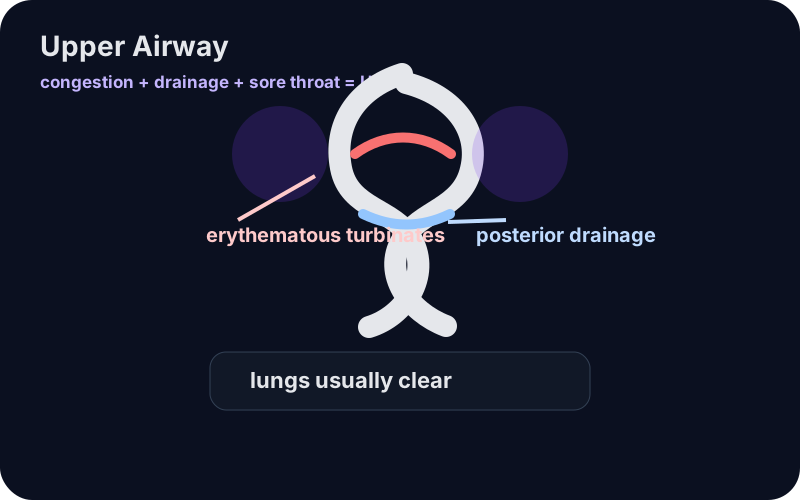
Many cases open like a common cold: a scratchy throat, a little congestion, mild cough. At this point the upper airway is the irritated tissue, and the lungs are still clear.
SiteUpper airway: nose and pharynx
PatternCold-like symptoms with clear lungs
PearlA quiet chest keeps the case upper-airway for now
Acute bronchitis: bronchial inflammation narrows the tube, and turbulent airflow through that narrowing produces the wheeze. Tap to expand.
Locate the sound
Find the abnormal finding by anatomy
The trick is not memorizing five illnesses. It is letting the abnormal finding pick the floor of the airway first, then confirming with the associated clues. Nose, sinus, throat, or bronchi.
Lower airway
Acute bronchitis
Bronchial inflammation after a respiratory infection. The chest is where the action is: diffuse bilateral wheezesWheeze is generated by turbulent airflow through narrowed bronchi. Diffuse and bilateral, with a rising respiratory rate, points below the larynx. or rhonchi, often with mild tachypnea. The case may open like a cold, but the lung exam decides it.
Upper airway
Viral URI
Congestion, rhinorrhea, and sore throat with clear lungsViral URI is an upper-airway mucosal infection. It can cough from drainage, but it does not produce diffuse bilateral wheeze the way bronchitis does.. Cough can come from postnasal drip, but the respiratory rate is usually not the clue and the chest stays quiet.
Nose
Allergic rhinitis
Sneezing, itching, and watery rhinorrhea with eye symptoms. The exam lock is pale, boggy turbinatesAllergic rhinitis is a histamine-driven nasal story. Boggy turbinates and a nasal smear with eosinophils confirm it; the lungs stay clear.. No fever pattern, clear lungs, and a seasonal or exposure trigger.
Sinus
Acute sinusitis
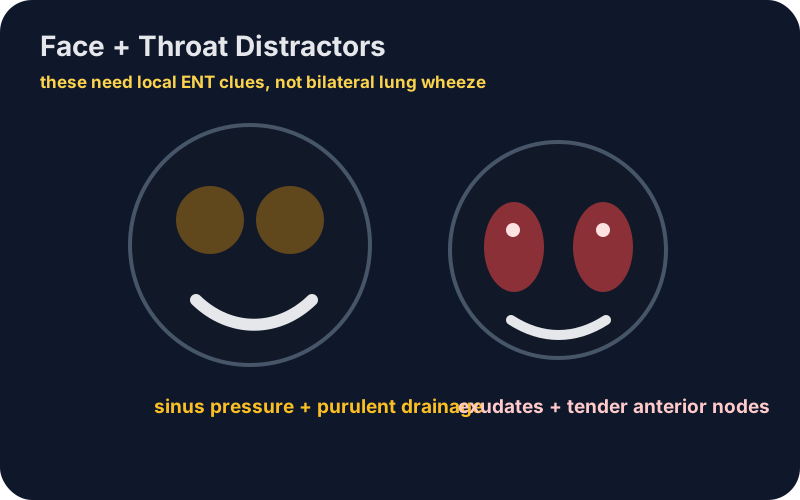
Facial pain or pressure with purulent drainageBacterial sinusitis is favored by symptoms beyond 10 days, double-worsening, fever, and purulent drainage with facial tenderness., and symptoms lasting at least 10 days or double-worsening. A quiet nose with no drainage track makes it a weak fit.
Throat
Strep pharyngitis
Fever, tonsillar exudatesGroup A strep pharyngitis centers on exudative tonsils and tender anterior cervical nodes, and cough is usually absent. Wheezing lungs are the wrong organ system., and tender anterior cervical nodes. Cough is usually absent. Wheezing lungs are the wrong organ system entirely.
From the Attending
Do not name the disease before you locate the sound. A wheeze is a lung clue, not a nose clue. Itch and boggy turbinates are allergy. Facial pressure with purulence and a long course is the sinus. Exudates and tender nodes with no cough is the throat. Make the anatomy answer first, every time.
A post-cold cough patient is in front of you. Where is the dominant abnormal finding?
Lung sounds move the problem into the lower airway. Diffuse bilateral wheeze with a rising respiratory rate is a bronchial clue, so now decide whether this is bronchitis or something more, like pneumonia. If the findings were nasal, sinus, or throat instead, you would sort URI, allergy, sinusitis, or strep by the exact upper-airway clue.
Next step unlocked: separate bronchitis from pneumonia in the lower airway.
The lungs wheeze diffusely, oxygen is stable, and there is no focal infiltrate. Which diagnosis fits best?
Diffuse wheeze, stable oxygen, and no infiltrate is acute bronchitis: the airway is inflamed without an alveolar pneumonia pattern. Focal crackles, hypoxemia, and an infiltrate would push you toward pneumonia, a different lower-airway branch. Viral URI cannot explain bilateral wheeze with tachypnea.
Pattern locked: quiet nose plus diffuse wheeze plus tachypnea equals bronchial airway involvement until proven otherwise.
Viral URI lane: congestion, rhinorrhea, and sore throat with clear lungs. When the chest is quiet, the case stays in the upper airway. Tap to expand.
Sort the look-alikes
Bronchitis vs the upper-airway mimics
These ride together in board questions because they share cough or viral timing. The trick is keeping their airway level and signature clues apart. Tap each tab.
Acute bronchitis: the lower-airway answer
Bronchial inflammation after a respiratory infection. Diffuse bilateral wheezes or rhonchi can appear, and the respiratory rate can rise because bronchial resistance increased. The case may begin like a cold, but the lung exam becomes the deciding clue. If the lungs wheeze diffusely, stop treating the case as a nose-only illness.
Viral URI: upper airway, clear lungs
An upper-airway mucosal infection with nasal congestion, rhinorrhea, sore throat, or cough from drainage. The lungs are usually clear and the respiratory rate is usually not the clue. URI can cough, but it does not explain bilateral wheeze as cleanly as bronchitis. URI lives above the larynx unless the lung exam says otherwise.
Allergic rhinitis: the nasal histamine story
Sneezing, itching, watery rhinorrhea, and eye symptoms, with pale or boggy turbinates as the exam lock and a nasal smear that can show eosinophils. No fever pattern and usually clear lungs. Without itch, sneezing, watery symptoms, or boggy turbinates, it loses. Allergic rhinitis needs nasal allergy clues, not bronchial wheeze alone.
Acute sinusitis: trapped, inflamed drainage
Facial pain or pressure, purulent nasal drainage, and symptoms lasting at least 10 days or double-worsening. A quiet nose with absent posterior drainage makes it a weak fit. Sinusitis earns the answer with the time course plus purulence or facial pressure, not with a diffuse wheeze.
Streptococcal pharyngitis: throat-centered
Fever, tonsillar exudates, and tender anterior cervical nodes, with cough usually absent. Rapid antigen testing or throat culture can support it. Wheezing lungs are the wrong organ system. Strep needs a throat pattern and the absence of cough, not diffuse wheeze.
The distractors: sinus pressure, boggy turbinates, or exudative tonsils all point away from the bronchi. Tap to expand.
Wheeze = below the throat
Wheeze plus tachypnea is a lower-airway clue. Diffuse bilateral wheezes with a quiet nose and throat is acute bronchitis, not viral URI.
Tap to reveal
Quiet nose + wheeze + fast breathing
Quiet nose plus diffuse wheeze plus tachypnea equals bronchial airway involvement until proven otherwise. That is the final rule.
Tap to reveal
Locate, then name
Place the abnormal finding by anatomy first: nose, sinus, throat, or bronchi. Let the location pick the diagnosis, then confirm with the clue.
Tap to reveal
Board walkthrough
One patient at a time
Use the exam tools before you answer: right-click or long-press to cross out, double-click or double-tap to highlight. The highlighted clues glow only after you commit.
Medically reviewed by Fatima Ali, DO and Kaitlyn Cocuzzo, MD · Last reviewed June 2026
Bone Wizardry is an independent educational resource for visual learning in the medical sciences. It is not affiliated with, endorsed by, or sponsored by any licensing or examination board, contains no real or recalled examination questions, and does not guarantee any educational or examination outcome.