Most common nephritic syndrome in adults. The board pivot: timing is everything.
Board Question · Read Every Word
A 21-year-old Asian woman presents with gross hematuria for 2 days. She denies dysuria, flank pain, or fever. She recovered from a sore throat 3 days ago; rapid strep testing was negative. Vital signs are within normal limits. Exam shows mild periorbital and lower extremity edema. Urinalysis: gross hematuria, negative for nitrites. Osteopathic lymphatic drainage is performed. Which of the following best explains her renal findings?
Most likely diagnosis?
Clinical Images
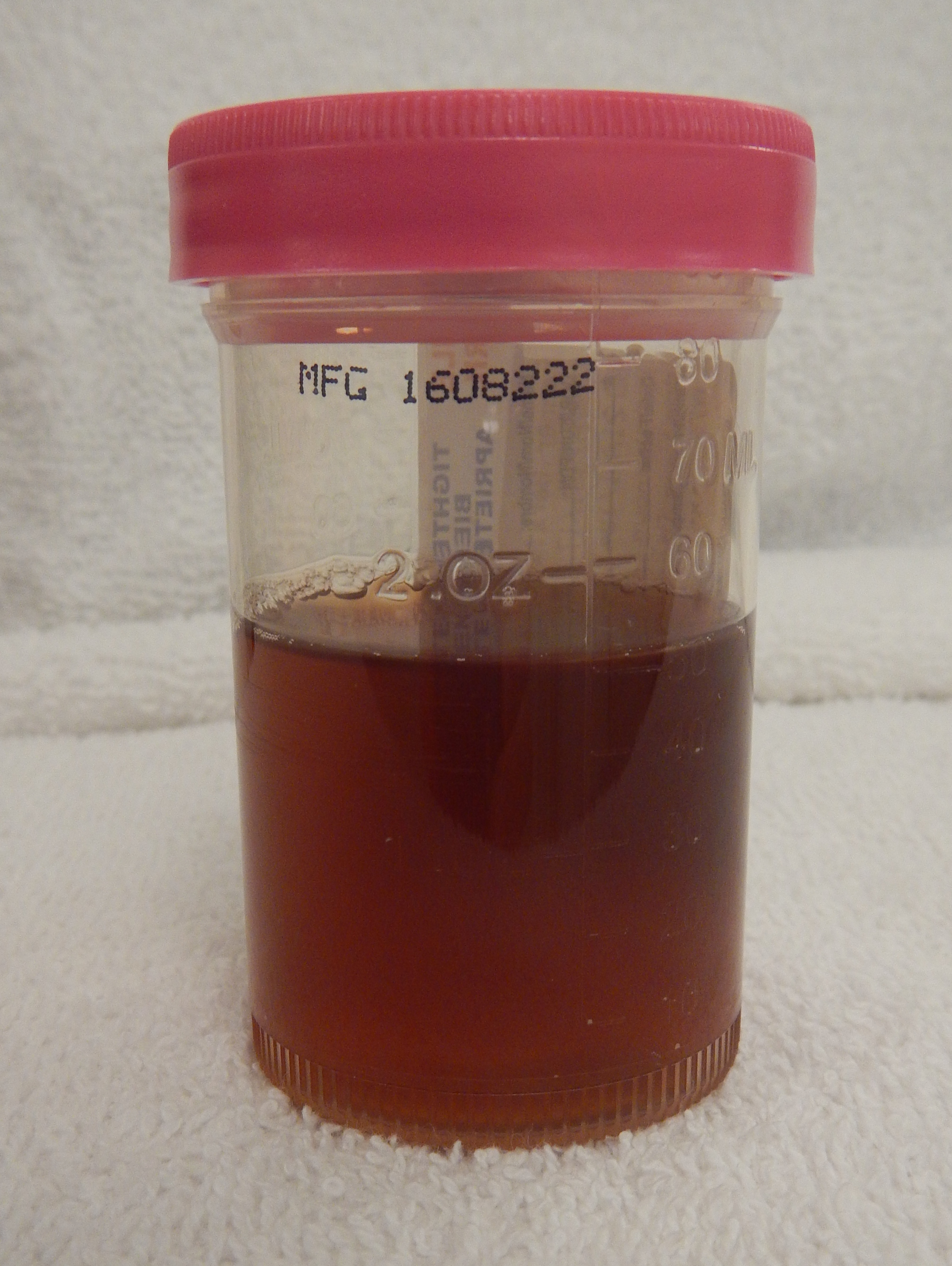
Gross hematuria · The synpharyngitic sign · Cola-colored urine
Crescentic GN · High mag · The rapidly-progressive IgA variant
Post-infectious GN · High mag · Compare timing to IgA neph
Post-infectious GN · Intermed mag · Hypercellular glomerulus
MPGN · High mag · Tram-track GBM splitting
1 of 7
The Mechanism
URI → Mucosal IgA → Mesangial Trap → Blood
Walk the 4-step chain before you flip to the diagnosis.
Mechanism Stage · IgA Nephropathy
Tap Step 1 to begin. The pharynx fires first.
Step by Step: URI to Hematuria
Mucosal surfaces (pharynx, gut) pump out secretory IgAIgA is the antibody of mucosal immunity. It protects airway and gut linings. Normally stays local and doesn't activate complement aggressively. as part of normal immune defense. In IgA nephropathy, there is a specific defect: poorly galactosylated IgA1 polymerizes and escapes into circulation during mucosal infections.
These abnormal complexes land in the mesangium, where mesangial cellsMesangial cells are the support cells of the glomerular tuft. They have receptors for IgA (CD89/galectin-3 binding protein) and phagocytose immune complexes. recognize and trap them. Complement activates, the GBM gets disrupted, and red blood cells pour into the urine.
The board signature is synpharyngitic hematuria: blood appears AT THE SAME TIME as the infection, not weeks later.
⚡IgA neph = concurrent hematuria with URI (0-5 days). PSGN = 2-4 week latent period after confirmed strep. That gap is the whole board game.
⚠
The Negative Strep Bait
The question plants "negative rapid strep" to tempt you away from IgA nephropathy toward PSGN. But IgA neph triggers during ANY mucosal infection: viral URI, GI illness, non-strep pharyngitis. PSGN requires confirmed Group A Strep. Negative strep rules out PSGN, not IgA neph. The timing (concurrent) and the negative strep together lock in Berger disease.
2 of 7
The Differential
Four Conditions. One Correct Answer.
Tap each card. The flip side has the full breakdown. Timing wins every time.
CONCURRENT
IgA Nephropathy
Berger disease · Most common nephritic in adults
📷 Histology · tap to expand
Timing0-5 days after URI
TriggerAny URI or GI infection
Strep requiredNo
IF patternMesangial IgA
ComplementNormal C3 + C4
🟢 Hallmark: Synpharyngitic hematuria
tap to flip →
Full Breakdown
How It Works
Hypogalactosylated IgA1 polymerizes, escapes mucosal sites, deposits in mesangium. Mesangial cells activate complement (mainly alternative pathway), causing proliferation and GBM disruption.
Path Findings
LM: Mesangial proliferation. IF: Dominant IgA in mesangium (diagnostic). EM: Electron-dense mesangial deposits.
Associations
Asian and Pacific Islander populations, celiac disease, liver cirrhosis (impairs IgA clearance), Henoch-Schonlein Purpura (same mechanism, systemic).
Prognosis
25% reach ESRD over 25 years. ACE inhibitors for proteinuria. Steroids only for crescentic/progressive disease.
2-3 WK DELAY
Post-Strep GN
PSGN · Most common nephritic in children
Timing2-4 wks after pharyngitis
TriggerGroup A Strep ONLY
Strep requiredYes
IF patternGranular "starry sky"
ComplementLow C3, normal C4
🔵 Hallmark: Low C3 + latent period
tap to flip →
Full Breakdown
How It Works
Strep antigens (streptokinase, endostreptosin) form immune complexes with IgG/IgM. Sub-epithelial immune complex deposits activate complement heavily, causing the neutrophil-packed hypercellular glomeruli.
Mesangial cells proliferate and insert into the GBM lamina densa, creating a double-layered basement membrane. On silver or PAS stain, this looks like train rails (tram tracks). The GBM literally splits.
Type Breakdown
Type I: Subendothelial IC deposits (HCV, HBV, SLE). Type II (Dense Deposit Disease): C3 nephritic factor locks C3 convertase "on," continuous C3 consumption, ribbon-like GBM deposits.
Board Key
Both C3 AND C4 low (classical pathway activated). Chronic proteinuria and hematuria. HCV patient is the stereotype. Tram-track on LM is the pathology signature.
BENIGN
Thin BM Disease
Benign familial hematuria
Hematuria typeMicroscopic ONLY
TriggerGenetic (COL4A3/A4)
EM findingThin GBM (<200 nm)
ComplementNormal
PrognosisBenign, no ESRD
🟢 Hallmark: Microscopic only, no edema
tap to flip →
How To Kill This Answer Fast
Two-Second Rule
Thin basement membrane disease NEVER causes gross hematuria. Never. The patient would never see cola-colored or pink urine. It causes persistent asymptomatic microscopic hematuria that shows up on routine UA. If the patient notices visible blood, this answer is eliminated before you finish reading the choice.
Relation to Alport
Thin BM = heterozygous COL4 carrier. Alport = homozygous/hemizygous = full disease with sensorineural hearing loss, lenticonus, basket-weave GBM on EM, progressive ESRD, and X-linked inheritance (most common).
Board Key
Family history of hematuria, normal hearing, no vision changes, young and healthy, never sees gross blood. No treatment needed. Will not progress to ESRD (unless they have the full Alport mutation).
3 of 7
Decision Tree
Hematuria After URI: Work the Tree
Answer each node to unlock the next branch. No peeking.
Node 1: Patient has hematuria after a URI. How far after?
Same time or within 1 week of URI (concurrent)
2 to 4 weeks after URI resolved (delayed)
Node 2 (concurrent path): Is there confirmed Group A Strep?
No confirmed strep (viral URI, negative rapid strep, GI illness)
Yes, Group A Strep confirmed by culture or ASO titer
Node 3 (delayed path): Check complement. What do you find?
C3 low, C4 normal
Both C3 and C4 low
4 of 7
Side by Side
The Full Comparison Cheat Sheet
Memorize the Timing row first. Everything else follows from there.
Feature
IgA Nephropathy
Post-Strep GN
MPGN
Thin BM Disease
Timing
Concurrent (0-5 d)
2-4 wks after strep
Chronic, no relation
Persistent microscopic
Hematuria type
Gross, recurrent
Gross (acute)
Gross or microscopic
Microscopic ONLY
Trigger
Any URI / GI
Group A Strep ONLY
HCV, HBV, SLE
Genetic (COL4A3/A4)
IF deposit
Mesangial IgA
IgG + C3 granular
IgG + IgM + C3
Negative IF
EM deposit
Mesangial deposits
Sub-epithelial humps
Subendothelial
Thin GBM (<200 nm)
LM finding
Mesangial proliferation
Hypercellular + neutrophils
Tram-track GBM
Normal or thin
Complement
Normal C3 + C4
Low C3, normal C4
Low C3 AND C4
Normal
Strep required
No
Yes
No
No
Prognosis
25% ESRD at 25 yrs
Usually self-limited
Slowly progressive
Benign
IgA Nephropathy
TimingConcurrent (0-5 days)
IFMesangial IgA
ComplementNormal C3 + C4
Prognosis25% ESRD in 25 yrs (tap)
Post-Strep GN
Timing2-4 weeks after
IFGranular IgG + C3
ComplementLow C3, normal C4
EMSub-epithelial humps (tap)
MPGN
TimingChronic
LMTram-track GBM
ComplementLow C3 AND C4
TriggerHCV, HBV, SLE (tap)
Thin BM Disease
HematuriaMicroscopic ONLY
EMThin GBM (<200 nm)
ComplementNormal
PrognosisBenign (tap)
5 of 7
Memory Hooks
Three Hooks. Tap to Unlock.
Blur means you haven't committed yet. Tap to reveal each one.
🎬
IgA neph: when does blood appear?
IgA runs WITH the infection like a live broadcast. URI starts, blood appears the SAME WEEK. PSGN comes after, like a scathing Yelp review posted 3 weeks later. The I in "IgA" stands for "Immediate." The P in "PSGN" stands for "Post."
Tap to reveal
🧯
Why Asian demographics?
IgA nephropathy is 3-4x more prevalent in East Asian populations due to a higher frequency of genetic variants that increase aberrant IgA1 galactosylation. clinical medicine quietly plant "Asian" in demographics as a soft clinical clue pointing toward IgA nephropathy.
Tap to reveal
⚽
Complement shortcut for all 4 conditions
IgA neph: C3 normal (alternative pathway not dominant). PSGN: C3 low, C4 normal (alternative pathway, classical spared). MPGN: C3 AND C4 low (classical pathway consumed). Thin BM: normal everything (no immune complexes).
Tap to reveal
When IgA Nephropathy Goes Systemic: HSP
Isolated IgA nephropathy = only the kidney affected. When the same aberrant IgA deposits in vessel walls throughout the body, the disease becomes IgA vasculitis (HSP)Henoch-Schonlein Purpura / IgA vasculitis: palpable purpura on buttocks and lower extremities, arthralgia, abdominal pain, and renal involvement. Identical IgA mechanism, systemic distribution..
⚠Board clue for HSP: if the stem adds palpable purpura on the buttocks or lower extremities plus arthralgia and/or abdominal pain to the hematuria, it is HSP, not isolated IgA neph. Same mechanism, different anatomic scope.
HSP is more common in children. Adults can get it too, and it tends to be more severe in adults. The renal involvement in HSP is pathologically identical to IgA nephropathy on biopsy (mesangial IgA deposits).
6 of 7
clinical Walkthrough
Seven Patients. The Timing Trap Set Each Time.
Right-click or long-press to cross out choices. Double-click to highlight. Tools lock after answering.
Seven original clinical vignettes. One at a time. Shuffle resets the pool.
7 of 7
Medically reviewed by Kaitlyn Cocuzzo, MD and Fatima Ali, DO · Last reviewed June 2026
Bone Wizardry is an independent educational resource for visual learning in the medical sciences. It is not affiliated with, endorsed by, or sponsored by any licensing or examination board, contains no real or recalled examination questions, and does not guarantee any educational or examination outcome.