The antiviral state is not inflammation. It is a cell pulling down its own factory shutters so a virus cannot build copies. IFN-alpha and IFN-beta sound the alarm that halts translation.
Commit before you scroll. A 35-year-old woman comes to the clinic with four days of fever, headache, severe muscle aches, and a sore throat. On exam she has mild pharyngeal erythema and nasal congestion. A rapid influenza antigen test is positive. She recovers over several days with only symptomatic treatment. Infected respiratory epithelial cells secrete increased interferons. Which change do those interferons most likely cause in the infected cells?
Decreased apoptosis of infected cells
Decreased protein synthesis by infected cells
Increased class II MHC expression on infected cells
Increased intracellular killing by macrophages
Increased neutrophil recruitment to the mucosa
The trap here is that every answer "activates the immune response," and most students reach for the loudest one. Interferons do sound like inflammation, but Type I interferons (IFN-alpha and IFN-beta) are not recruiting calls. They are shutdown orders. The infected cell releases them to warn neighbors, and the net effect is to halt host protein synthesis and push infected cells toward apoptosis so the virus loses its printing press. Macrophage killing and class II MHC are the IFN-gamma (Type II) story, not this one. Type I interferons shut the factory, they do not staff it.
Section 1
The Antiviral State
Watch one infected cell broadcast the alarm that arms its neighbors. Advance each phase, then predict what happens when virus reaches an armed neighbor.
Influenza A virions (electron micrograph). The very particles whose nucleic acid trips the innate sensors that fire the Type I interferon alarm.
Chapter I · Respiratory Epithelium
Cell 7
A ciliated airway cell, two days into influenza. Viral RNA is loose in its cytoplasm. You will watch the innate alarm fire and the neighbor cells arm themselves.
VIRAL ENTRY
Phase 1 of 4. A virion docks and uncoats.
An armed neighbor now meets the virus. Its protein synthesis will:
Pattern Locked
The Antiviral State
IFN-alpha and IFN-beta do not call soldiers. They tell the factory to stop the line.
RouteParacrine alarm from an infected cell to its neighbors, then autocrine on itself.
PathwayIFNAR to JAK1 and TYK2 to STAT1 and STAT2 (ISGF3) to interferon-stimulated genes.
EffectorsPKR phosphorylates eIF2-alpha to stop translation. OAS turns on RNase L to shred viral RNA.
PearlThe net result is halted host protein synthesis plus apoptosis, not boosted inflammation.
Section 2
Type I vs Type II Sorter
Most wrong answers on this topic come from giving an IFN-gamma fact to an IFN-alpha question. Sort each statement before the reveal. Tap Type I, Type II, or Both.
Type I (alpha, beta)
Antiviral state
Type II (gamma)
Macrophage activation
Section 3
Trace the Cascade
Follow one signal from viral RNA to halted translation. Commit at each node before the next step reveals.
1
A virus uncoats and releases double-stranded RNA in the cytoplasm. Which intracellular sensor first flags it to turn on Type I interferon?
Toll-like receptor 4 on the surface
RIG-I or MDA5, the cytoplasmic RNA helicases
NF-kB alone, without IRF3
2
The sensor activates transcription factors that drive IFN-alpha and IFN-beta gene expression. Which pair is specific to Type I interferon induction?
STAT1 homodimers, the gamma-activated factor
IRF3 and IRF7, the interferon regulatory factors
HIF-1 alpha, the hypoxia factor
3
Secreted IFN binds IFNAR on a neighbor. The JAK-STAT signal switches on interferon-stimulated genes. What is the net effect in that neighbor when virus arrives?
Host protein synthesis halts via PKR and RNase L
Neutrophil recruitment surges through IL-8
Class II MHC expression rises on the epithelium
Memory Hooks
Tap to unblur. Test yourself first.
⚠
Which interferon is which
Type I (alpha, beta) means Interfere with the virus: halt the factory. Type II (gamma) means Get the macrophage going. One shuts the line, one hires the cleaner.
tap to reveal
✂
PKR vs RNase L
PKR phosphorylates eIF2-alpha and Stops translation. OAS activates RNase L and Shreds viral RNA. One freezes the printer, one feeds paper to the shredder.
tap to reveal
💊
Clinical uses by type
Alpha does virus and tumors: Hepatitis, Hairy cell, Kaposi, condyloma, melanoma, renal cell. Beta does the brain: Multiple sclerosis. Gamma does the phagocyte: Chronic granulomatous disease.
tap to reveal
💆
Adverse effects tell the story
Interferon therapy causes flulike symptoms, because that achy feverish misery IS the cytokine you normally make fighting a virus. Also watch for depression, neutropenia, myopathy, and autoimmunity.
tap to reveal
Section 4
Clinical Uses and Findings
Tap a card to flip. Front: what each interferon treats. Back: why it works and the adverse effect to watch.
IFN-alpha
Type I · leukocyte interferon
VIRUSES AND TUMORS: chronic hepatitis B and C, hairy cell leukemia, Kaposi sarcoma, condyloma acuminatum, melanoma, renal cell carcinoma.
tap to flip →
Why It Works
Mechanism
Induces the antiviral state in uninfected hepatocytes and boosts class I MHC so CD8 T cells recognize infected or tumor cells. Also antiangiogenic in renal cell carcinoma and Kaposi sarcoma.
Adverse effects
Flulike symptoms, depression and suicidality, neutropenia, myopathy, and interferon-induced autoimmunity such as thyroiditis.
IFN-beta
Type I · fibroblast interferon
MULTIPLE SCLEROSIS: reduces relapse rate and new lesions in the relapsing-remitting form.
tap to flip →
Why It Works
Mechanism
Shifts the immune response away from inflammatory Th17 traffic into the central nervous system and reduces T-cell crossing of the blood-brain barrier. A Type I interferon used as immune modulation, not antiviral clearance.
Adverse effects
Flulike symptoms, injection-site reactions, liver enzyme elevation, and rare neutralizing antibodies that blunt efficacy.
IFN-gamma
Type II · immune interferon
CHRONIC GRANULOMATOUS DISEASE: prophylaxis to boost phagocyte killing. Made by Th1 cells and NK cells.
tap to flip →
Why It Works
Mechanism
Binds IFNGR, signals through JAK1 and JAK2 to STAT1 homodimers, and activates macrophages: upregulated class II MHC, more phagocytosis, and a bigger respiratory burst. In CGD it partially restores reactive oxygen species output.
Adverse effects
Fever, chills, headache, injection-site reactions, and fatigue with chronic dosing.
Findings Behind the Uses
Tap any image to expand. Each ties an interferon use to a real finding.
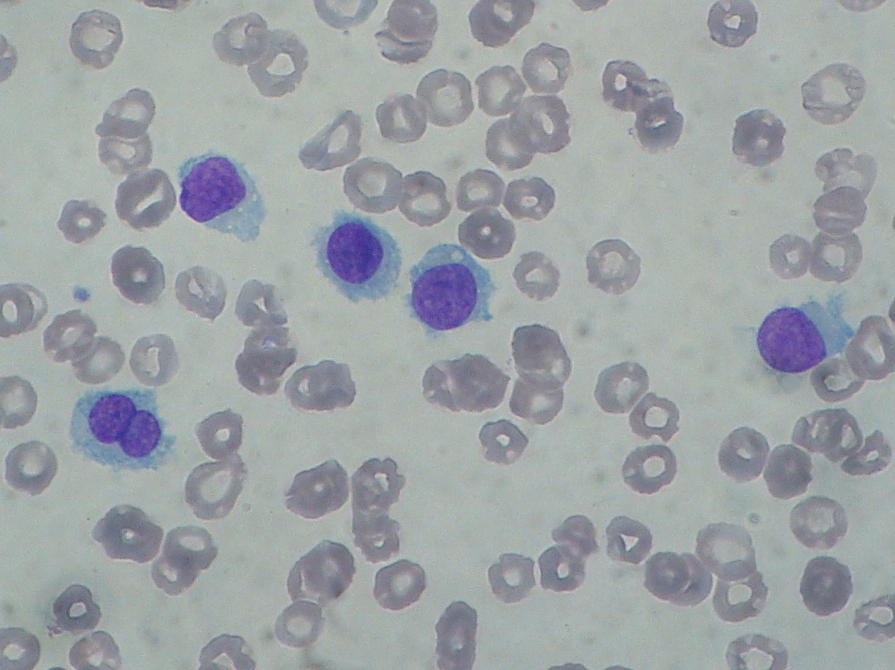
HAIRY CELL LEUKEMIA SMEAR · tap to expand
KAPOSI SARCOMA · tap to expand
MULTIPLE SCLEROSIS MRI · tap to expand
Section 5
Board Walkthrough
26 original vignettes, one at a time, shuffled and never repeated until the bank runs dry. Right-click or long-press to cross out, double-click or double-tap to highlight.