Right upper quadrant discomfort baits the gallbladder, so students name the storage pouch and miss the disease. When alkaline phosphatase and bilirubin dominate and antimitochondrial antibody is positive, the disease lives in the biliary drainage system. That is primary biliary cholangitis, an autoimmune attack on small bile ducts. Sort that once and the cholestatic question set falls apart in your favor.
From the Attending
When a stem hands you fatigue, itching, a sky-high alkaline phosphatase, and a positive antimitochondrial antibody, do not reach for the gallbladder just because it sits in the right upper quadrant. The gallbladder stores bile. It does not become autoimmune. Read the enzymes, then the antibody, then the imaging. Know your clues and the trap stops working on you.
Opening challenge
A 54-year-old woman has months of fatigue, itching, dry eyes, and intermittent right upper abdominal discomfort. Total bilirubin is 5.8 mg/dL, AST is 78 U/L, ALT is 86 U/L, and alkaline phosphatase is 690 U/L. Antimitochondrial antibody testing is positive, and ultrasound shows no gallstones. Which structure family best explains the pattern?
Right. The lab pattern says bile is not draining, and the antibody names primary biliary cholangitis, an autoimmune attack on small intrahepatic bile ducts. The gallbladder is only the storage pouch; it cannot explain a positive antimitochondrial antibody or autoimmune small-duct destruction. Right upper quadrant discomfort alone never beats the cholestatic labs plus the antibody.
Route theater
Route the bile before naming the organ
Press the stages. Hepatocytes make bile, small intrahepatic ducts carry it, the gallbladder stores it, and the common bile duct drains it to the gut. A cholestatic lab pattern is a drainage alarm, and the antibody tells you the attack is on the small ducts.
Hepatocytes make bile
Small intrahepatic ducts
Gallbladder stores
Bile starts in the liver
ALP 110 U/L Bilirubin 1.0 mg/dL
Tap a stage
The liver makes the bile
Hepatocytes produce bile and pass it into the smallest intrahepatic bile ducts. The gallbladder has not touched it yet. If you start naming organs from pain location, you skip the structure that actually makes and routes bile.
RouteLiver makes bile and feeds small intrahepatic ducts
PatternProduction starts upstream, long before the gallbladder
PearlName the maker and the pipes before the pouch
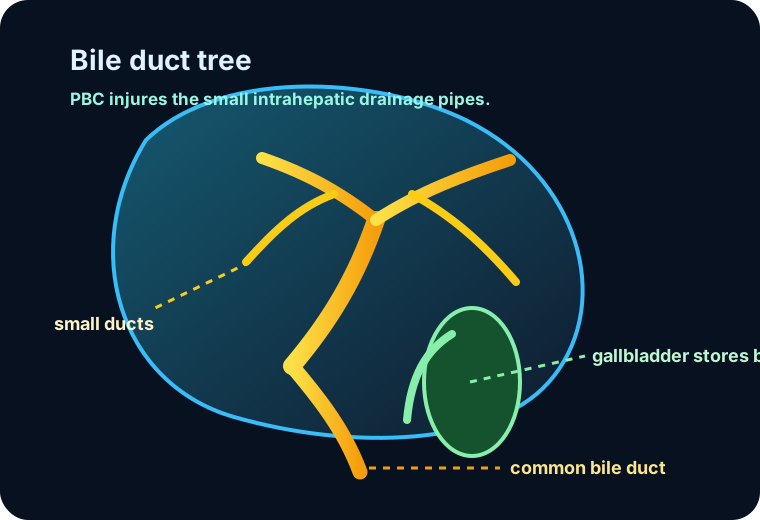
The bile duct tree: the drainage pipes that get attacked or obstructed in cholestatic disease. Primary biliary cholangitis targets the smallest of these intrahepatic ducts. Tap to expand.
Structure triage
Separate pipe disease from pouch disease
Students pick the gallbladder because it lives in the right upper quadrant. Boards reward the structure that explains the lab pattern. Read the enzymes, then the antibody, then the imaging.
Bile ducts
The pipes, attacked in PBC
Primary biliary cholangitis is an autoimmune assault on the small intrahepatic bile ductsPBC destroys the smallest bile ducts inside the liver. Bile acids back up, raising alkaline phosphatase and bilirubin and causing itching. The antimitochondrial antibody is the serologic fingerprint.. Bile cannot drain, so alkaline phosphatase and bilirubin climb while antimitochondrial antibody marks the diagnosis. This is the structure that explains the whole cluster.
Gallbladder
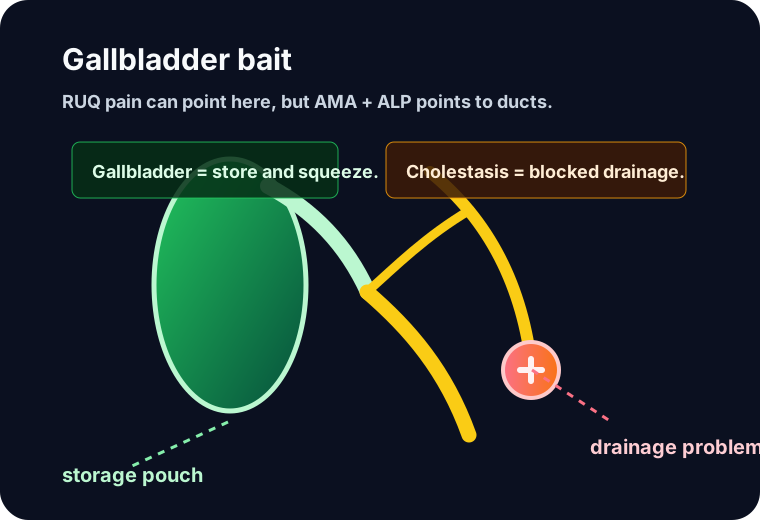
The pouch, not autoimmune
The gallbladder stores and concentrates bile between meals. It earns the answer with stones and a Murphy signGallbladder disease shows fatty-meal right upper quadrant pain, fever, a positive inspiratory arrest on palpation, leukocytosis, and gallstones with a thickened wall on ultrasound. None of that is antibody driven., not with a positive antimitochondrial antibody. Right upper quadrant pain alone is bait, never proof.
Labs
The cholestatic alarm
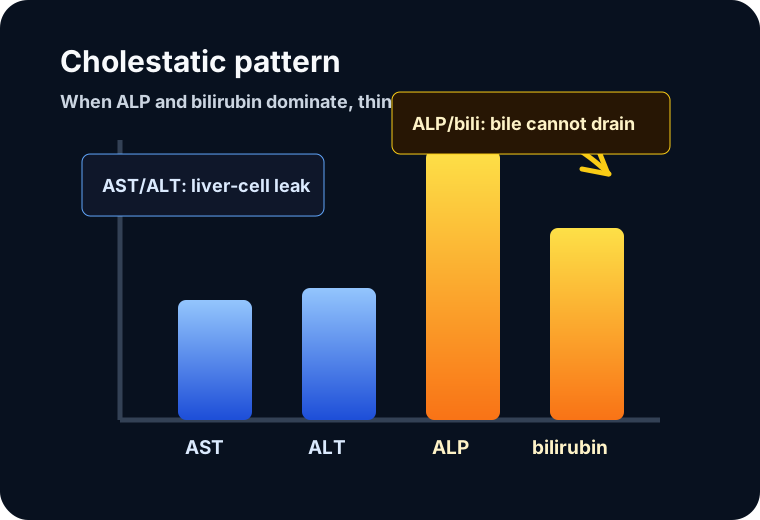
When alkaline phosphatase and bilirubin dominateA cholestatic pattern means bile flow is impaired. ALP and direct bilirubin rise more than AST and ALT. Hepatocyte injury would instead drive the aminotransferases up first. over AST and ALT, the problem is bile flow, not liver-cell injury. The labs route you to the pipes before any organ name.
From the Attending
Do not blur these together. A huge alkaline phosphatase with retained bilirubin is a drainage alarm. A positive antimitochondrial antibody is the bile duct tree. Stones with a Murphy sign are the gallbladder. One enzyme pattern, one antibody, and the pouch is not the answer unless the imaging earns it.
The cholestatic pattern: alkaline phosphatase and bilirubin dominate when bile flow is the problem, while AST and ALT stay relatively modest. Tap to expand.
A patient has abnormal liver-related labs. Start the routing. Which lab family is dominant?
A cholestatic pattern means bile is not draining, so the problem localizes to the biliary system rather than to hepatocytes or the pancreas. AST and ALT dominance would point to viral, toxic, ischemic, or autoimmune hepatitis, and a high lipase would point to the pancreas.
Next step unlocked: add the serology to localize within the biliary tree.
The labs are cholestatic. What is the strongest added clue here?
A positive antimitochondrial antibody names primary biliary cholangitis, an autoimmune disease of the small intrahepatic ducts. A dilated duct with a stone would be mechanical obstruction, and stones with a Murphy sign would be gallbladder disease.
Next step unlocked: commit to the structure the antibody points to.
Cholestatic labs plus a positive antimitochondrial antibody. Which structure is the answer?
Primary biliary cholangitis attacks the small intrahepatic bile ducts, so the structure answer is the bile duct tree, never the gallbladder. The pouch stores bile and the pancreas needs a lipase story; neither explains a positive antimitochondrial antibody.
Pattern locked: pipe before pouch. Cholestatic labs plus antimitochondrial antibody equals bile duct tree.
Sort the look-alikes
PBC vs duct stone vs gallbladder vs pancreas
These four cluster in cholestatic question stems because they share the right upper quadrant and overlapping labs. The trick is keeping their signatures apart. Tap each tab.
Antimitochondrial antibody is positive, alkaline phosphatase and bilirubin dominate, and the small intrahepatic bile ducts are destroyed. Fatigue, pruritus, dry eyes, and xanthomas fit. The gallbladder can sit nearby and innocent. The rule is simple: antimitochondrial antibody plus cholestatic labs means bile duct disease.
Common bile duct obstruction: mechanical, not autoimmune
Jaundice can be prominent, and ultrasound or MRCP shows a dilated common duct, often with a distal stone. A stone, tumor, or stricture physically blocks drainage. The cholestatic labs look similar to PBC, but the cause is plumbing, not immunity. A dilated duct names the location.
Gallbladder disease: the pouch earns it with stones
Fatty-meal right upper quadrant pain, fever, a positive Murphy sign, leukocytosis, and gallstones with a thickened wall point here. The gallbladder is a reservoir that stores and squeezes bile, not the small-duct target of PBC. It needs pouch findings, not autoimmune serology.
Pancreas disease: lipase and back-radiating pain
Epigastric pain radiating straight to the back with a high lipase is the pancreas. It sits next to the biliary system and can become involved when a stone blocks the shared outflow, but PBC does not live here. A pancreas answer needs lipase, not an antimitochondrial antibody.
AMA aims at the ducts
The antimitochondrial antibody marks primary biliary cholangitis, an autoimmune attack on small bile ducts. The gallbladder is innocent. Picture the antibody bypassing the pouch and biting the pipes.
Tap to reveal
Pipe before pouch
Cholestatic labs plus a positive antimitochondrial antibody means bile duct tree. Right upper quadrant pain alone never beats the lab pattern plus the antibody.
Tap to reveal
ALP leads the cholestatic chorus
When alkaline phosphatase and bilirubin dominate over AST and ALT, bile flow is the problem. Aminotransferase dominance would point at the hepatocytes instead.
Tap to reveal
The gallbladder decoy: a storage pouch classic for stones and cholecystitis, not for antimitochondrial antibody positivity. The pouch is bait when the labs and serology point at the ducts. Tap to expand.
Board walkthrough
One patient at a time
Use the exam tools before you answer: right-click or long-press to cross out, double-click or double-tap to highlight. The highlighted clues glow only after you commit.
Medically reviewed by Fatima Ali, DO and Kaitlyn Cocuzzo, MD · Last reviewed June 2026
Bone Wizardry is an independent educational resource for visual learning in the medical sciences. It is not affiliated with, endorsed by, or sponsored by any licensing or examination board, contains no real or recalled examination questions, and does not guarantee any educational or examination outcome.