UV light fuses thymidines into a bulky dimer. Nucleotide excision repair cuts the damage out. Lose that pathway and sunlight becomes carcinogenic in childhood.
Board opener: A 4-year-old boy is brought to dermatology because he burns after minimal sun exposure. Examination shows facial erythema, scaling, mottled pigmentation, and periorbital erythema. Which repair pathway is defective?
Sun sensitivity beginning in early childhood, freckling on exposed skin, and periorbital erythema point to unrepaired UV damage. UV creates thymidine dimers that distort the helix. NER excises the oligonucleotide patch. Complete NER loss is xeroderma pigmentosum. Lynch fixes replication mismatches, not UV dimers.
Scroll to begin
CLINICAL PHOTOS
XP on the Skin
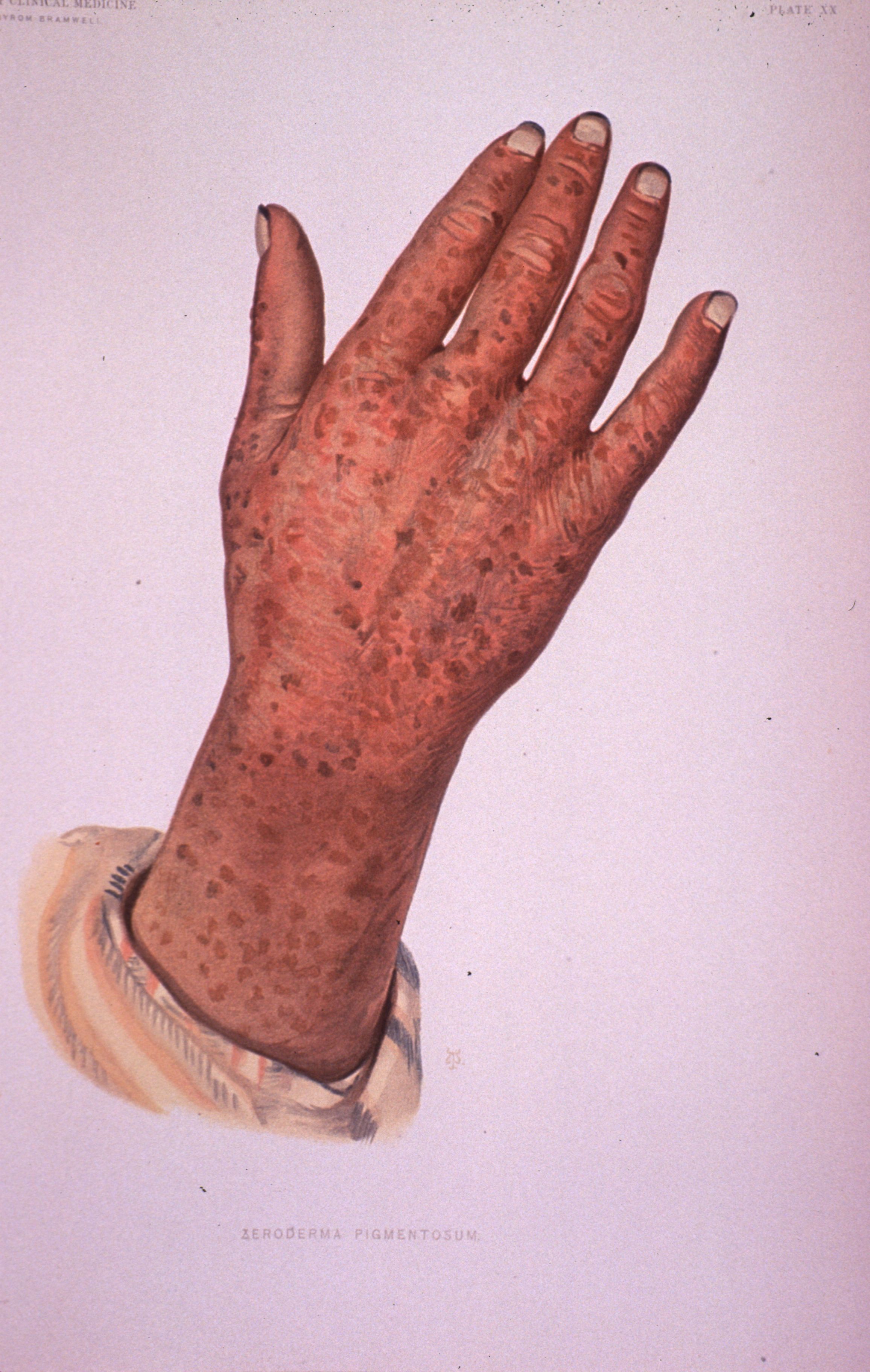
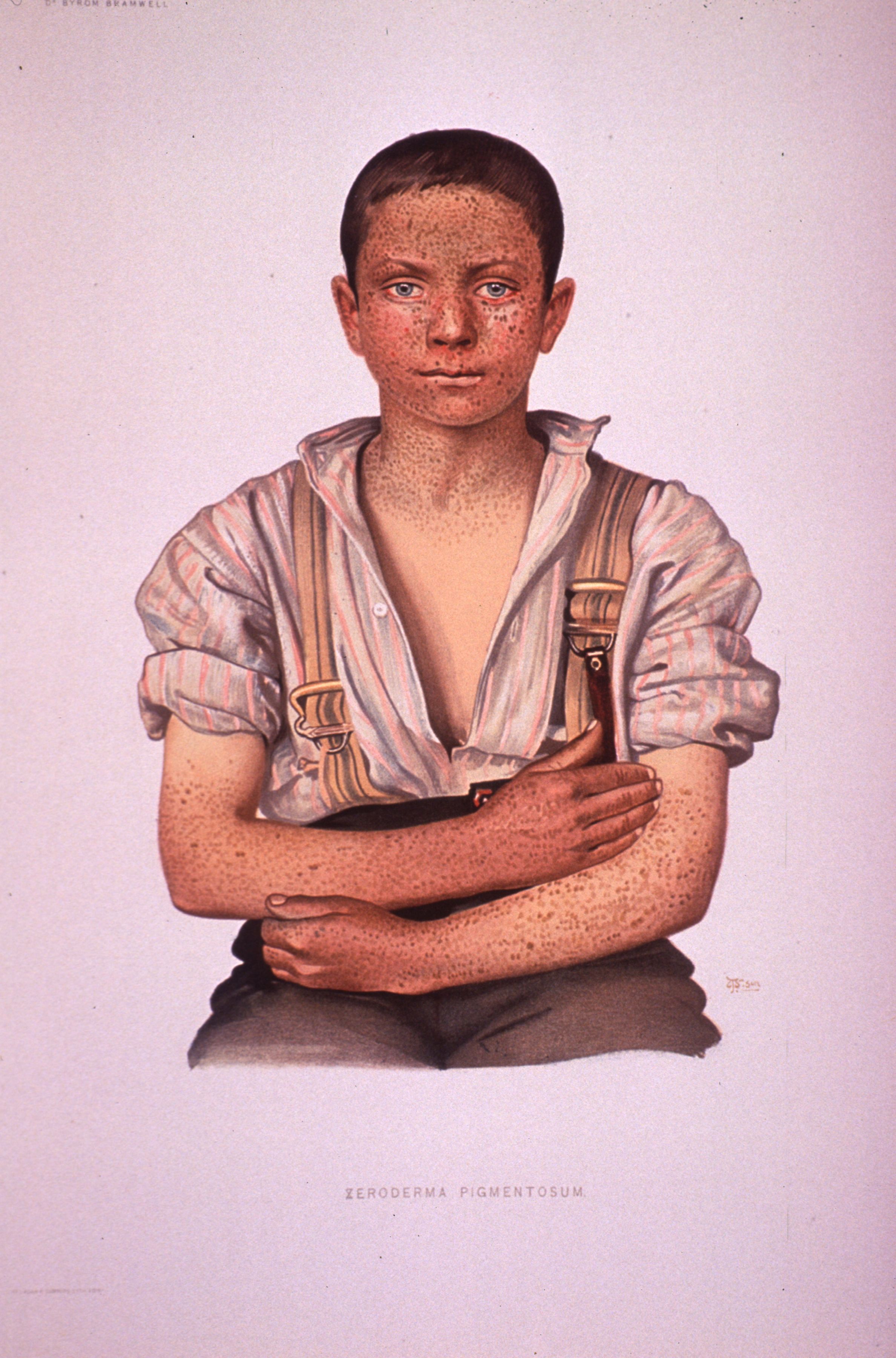
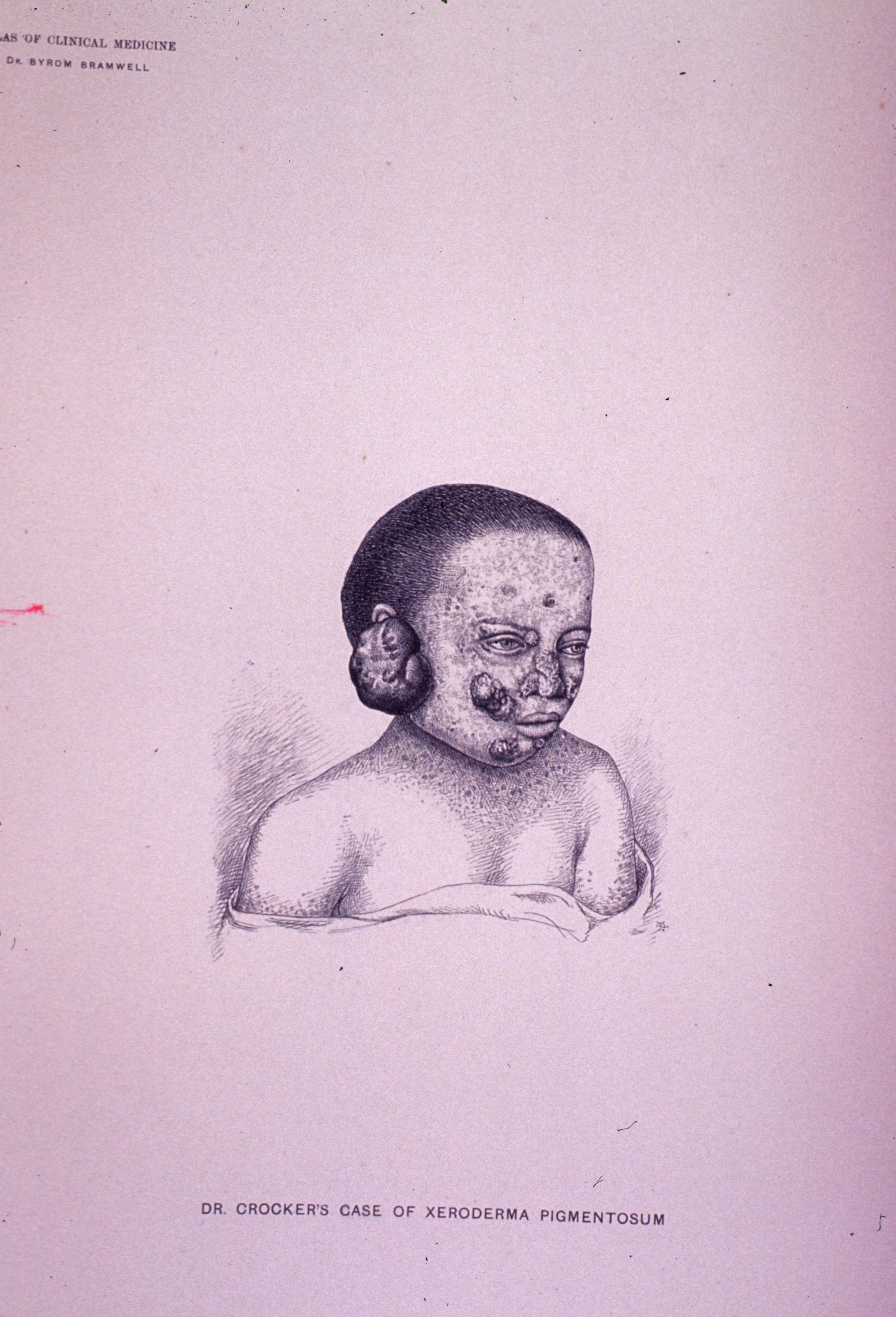
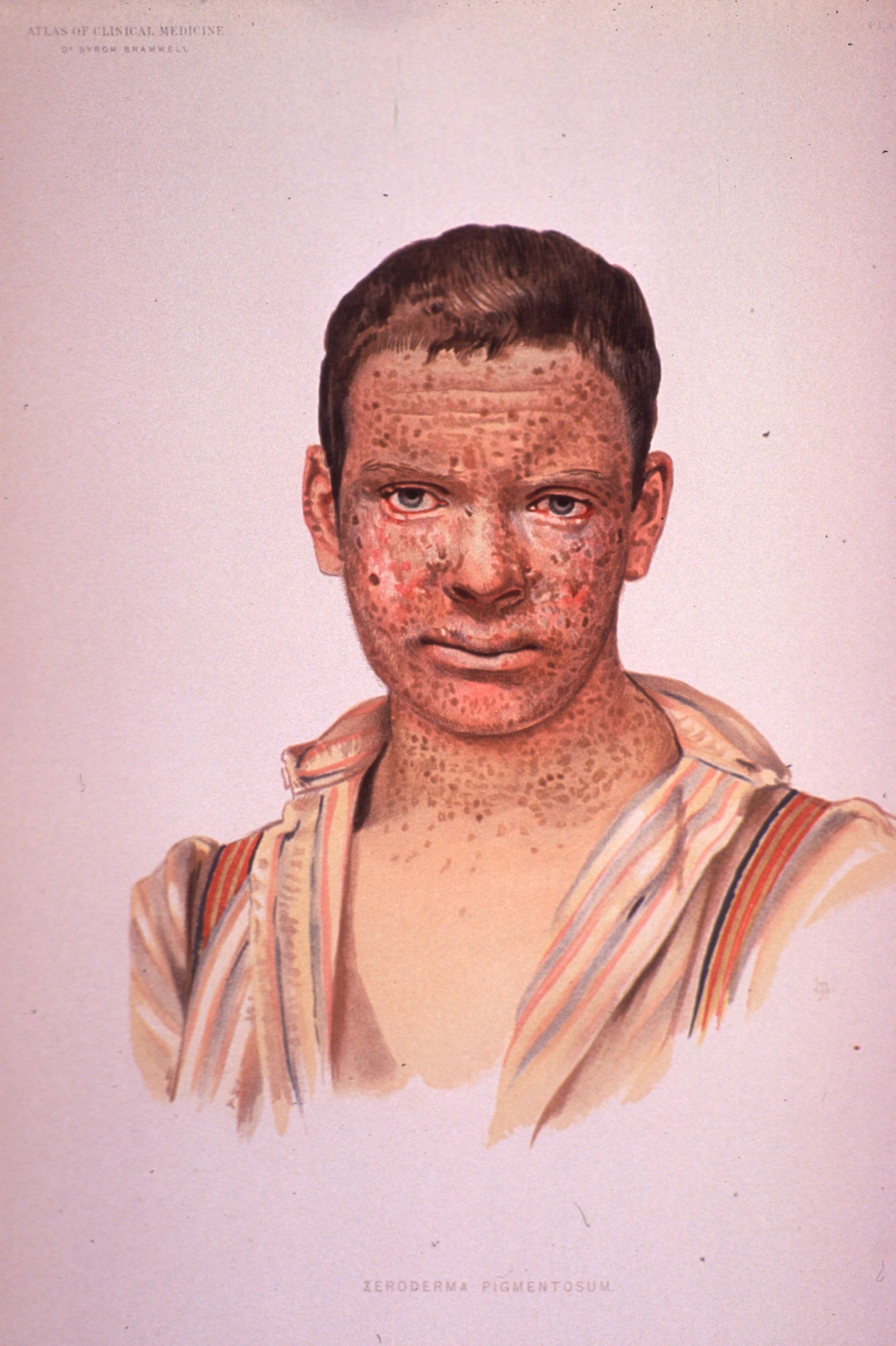
NLM clinical images. Tap to enlarge. Freckling, scaling, and early actinic damage on sun-exposed skin.
Facial freckling
Scaling erythema
Pigment change
Periorbital erythema
Plain English
UVB photons covalently link adjacent thymidines. The bulge stalls RNA polymerase and replication. Nucleotide excision repair recognizes the distortion, nicks both sides, removes ~25 to 30 bases, and resynthesizes the patch. In xeroderma pigmentosum every sunburn is a mutation that never gets erased.
INTERACTIVE
Rescue the Dimer
Step through global genomic NER. Watch the excision patch travel along DNA. XP stops the rescue crew cold.
Step 0: Normal DNA waits in the nucleus. UV has not struck yet.
COMPARE
Three Repair Lanes
Same DNA damage vocabulary, different board stories. Tap each tab.
Classic Xeroderma Pigmentosum
Complete global NER failure
Childhood sun burns, freckling, periorbital erythema
Photosensitivity but lower skin cancer risk than XP
Cachectic dwarfism, neurodegeneration, hearing loss
Brain MRI atrophy; NER assay partially reduced
Board split: partial NER + neuro = Cockayne
Lynch Syndrome (MMR)
Mismatch repair loss: MLH1, MSH2, MSH6, PMS2
MSI-high right colon and endometrial cancer
Tans easily; no childhood UV freckling required
Fixes replication errors, not UV dimers
Separate lane from XP entirely
VILLAIN LINEUP
Wrong Repair Suspects
Tap a card to reveal why it fails the UV child vignette.
BER
Fixes small base damage like deamination. Thymidine dimers are bulky helix distortions handled by NER, not BER.
MMR / Lynch
Repairs replication mismatches. Causes colon and endometrial cancer with MSI, not childhood sun burns.
HR / BRCA
Repairs double-strand breaks. Breast and ovarian risk, not UV dimer excision.
NHEJ
Ligates broken chromosome ends. AT and radiosensitivity syndromes, not freckled toddlers.
Ataxia telangiectasia
ATM kinase for DSBs. Ataxia and telangiectasias with AFP elevation, not primary NER failure.
Purine salvage
ADA deficiency causes SCID. Immunodeficiency without UV cancer diathesis.
DECISION TREE
Sun-Sensitive Child Branching
Answer each node before the next branch unlocks.
A child burns within minutes of sun exposure and freckles only on exposed skin. Which lesion type is most likely accumulating?
NER testing shows complete failure of global genomic repair with normal neurology. Best diagnosis?
MEMORY HOOKS
Lock the Lane
Tap each blurred hook to reveal.
UV to cancer chain
UVB → thymidine dimer → NER excises patch → XP loses excision → mutations accumulate → BCC/SCC/melanoma in childhood.
tap to reveal
XP versus Lynch
XP: skin under sun, NER, childhood. Lynch: colon/endometrium, MMR, MSI-high, adulthood. Both are DNA repair, different lesions.
tap to reveal
Partial NER splits
Complete NER loss = classic XP with extreme skin cancer risk. Partial TC-NER with neuro + cachexia = Cockayne. Tiger-tail hair = trichothiodystrophy.
tap to reveal
Periorbital erythema clue
Eyelid skin is thin and UV exposed. Periorbital erythema plus freckling on the face in a young child screams photosensitivity syndrome until proven otherwise.
tap to reveal
BOARD WALKTHROUGH
25 Clinical Vignettes
Shuffled, never-repeat until the bank exhausts. Right-click or long-press to cross out. Double-click or double-tap to highlight.
Medically reviewed by Kaitlyn Cocuzzo, MD and Fatima Ali, DO · Last reviewed June 2026
Bone Wizardry is an independent educational resource for visual learning in the medical sciences. It is not affiliated with, endorsed by, or sponsored by any licensing or examination board, contains no real or recalled examination questions, and does not guarantee any educational or examination outcome.