When the stem names peripheral ganglia, Schwann cells, melanocytes, adrenal medulla, or thyroid C cells, stop thinking neural tube. Those are the migrators.
Before you scroll: A newborn has absent dorsal root ganglia and impaired development of autonomic ganglia. The same embryologic population normally also gives rise to Schwann cells and adrenal medulla chromaffin cells. Which embryologic structure is defective?
The nervous system starts from ectoderm, but it splits into two jobs. The neural tube stays home and becomes brain, spinal cord, retina, and central glia. The neural crest migrates away and builds the peripheral nervous system plus adrenal medulla, melanocytes, craniofacial pieces, and thyroid C cells. Peripheral ganglia + Schwann + adrenal medulla = neural crest.
Embryology split
Homebody Tube vs Traveling Crest
Tap the lineages. The board move is not memorizing every derivative. It is asking whether the cell stayed central or migrated out.
Eye trapRetina and optic nerve are central outgrowths
Disease hooksNeural tube closure defects, ependymoma, central gliomas
Surface ectoderm
Skin and sensory epithelium
Core clueEpidermis, lens, inner ear epithelium
Pituitary trapAnterior pituitary comes from Rathke pouch
Not hereNo dorsal root ganglia, no Schwann cells
RuleSurface makes coverings and epithelial sensory pieces
Mesoderm and endoderm traps
Same organ, different parent
Adrenal trapCortex is mesoderm, medulla is crest
Thyroid trapFollicular cells are endoderm, C cells are crest
KidneyRenal tubules are intermediate mesoderm
Gut liningGI epithelium is endoderm, enteric ganglia are crest
Board trap: Ectoderm is not specific enough. Neural tube and neural crest both come from neuroectoderm, but they build different worlds.
Lineage switchboard
Name the Parent Cell
Pick the derivative. The readout forces the embryologic split before the answer feels automatic.
Which embryologic population built this structure?
Pick a clue.The fastest route is: central nervous system structure means tube; peripheral nerve support, ganglia, chromaffin, melanocyte, or C cell means crest.
Board trap: Do not let the word adrenal pull you to mesoderm automatically. Adrenal cortex is mesoderm. Adrenal medulla is crest.
Two-gate discriminator
Decision Tree
Answer the two embryology gates before naming the derivative.
1
Is the structure a brain, spinal cord, retina, or central glial cell?
Yes. It stayed central.
No. It is peripheral, endocrine, skin pigment, or craniofacial.
2
Is it a peripheral ganglion, Schwann cell, adrenal medulla, melanocyte, or thyroid C cell?
Yes. It migrated out from the dorsal neural folds.
No. It is likely surface ectoderm, endoderm, or mesoderm.
Make it stick
Hooks and Images
The memory problem is the migration problem: tube stays, crest travels.
TUBE
Tube stays home
Neural tube is the central apartment building: brain, cord, retina, central glia. If it sounds like CNS parenchyma, keep it in the tube.
tap to reveal
CREST
Crest gets on the road
Crest migrates. Anything that had to travel to a peripheral nerve, adrenal medulla, skin pigment cell, or thyroid C cell should light up crest.
tap to reveal
SPLIT
Same organ trap
Adrenal cortex and medulla are not siblings. Thyroid follicular cells and C cells are not siblings. Same organ can hide two parents.
tap to reveal
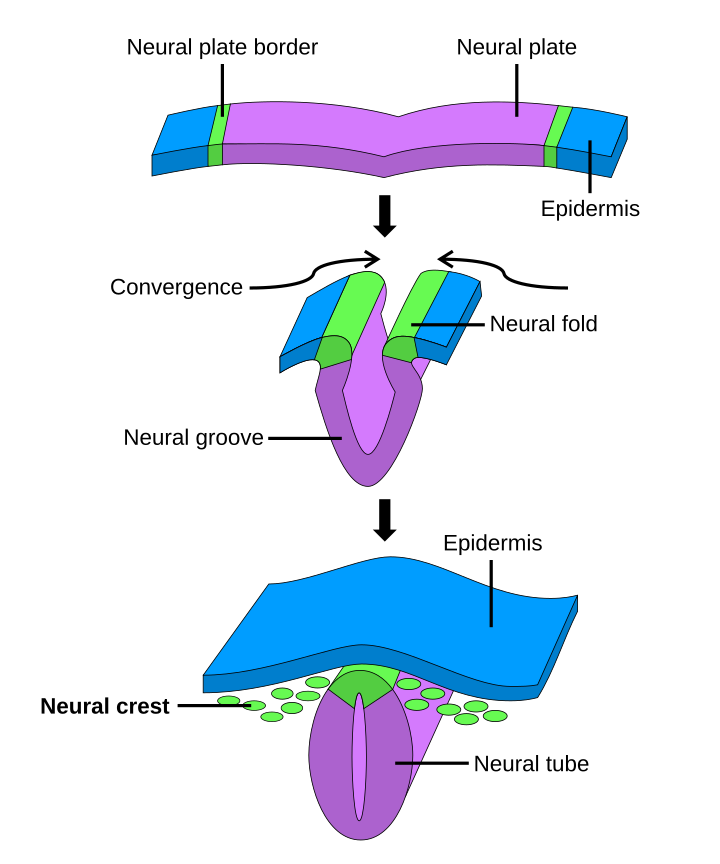
Neural crest formation · tap to expand
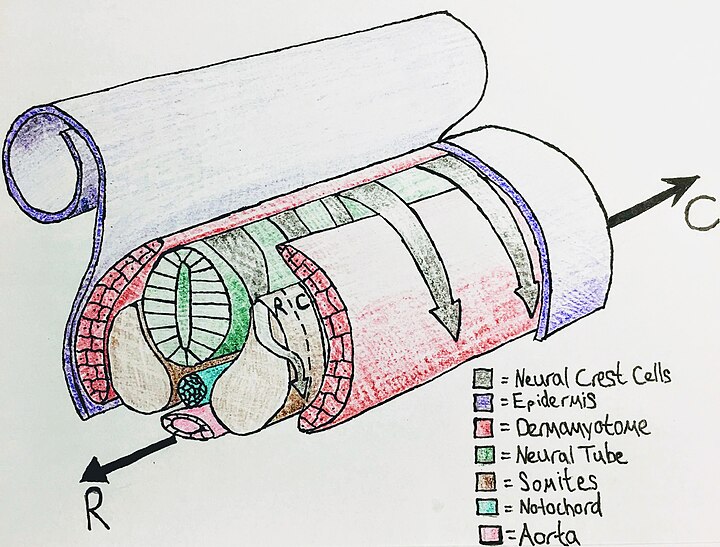
Migration paths · tap to expand
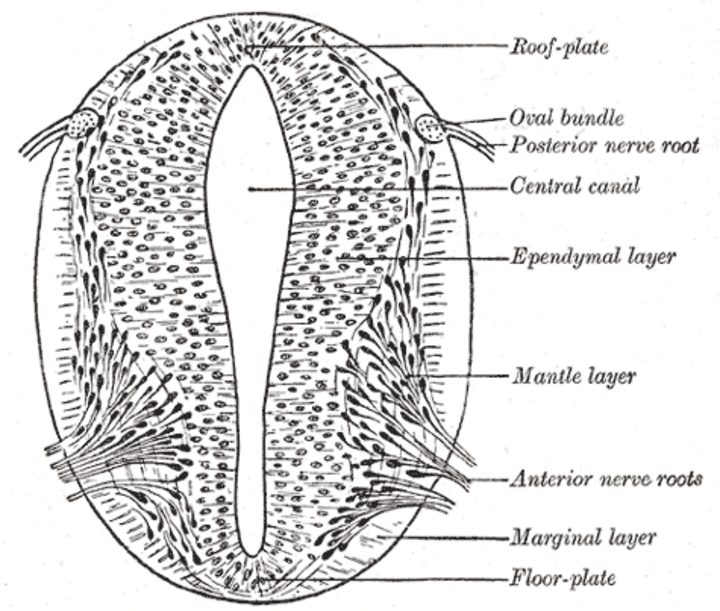
Neural tube · tap to expand
Board walkthrough
Prove It
One vignette at a time. Choices shuffle. The bank does not repeat until it is exhausted.
Vignette 1Never-repeat tracking ready
Exam tools: right-click or long-press to cross out a choice. Double-click or double-tap to highlight one. Tools switch off after you answer.