The deletion that kills one elastin gene, narrows the aorta above the valve, gives a child the face of an elf, the friendliness of a golden retriever, and a serum calcium that will not quit.
Section 1 of 5
One small chunk of chromosome 7 is missing. The elastin gene goes with it. What follows is a cascade that changes the heart, the face, the brain, and the blood.
Step 1 of 3 · Normal Chromosome 7
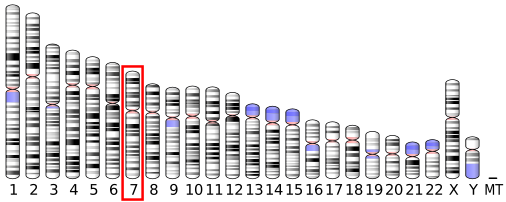
Normal chromosome 7 has two arms: the short arm (7p) above the centromere, and the long arm (7q) below. The critical region for Williams syndrome sits on the long arm at band q11.23.
Step 2 of 3 · The 7q11.23 Deletion
The deletion at 7q11.23 removes approximately 1.5 to 1.8 megabases of DNA. This region contains over 25 genes. The clinically critical one is ELN, the gene encoding elastin. When it goes, so does the structural integrity of every large artery.
Step 3 of 3 · ELN Loss: The Downstream Cascade
Without elastin, arterial walls stiffen. Smooth muscle cells multiply to compensate. The lumen narrows. In the aorta, the narrowing forms above the valve: supravalvular aortic stenosis. The valve itself is usually normal. This is the elastin arteriopathy.
Confirming the Diagnosis
Standard karyotypeG-banded chromosomes: detects big rearrangements but misses small microdeletions. Resolution is about 5-10 megabases; the Williams deletion is only 1.5-1.8 Mb. cannot reliably detect the 7q11.23 microdeletion. You need a higher-resolution method.
First-line: FISHFluorescence In Situ Hybridization: a fluorescent probe binds specifically to the 7q11.23 region. One signal instead of two = deletion confirmed. using a probe targeted to the 7q11.23 locus. One signal instead of the expected two = deletion confirmed.
Alternative: Chromosomal microarrayAlso called array CGH or SNP array: surveys the entire genome for copy number changes at very high resolution. Detects the deletion and also tells you exactly which genes are missing. (array CGH) is equally confirmatory and also tells you exactly which genes were deleted. On boards, FISH and microarray are both accepted answers for confirmation.
Walk the Chain · Tap each beat
Tap each step to reveal the next link in the mechanism.
Tap to reveal
Section 2 of 5
Elfin face. Friendly to a fault. Aorta in trouble. Calcium too high. Each feature has a mechanism. Tap the cards.

The Face
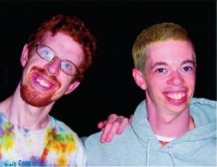
Broad forehead · periorbital fullness · short upturned nose · long philtrum · wide mouth · full lips · small chin · widely spaced teeth.
Board tip: "Elfin" is the descriptor on every exam. The face is distinctive enough that experienced clinicians recognize it at a glance.
Elastin Arteriopathy
Supravalvular aortic stenosis (SVAS): narrowing above the aortic valve. The signature lesion. Valve leaflets are normal.
Peripheral pulmonary artery stenosis: elastin loss in the branch pulmonary arteries. Both driven by smooth muscle hyperplasia from elastin deficiency.
The Unusual Brain
Intellectual disability (mild to moderate) with a paradoxical relative verbal strength: vocabulary and language skills exceed what IQ predicts.
Severe visuospatial deficits: can't draw a simple house but can tell you stories all day.
Hyperacusis: loud sounds cause genuine distress. Cocktail party personality: approaches strangers, hyperloquacious.
Why the Calcium?
Infantile hypercalcemia from increased sensitivity to vitamin DThe exact mechanism is debated but involves increased 1-alpha-hydroxylase activity and dysregulated intestinal calcium absorption. It usually improves with age. leads to increased intestinal calcium absorption.
Board discriminator: Williams = hypercalcemia. DiGeorge = hypocalcemia. Exact opposites. Don't flip them.
Differential Challenge: Williams or DiGeorge?
A patient walks in with a cardiac defect and a genetic syndrome. Work through the clues.
Clue 1: The serum calcium is 11.8 mg/dL (normal: 8.5-10.5 mg/dL). Which direction does this push you?
Clue 2: Echo shows narrowing above the aortic valve with normal valve leaflets. Which syndrome?
Clue 3: No history of recurrent infections. T-cell counts are normal. Thymus is intact on chest imaging. Which syndrome fits?
Board Summary
Williams (7q11.23): hypercalcemia, supravalvular AS, elfin facies, cocktail personality, intact immune system.
DiGeorge (22q11.2): hypocalcemia from hypoparathyroidism, conotruncal defects, T-cell deficiency from thymic aplasia.
The calcium direction alone settles 80% of these questions. Williams is High. DiGeorge is Low.
Tap to reveal
Genetics Discriminator Table · Tap table to reveal
| Feature | Williams 7q11 | DiGeorge 22q11 | Down Tri-21 | Cri-du-chat 5p- |
|---|---|---|---|---|
| Cardiac | Supravalvular AS | Truncus, ToF | AVSD, VSD, ASD | VSD (variable) |
| Calcium | HIGH | LOW | Normal | Normal |
| Immunodeficiency | None | T-cell (thymic) | None specific | None specific |
| Intellect | Mild-mod ID, verbal strength | Variable | Mild-mod ID | Severe ID |
| Key clue | Elfin face, friendly | Cleft palate, thymic aplasia | Round face, Brushfield spots | High-pitched cry at birth |
| Diagnosis | FISH 7q11 / microarray | FISH 22q11 / microarray | Karyotype | FISH 5p / microarray |
Williams 7q11.23
Cardiac: Supravalvular AS · Calcium: HIGH · Immune: intact · Face: elfin · Dx: FISH 7q11
DiGeorge 22q11.2
Cardiac: Truncus / ToF · Calcium: LOW · Immune: T-cell deficient · Dx: FISH 22q11
Down Syndrome Trisomy 21
Cardiac: AVSD/VSD/ASD · Face: round, Brushfield spots · Dx: karyotype
Cri-du-chat 5p-
Clue: high-pitched cat cry at birth · Severe ID · Dx: FISH 5p / microarray
Section 3 of 5
Aortic stenosis happens at three different levels. Williams fixes it above the valve. Work through each stage to lock in the discriminator.
Normal aorta: wide lumen above and below the aortic valve. Blood flows freely. Elastin fibers in the wall maintain resilience and allow the artery to recoil between beats.
Williams syndrome. The aortic wall above the valve is thickened from smooth muscle hyperplasia secondary to ELN loss. The valve itself is normal. The stenosis sits above the valve: supravalvular.
Valvular aortic stenosis (NOT Williams). The obstruction is at the valve leaflets themselves: thickened, calcified, or bicuspid. The aortic wall is normal. Classic calcific AS of elderly patients or bicuspid aortic valve in younger adults.
Subvalvular aortic stenosis (NOT Williams). The obstruction is below the valve, typically from hypertrophic cardiomyopathy (HOCM) where the interventricular septum bulges into the outflow tract. Valve is normal. Wall is normal. The heart muscle itself is the problem.
Tap to reveal
Section 4 of 5
Five patients just walked in. You know what Williams syndrome looks like. Now prove it under exam conditions.